
The Sound of Connection. DJ Mehdi and the Globalization of French Hip-Hop

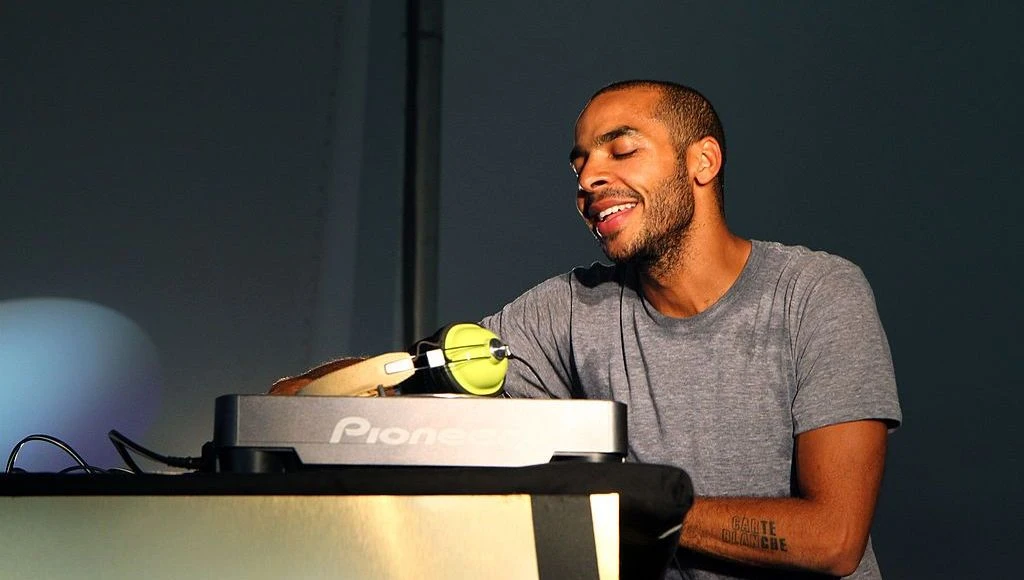
French hip-hop did not become global by abandoning its identity. In her latest article for oltreoceano, Hajar Ouahbi explores the legacy of DJ Mehdi, one of the most influential producers in the history of French rap and electronic music. Rather than copying American hip-hop, Mehdi helped bridge worlds, bringing new levels of clarity, groove, and sonic ambition to French rap while keeping it unmistakably local. Moving between Paris, New York, and the global club scene, the piece traces how DJ Mehdi transformed the role of the producer, reshaped the sound of a generation, and helped make French hip-hop resonate far beyond its borders.
When DJ Mehdi collaborated with French rapper Booba, some fans were surprised. In a 2009 interview with Mowno, he said: “As a producer, I want to move from universe to universe, keeping my mindset that pushes me to try new things, to evolve and move forward.” He was always a free spirit : and it was that freedom that allowed him to connect the French hip-hop scene to the American sound, mindset, and industry long before it became fashionable.
There are two ways to approach the story of DJ Mehdi, a French hip-hop producer who later became a key figure in the country’s electronic music scene, notably through the Ed Banger label, before his death in 2011. The first is the familiar narrative: a tastemaker with an unusually wide range, equally comfortable producing rap records and club tracks, and able to move between scenes without losing credibility in either.
The second approach looks past reputation and focuses on method. It examines how he placed a kick drum, how he shaped dynamics, how space was organized in a mix, how a bassline could drive momentum, and how rhythmic swing gave tracks physical presence. From this perspective, DJ Mehdi helped reshape the sonic expectations of French rap, bringing it closer to international production standards (particularly those of American hip-hop) without forcing it to imitate New York or Los Angeles. As he made clear in a 2009 interview with the blog British Hip-Hop: “If you’re from Paris, don’t try to sound like Los Angeles or New York.”
Now, let’s dissect the “DJ Mehdi sound”.
The real gap between French and American hip-hop
By the late 1990s, French hip-hop had established itself as a complete scene, with key artists, strong lyric traditions, local networks, and a distinct cultural identity. Musically, many records were solid, but they could sound flatter, less dynamic, and less spacious than their American counterparts. The difference was primarily technical. American rap at the time relied on precise studio practices: hard-hitting drums with clearly defined kicks and snares, basslines designed to carry energy across low and mid frequencies, and arrangements structured almost like a film, with drops, breaks, and shifts that guided the listener’s attention. The mixes emphasized clarity, careful management of the low end, and controlled dynamics, ensuring the tracks worked both on the radio and in clubs. DJ Mehdi recognized this gap intuitively. He did not attempt to copy American rap directly. Instead, he approached the problem from another angle, focusing on how to bring the same level of clarity, impact, and energy to French hip-hop without sacrificing its identity.
In the U.S., hip-hop and dance music had long shared roots in soul and funk, and a common production logic focused on rhythm, groove, and sound-system impact. Mehdi recognized this continuity when he heard Daft Punk’s album Homework in 1997. “I thought: ‘That’s funny, we use the same machines, the same samplers, they live just around the corner, they’re about my age, that could have been me,’” he said in archival footage from DJ Mehdi: Made in France, a 2024 documentary by Thibault de Longeville, widely praised as a groundbreaking look at Mehdi’s life, work, and lasting impact on French hip-hop and electronic music.
In a 2007 Red Bull Music Academy lecture with DJ A-Trak, he recalled how experiments merging electronic music and hip-hop were already happening in Paris by the late 1990s. “Being a hip-hop producer for quite a long time, the idea of merging electronic music and hip-hop was already there,” he explained, recalling how he and his circle, including Pedro Winter (better known as Busy P, the founder of Ed Banger Records, a label that would become a major force in French electronic music) were experimenting with these hip-hop/electronic hybrids as early as 1997 or 1998, performing in small Parisian clubs on a strictly underground scale. What changed, according to Mehdi, was not the idea itself but the conditions that allowed it to expand: a growing network of like-minded artists across different scenes, and parallel evolutions taking place elsewhere. “Maybe you won’t agree with me,” he added during the lecture, “but I think the Neptunes, Timbaland, some of those guys were already, maybe without knowing it, merging electronic music and hip-hop in their own ways, and that also paved the way.”
Two obsessions: groove and clarity
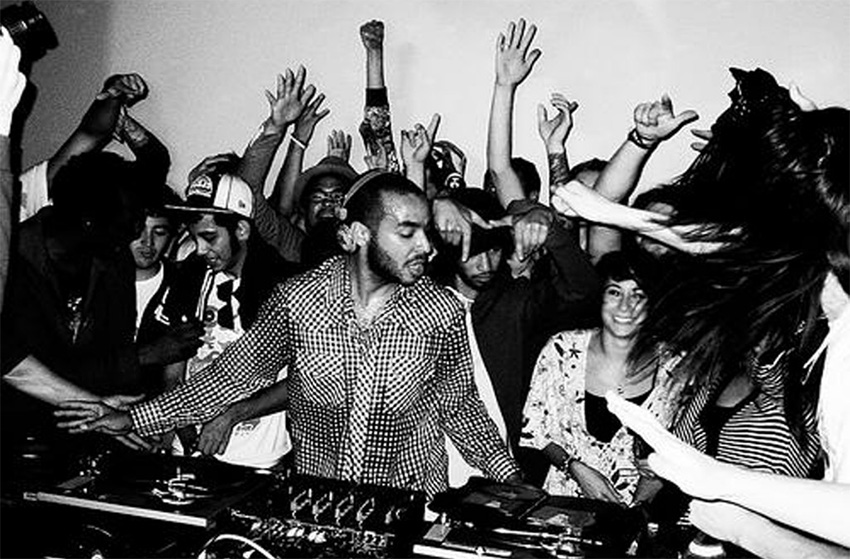
The documentary DJ Mehdi: Made in France, repeatedly emphasizes how producers, collaborators, and friends describe Mehdi as obsessed with clarity and with music as a physical experience. Those who worked with him remember Mehdi as a creator of sensations. For him, rhythm and sound were meant to move the body, a principle deeply rooted in the history of hip-hop, whether nodding along, swaying with the beat, or dancing in the streets, as in the genre’s early breakdancing culture.
Mehdi’s sense of groove was shaped by subtle production choices: a kick drum placed slightly off-center, a hi-hat that rolls rather than snaps, a sample that cuts just before a moment of tension or re-enters to restart energy. And this attention to rhythmic feel over strict metric accuracy reflects a production philosophy shared by many of the most influential American hip-hop beatmakers, for whom impact on the body matters more than theoretical balance. It also helps explain how Mehdi was able to connect two worlds often seen as incompatible, he relied on groove as common ground. This focus on movement and physical response carried over directly into the way he structured his beats.
Rather than building beats as dense, opaque walls of sound, Mehdi approached instrumentation as a form of musical architecture. The result was a mix in which the voice naturally occupied the center, no longer forced to compete for space, but framed as the focal point. That clarity was not an aesthetic preference; it addressed a structural constraint of French hip-hop. Unlike English, French packs more syllables into each bar, increasing the risk of congestion when the instrumental is too busy.
The Ed Banger shift: reaching America through the club
At a certain point in DJ Mehdi’s trajectory, the France-United States connection stopped running exclusively through hip-hop references and began to follow a far more universal route: global club culture. For some, it might have looked as if DJ Mehdi had left rap behind to focus on electronic music. In reality, he brought a hip-hop approach with him: he thought of tracks as tools for performance, emphasized groove and physical impact, and treated arrangement and rhythm with the same attention he had given to rap. Choosing the club as a medium also meant choosing a route to international audiences. Where rap must navigate language barriers, club music requires no translation. In this sense, the club functions as a transnational language.
Another key element of this period was Mehdi’s close friendship with the Canadian DJ A-Trak, a prominent figure in the global DJ circuit and former DJ for Kanye West. Their connection went far beyond occasional collaborations in clubs. It represented a real exchange between French and North American scenes : musical, cultural, and personal. In interviews and tributes, A-Trak has recalled how Mehdi refined his sense of taste, helping him recognize what ideas and tracks had lasting value versus what was already overdone, while both remained rooted in their shared hip-hop background.
Conclusion
One of DJ Mehdi’s most important contributions was the versatility of his productions. His tracks could work anywhere: on the radio, in cars, in small clubs, at large festivals, and across both local and international audiences. This versatility reflects how Mehdi understood hip-hop itself. He rejected the idea of hip-hop as a closed territory that needed protecting. “I don’t think hip-hop needs to be ‘saved,’ because hip-hop is just fine if I am fine. To quote Mos Def, ‘hip-hop is not some giant hidden in the mountain, hip-hop is me, you, whoever feels connected to the culture and doing something about it,’” he said in a 2009 interview with British Hip-Hop. This perspective framed hip-hop as a shared culture rather than a guarded domain, making transatlantic exchange between France and the United States feel natural rather than forced or “calculated”.
Today, French rap operates with far less sonic constraint than it once did. Producers can keep the lyrics local, full of Parisian slang, neighborhood references, and French-language wordplay, while building tracks that meet the technical standards of music anywhere in the world. That change did not happen by chance. While advances in technology and the rise of streaming helped, DJ Mehdi played an early role in setting benchmarks for clarity, dynamic range, and bass control, bringing French rap closer to the production quality of international hip-hop.
DJ Mehdi showed that French rap could compete globally on sound. He also expanded the role of the producer in France, from a supporting figure to a cultural agent capable of shaping both music and context.