The Photographer Who Captured Brazil’s Afro-Brazilian Religion
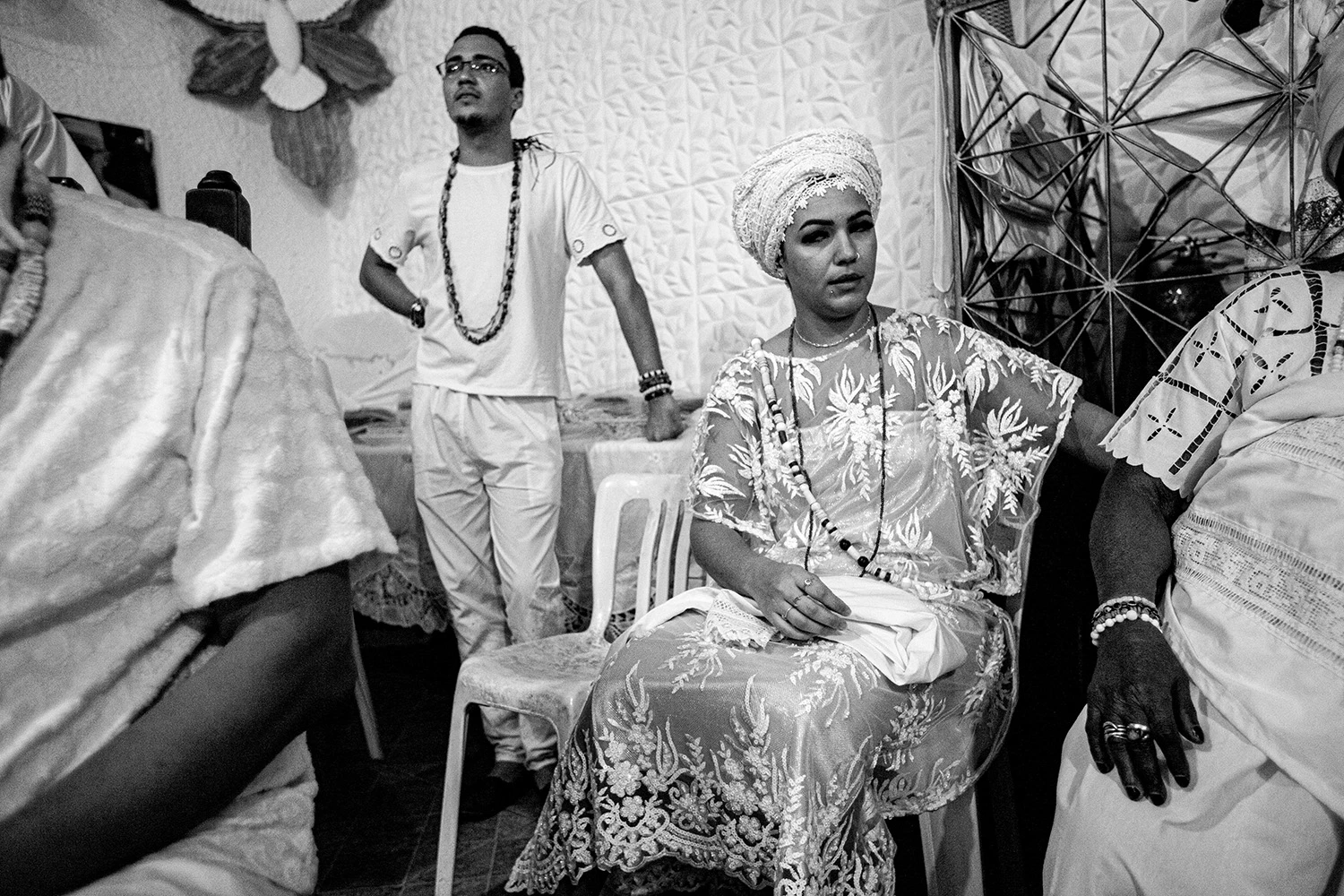
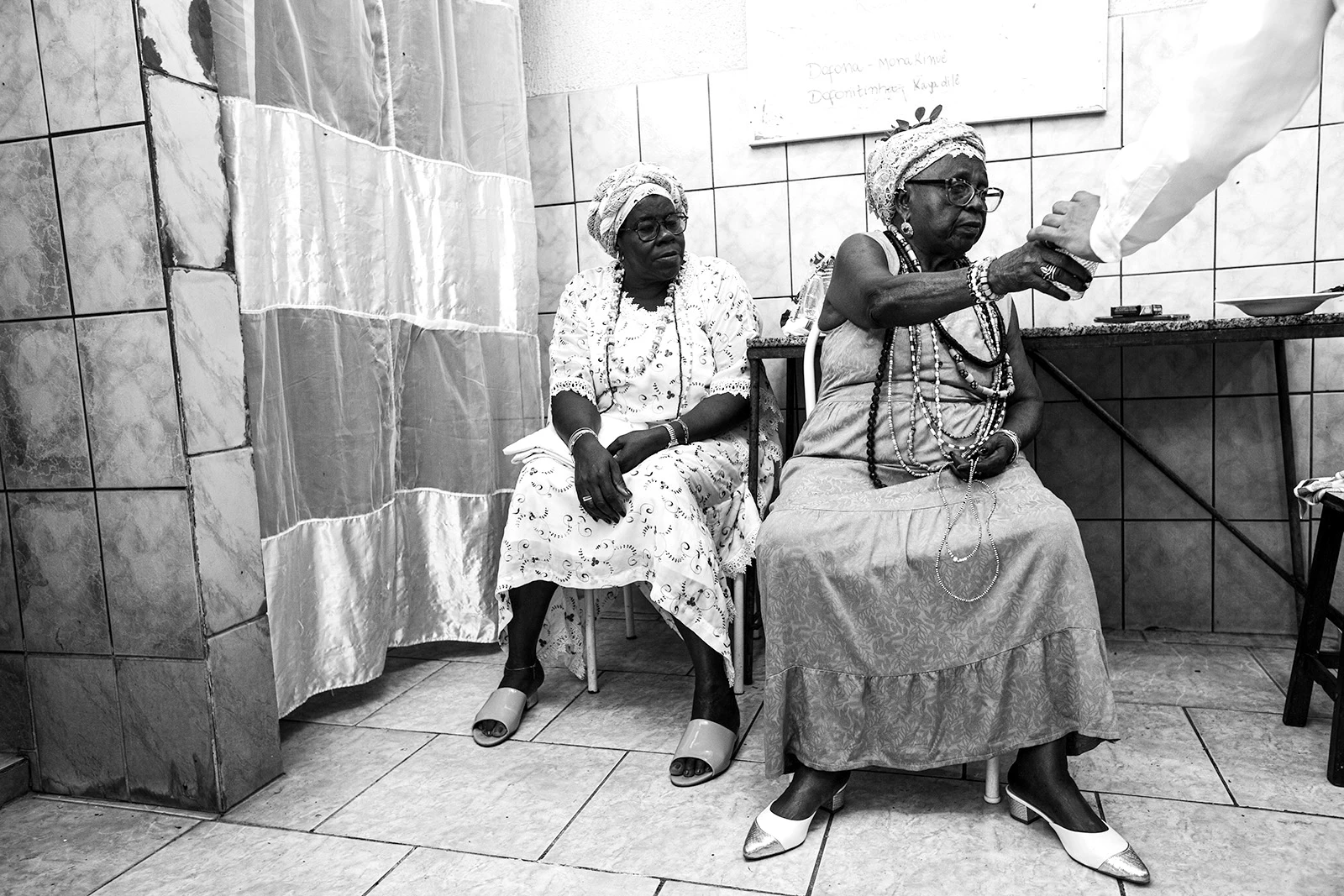
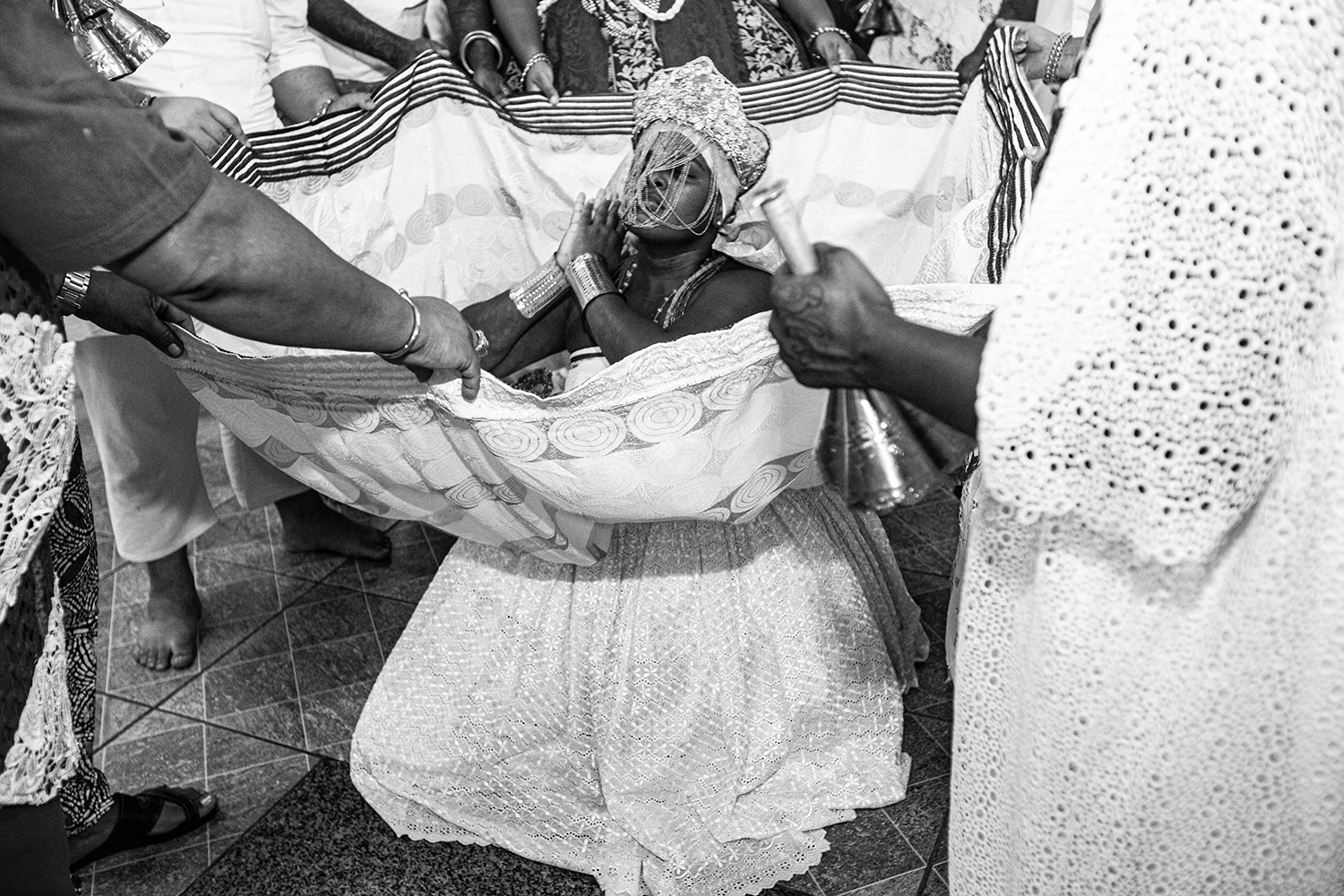
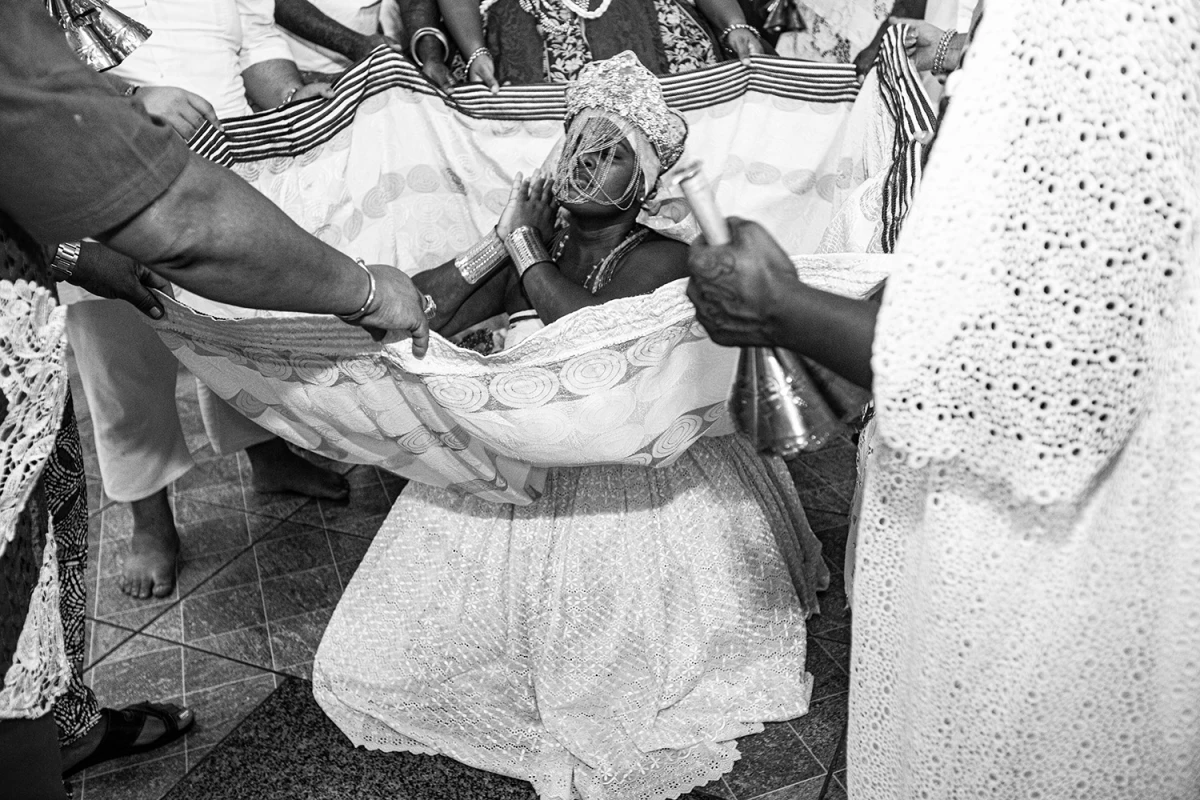
In her work O Barracão, Canadian photographer Chantal Simone explores the spiritual, physical, and ancestral dimensions of Candomblé, an Afro-Brazilian religion, through the main ceremonial hall of a Bantu-based terreiro in Rio de Janeiro. Drawing on decades of engagement with the Black Atlantic and her encounters with Afro-Cuban spirituality, Simone moves beyond conventional documentary photography to capture the raw energy of ritual, the interplay of bodies and gestures, and the invisible forces that shape the sacred space.
The Architecture of Energy: Inside Chantal Simone’s ‘O Barracão’
The Barracão is a photographic series conceived by the visual artist Chantal Simone, focusing on the main ceremonial hall of a Bantu-based terreiro in Rio de Janeiro. Far from being a passive or sentimental documentary on Afro-Brazilian folklore, the series views this enclosed space as a veritable high-pressure cauldron: the physical threshold where the kinetic and raw reality of the body (Ku Nseke) and the invisible spiritual realm of the ancestors (Ku Mpémba) collide in real time, crossing the boundary of Kalûnga. Kalûnga represents the boundary between the world of the living and the spirit world, associating death with immensity.
Having lived in Rio de Janeiro for over two decades, the 49-year-old Canadian photographer brings a keen and mature perspective to the project, backed by 30 years of documenting everyday life in the Black Atlantic, from Harlem to Brazil. But upon entering the Barracão, Simone stepped into a completely different world. “Crossing that threshold took time, maturity, and the right opportunity,” she reflects. “It’s the sort of door you don’t force open; it has to open naturally for you.”
The catalyst for the project came after a six-month immersion in Cuba between 2024 and 2025, where close contact with Santería fundamentally altered her relationship with the invisible. “I felt an urgent need to experience more of this energy. On returning to Brazil, I decided to immerse myself in the very space where this reality materialises: The Barracão.”
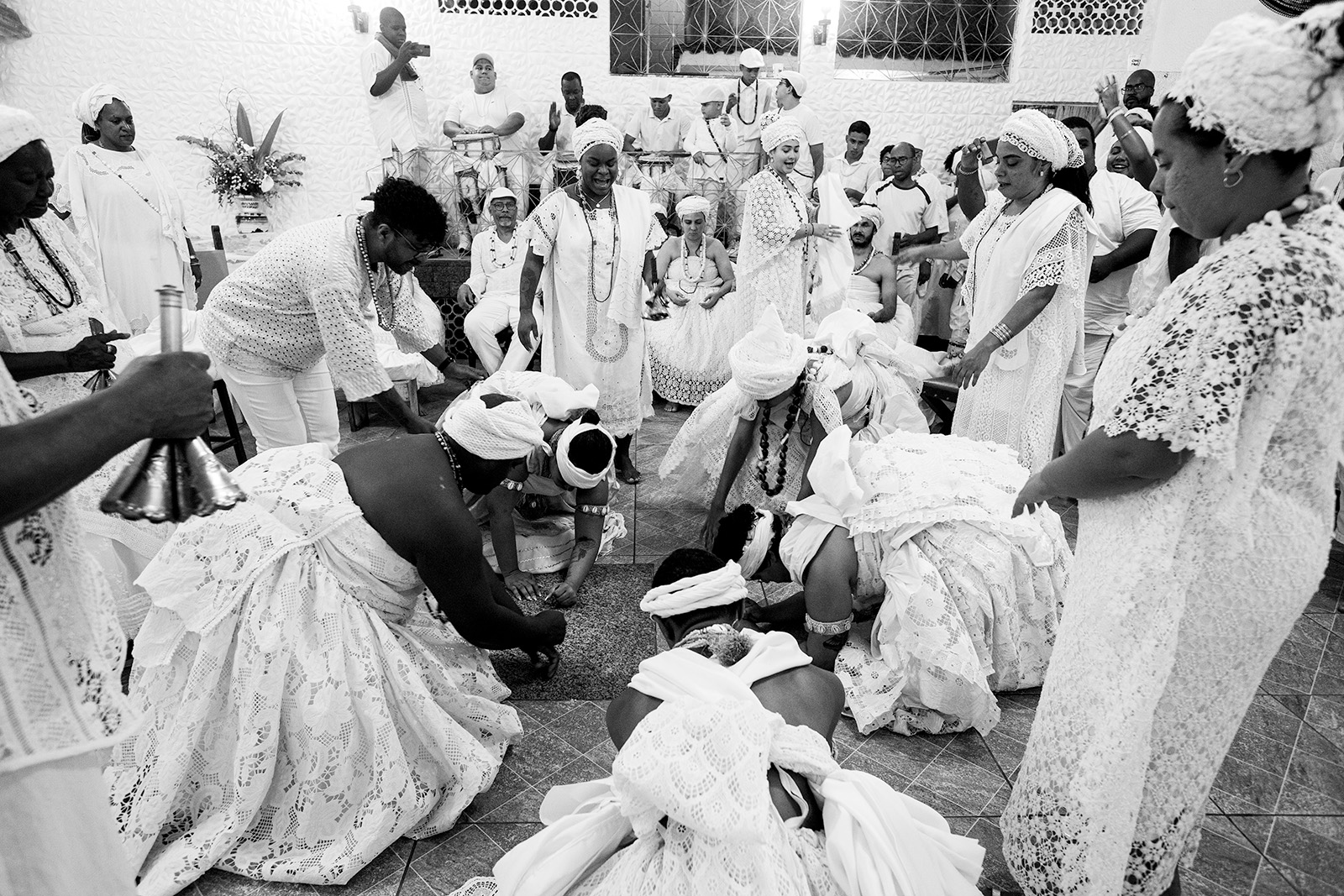
To provide a foundation for this empirical visual research, it is necessary to understand the historical resistance that lies behind those walls. Jairo Ribeiro da Silva, aged 47, a historian and spiritual leader at Ilê Axé Azoane in Salvador, Bahia, explains: “Candomblé is a recreation on Brazilian soil of the worship of deities from certain regions of Africa. Those enslaved during the 16th, 17th, and 18th centuries struggled to recreate their ancestral cults as faithfully as possible.”
Under the violent oppression of slavery and the forced imposition of Catholicism, practitioners had to adapt in order to survive, using strategic dissimulation to preserve their sacred connection. “This gathering of people from different African ethnic groups, who came together to preserve the worship of the Orixás, the Inquices and the Voduns – which are the energies of nature – came to be known as Candomblé,” points out Silva.
The Jazz of the Frame: Against the Sentimental Gaze
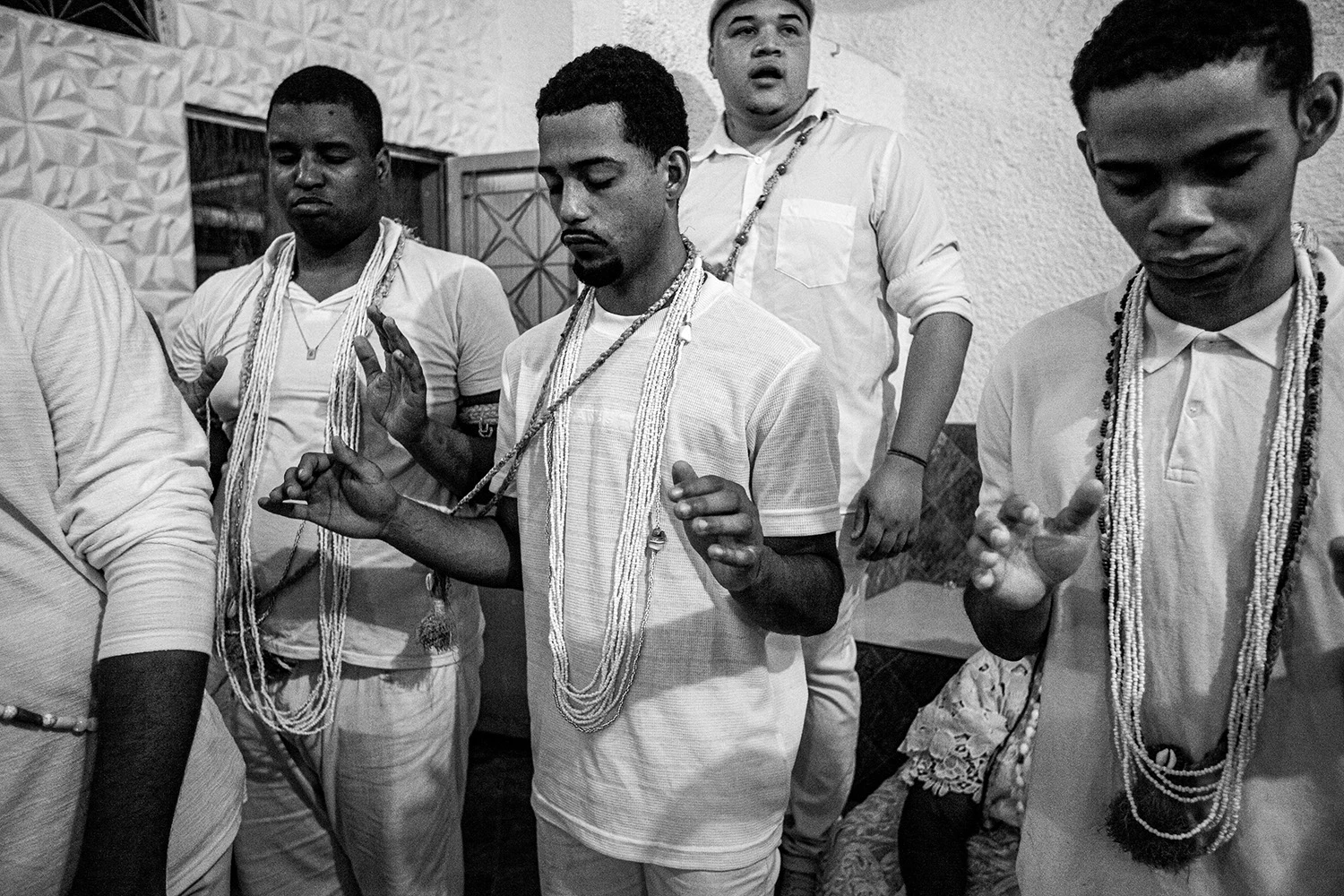
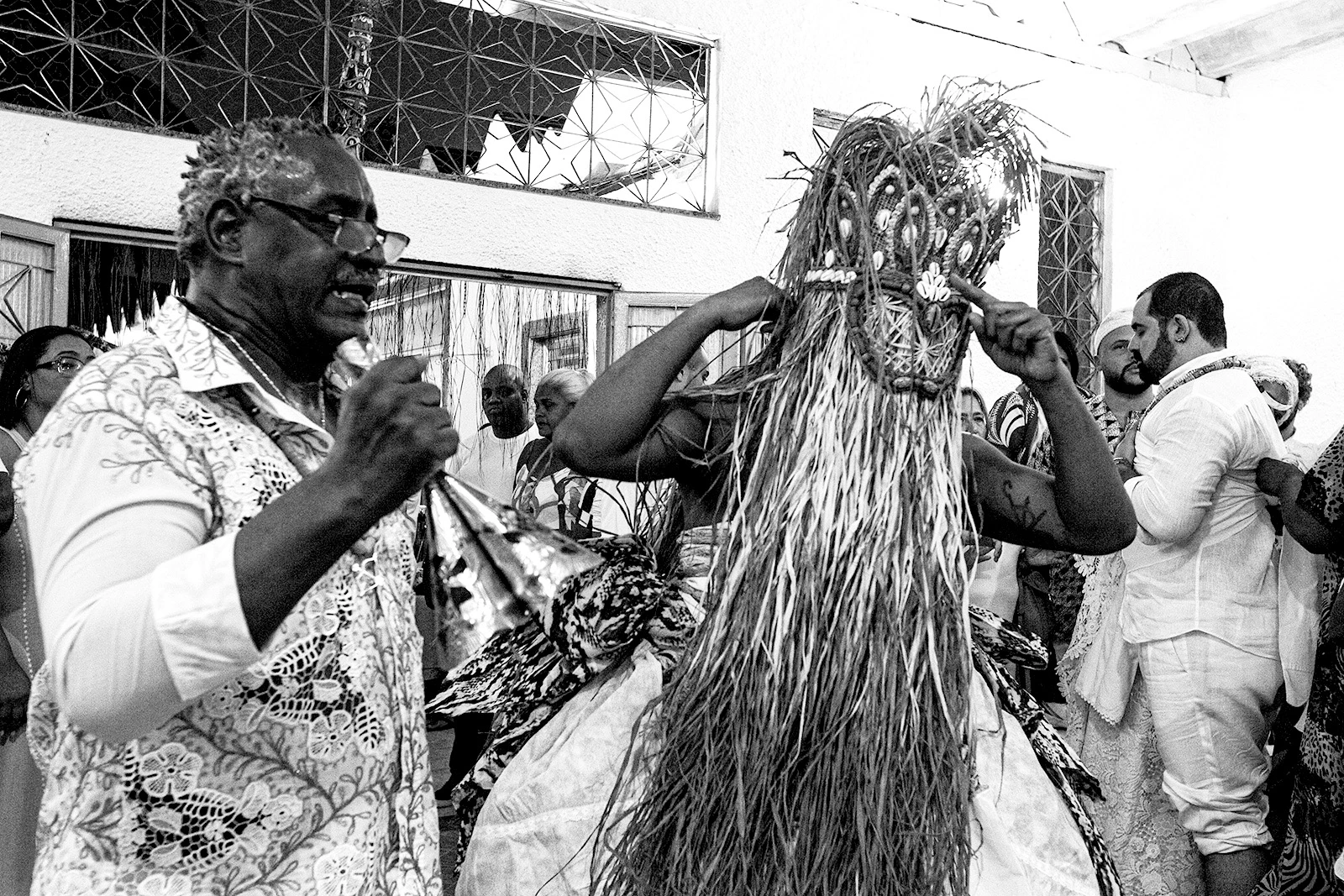
Whilst the terreiro functions as a macro-temple, the barracão is the main hall where collective rituals, sacred dances, and the physical manifestation of the Orixás take place. Simone focused her lens on the Tumba Indandurê de U’Izzame terreiro, located in Costa Barros, in the North Zone of Rio de Janeiro.
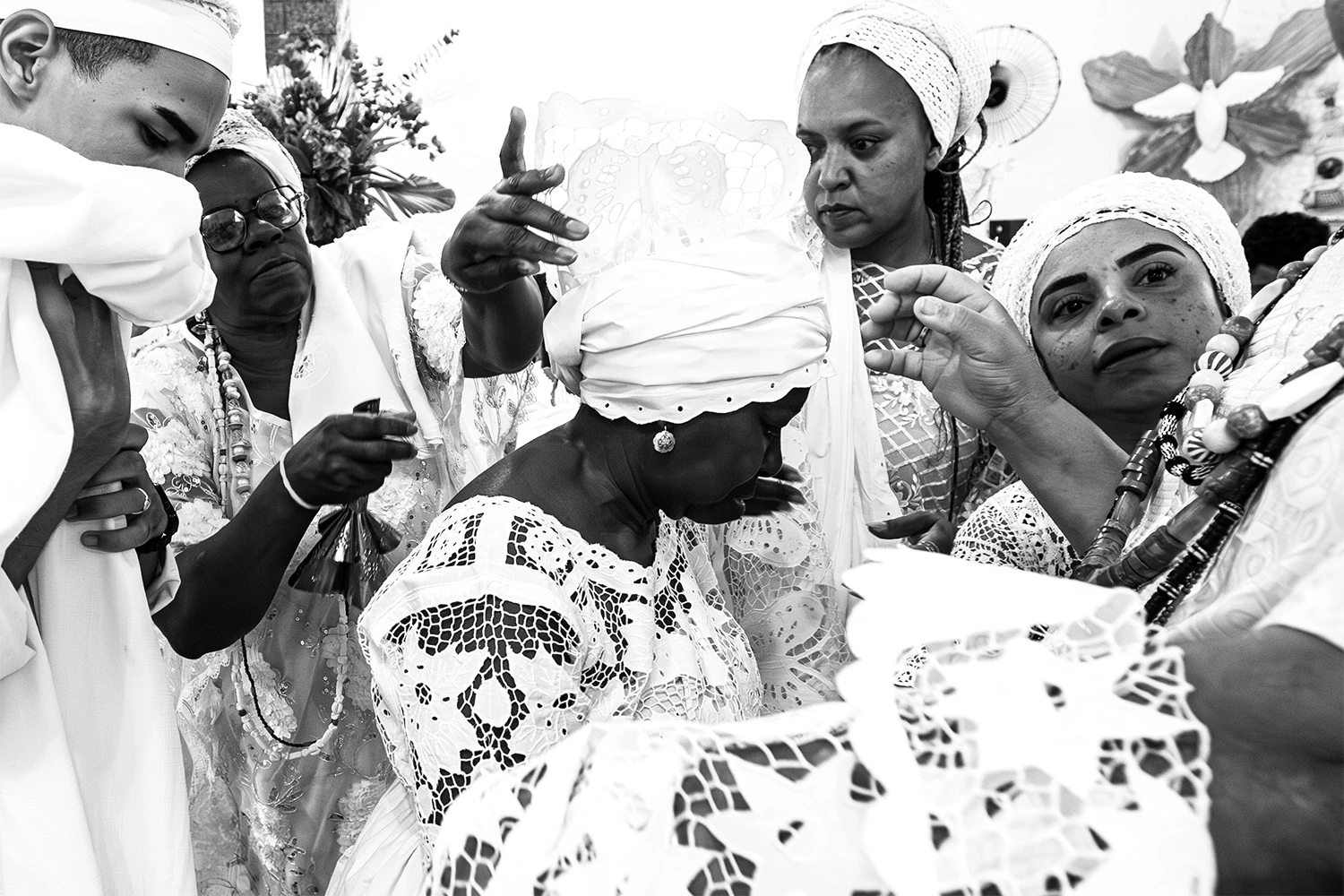
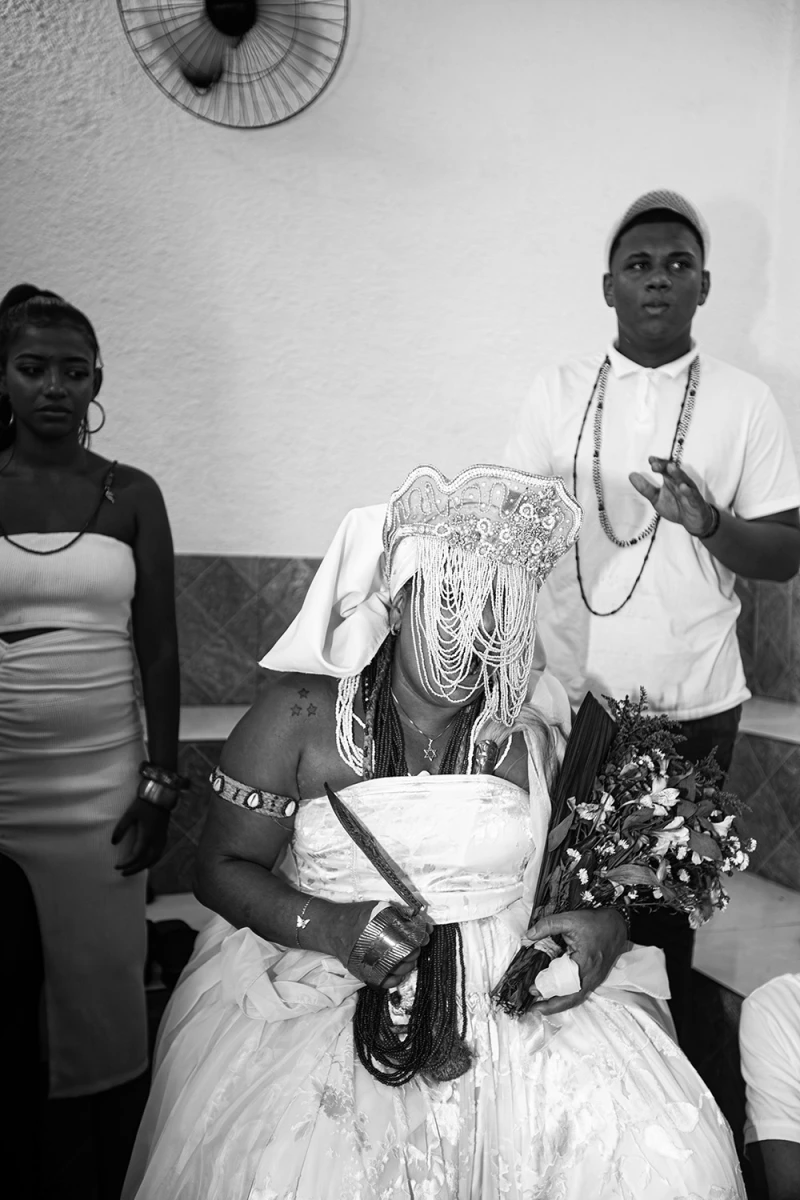
Her black-and-white images, however, reject the classic, comfortable symmetry of traditional religious photography. “I’m not trying to create beautiful, comforting images or sentimental postcard-style shots of a ritual,” says Simone. “My focus is on capturing the raw, compressed energy of that hall, and my composition is directly inspired by jazz.”
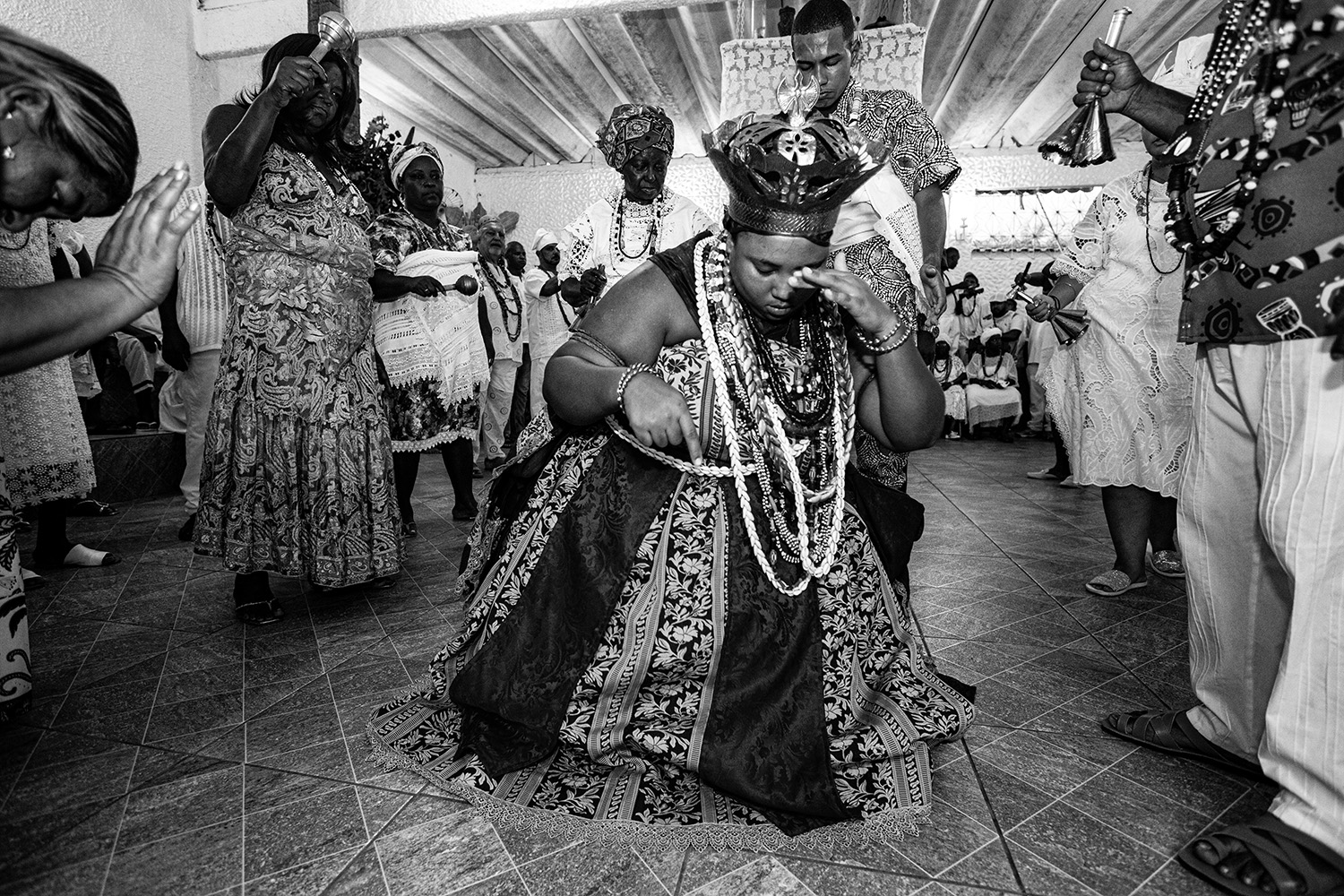
Operating on the principles of a jazz arrangement, Simone’s visual grammar relies on syncopation, unexpected spatial cuts, and polyrhythmic timing. The electrifying power of Barracão lies precisely in this non-classical friction. The camera behaves like an instrument of improvisation, cutting through space to capture an open and unstable network of bodies and gestures.
The photographer explains this fine line she has discovered between the musical genre that originated in the United States in the late 19th century and the Afro-Brazilian religion. “Jazz is based on African rhythms; it has a rhythm that we call polyrhythm, which we also find in the drumming of Candomblé, samba, and various African musical styles that use drums.”
Simone refers to the work of Pierre Verger (1902–1996) and explains how her work differs from that of the French photographer and ethnologist: “Verger’s images have a sentimental, romantic quality; there’s an asymmetry to everything. I wanted to break away from that; I specifically want the image to have a disorganized energy, like in jazz music, which is difficult to dance to because the pattern isn’t the same throughout the whole song,” she reflects.
Breaking away from her secular American upbringing was a crucial part of this artistic shift. “Growing up in North America means being conditioned to a very rigid, linear, and literal way of thinking,” explains Simone. “In this highly secularized environment, there is a veiled assumption that we are ‘above’ spirituality, treating it as an outdated concept.” Her perspective shifted in the 1990s, during her first encounters with Cuban Santería. “For almost thirty years, these cosmic structures have been part of my life, forcing me to have a much deeper perception of reality.”
The Unstable Sign: A Denser Reality
Candomblé functions as a hypercomplex system of knowledge, community values, and profound conceptions of human nature that completely elude a superficial and rationalist perspective. “It’s a kind of knowledge that’s impossible to ‘understand’ simply because someone has explained it to you logically,” observes Simone. “It needs to sink in; it has to seep into you slowly, like a cup of tea. You gradually become aware of it over time.”
The ceremonies, led by spiritual authorities such as the babalorixá (father of saints) or the ialorixá (mother of saints), unfold through oral traditions, complex chants in African languages, and precise ritual attire, in which structured white garments and torços (a white cloth wrapped around the head, similar to a turban) are worn. Within this realm, conventional social labels are completely dissolved.
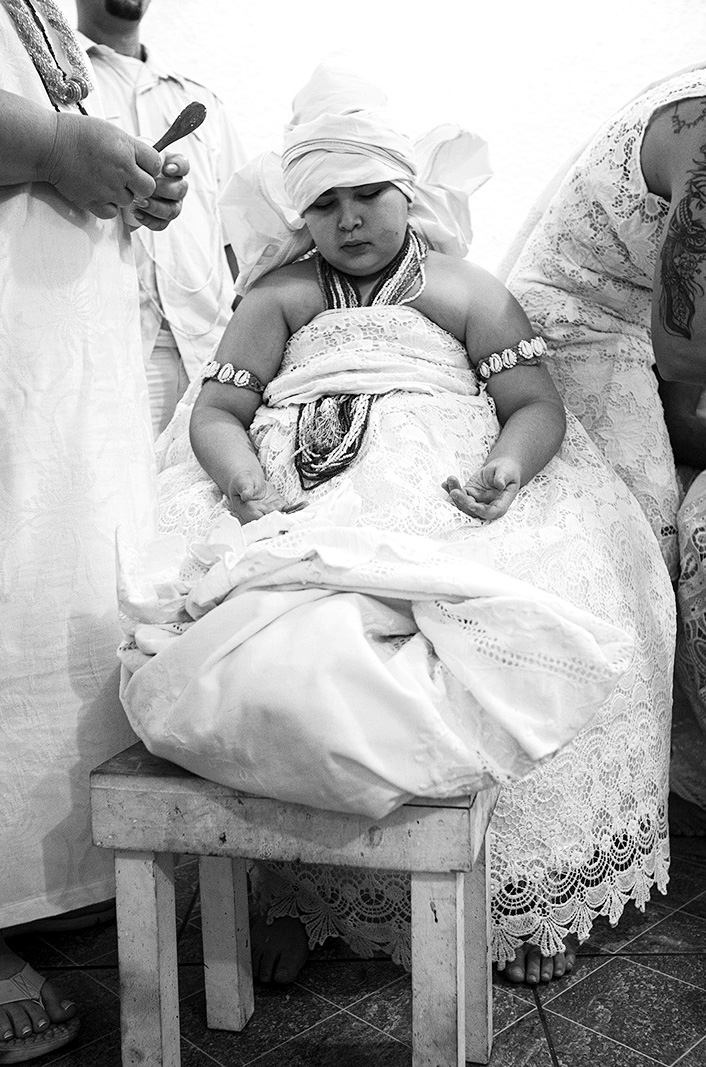
‘In North America, a person’s identity is directly linked to their job and how they earn a living; there is a rigid social hierarchy based on professional status,’ Simone explains. ‘But within the terreiro, none of these external corporate facades matter. People are defined by their presence.’ This sovereignty was forged through centuries of survival. Even after the abolition of slavery in Brazil in 1888, Candomblé continued to be criminalized and associated with witchcraft by an oppressive state. It was only legally recognized as a religion in 1946, and, until the mid-1970s, police authorization was required to hold ceremonies. “Historical repression forced the terreiros into a state of constant marginalization,” confirms historian Jairo Ribeiro da Silva.
Simone began this photo project in 2025, returning to the terreiro every month to document both public and private ceremonies. As the project rejects a linear, simplistic narrative, it remains an ongoing investigation. “This is not an experience that can be exhausted in just a few visits,” concludes Simone. “Every time I step into that hall, a new layer is revealed. It is a continuous and invisible learning process. The depth of this universe is immense, and I have many more decades of listening ahead of me.”