
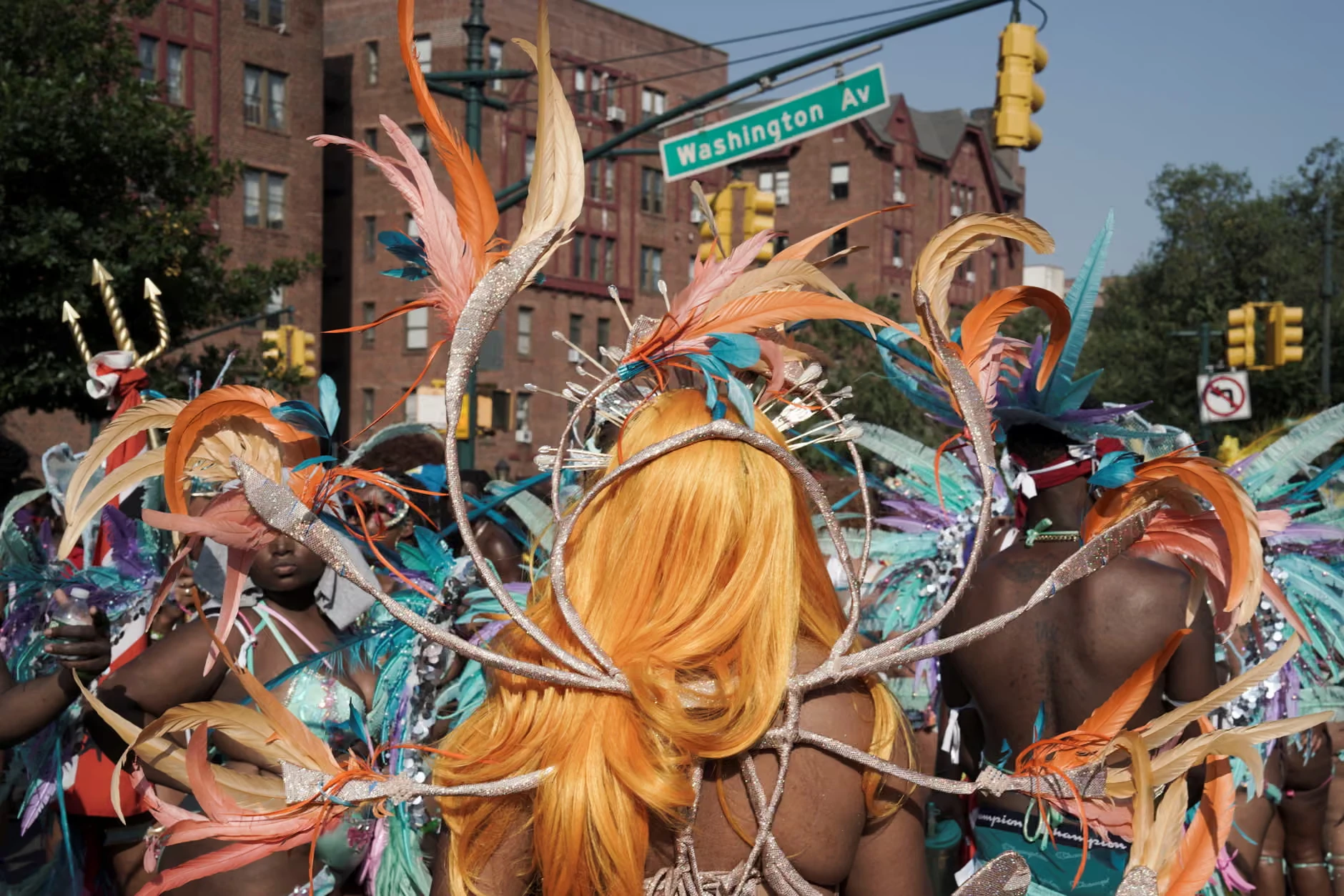
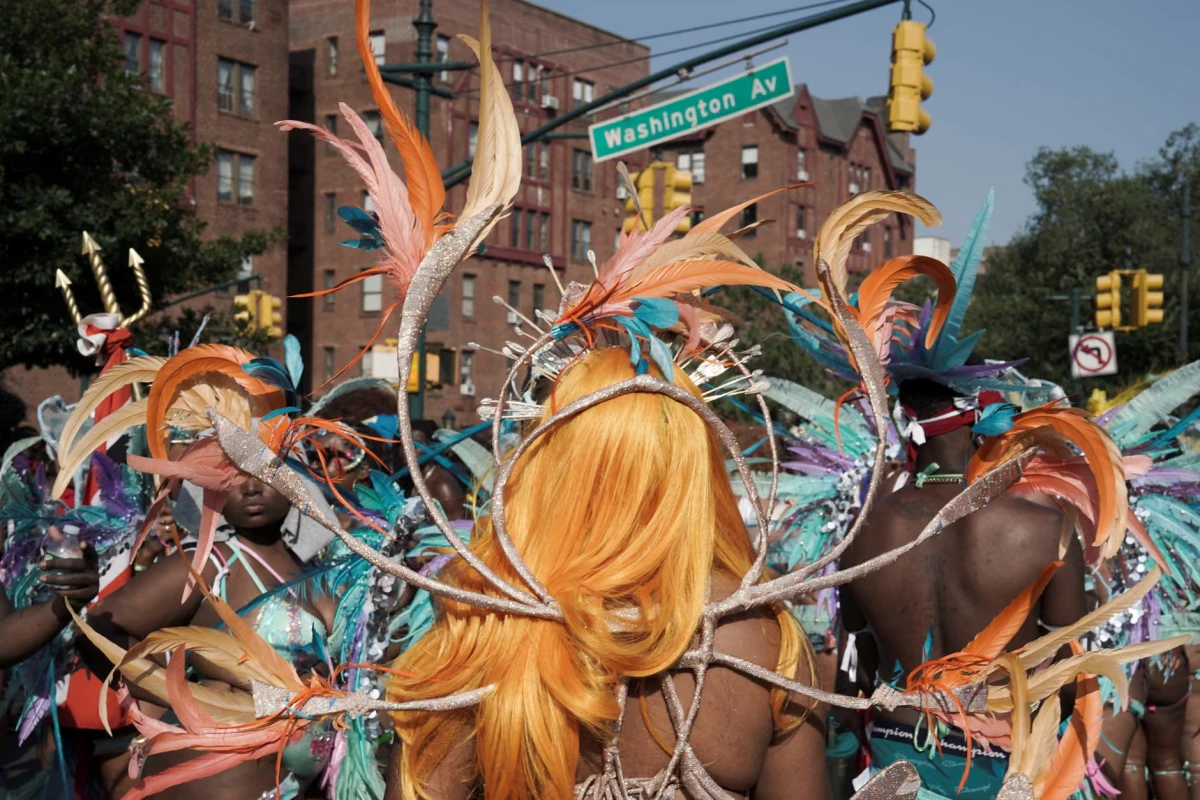
Caribbean Flows Part I: From the Caribbean to America, a Hidden Legacy

This article aims to explore the frequently overlooked history of the cultural, social and political influence of Afro-Caribbean communities on the United States, and more specifically on African-American communities. The article will be published in two parts. The first part, From the Caribbean to America, A Hidden Legacy, focuses on the history of slavery in North America, its abolition and US colonialism in the region — from the formulation of the Monroe Doctrine (1823) to the invasions of Grenada (1983) and Panama (1989). The second part, The Sound Behind American Hip Hop, examines the influence of Afro-Caribbean communities on contemporary music in greater detail, focusing on the scenes in Atlanta and Florida.
On the night of 11 August 1973, it was a typical New York summer night. It was Saturday, the weather was hot, and many young people across the United States were returning from movie theatres where, that very weekend, "American Graffiti" was premiering—the film that catapulted a young director named George Lucas into the national spotlight for the first time. While the Sunbelt and California were experiencing strong economic and population growth, the American Northeast — the region of industry and rust, and New York in particular — was facing a much more dire situation. The city was teetering on the brink of bankruptcy; unemployment rates were reaching unprecedented heights; stagflation was constant; and services and infrastructure were deteriorating. In some areas of the metropolis, municipal inefficiency was so severe that local criminal groups effectively held a monopoly on the use of force. One of the areas hardest hit by the city’s crisis was the South Bronx.
A few years earlier, the neighbourhood had been split in half by the massive Cross Bronx Expressway, a gargantuan highway project intended to bypass Manhattan’s heavy traffic, but which had had devastating repercussions for the Bronx communities, displacing and separating thousands of people, and acting as a catalyst for massive disinvestment in the area.
Ten years after the construction of the highway, the neighbourhood, now mainly inhabited by African Americans and families who had immigrated from the Caribbean and Latin America, evoked scenes that seemed straight out of a war report: destroyed buildings, raging fires in broad daylight, streets completely covered in debris and cars without wheels or roofs. However, on 11 August, amid all this misery, the South Bronx also offered an oasis, providing refuge for young people returning from the cinema. Until just a few years earlier, the apartment complex at 1520 Sedgwick Avenue had boasted splendid Art Deco architecture, but with the construction of the expressway it had become one of the many dilapidated public housing buildings in the area. A party was taking place on the second floor of the complex where a young DJ — who had arrived from Jamaica six years earlier and was known for his physical presence as Kool Herc — was spinning records on two turntables, stretching out the rhythmic tempo of the songs so that people could dance for longer on the dance floor.
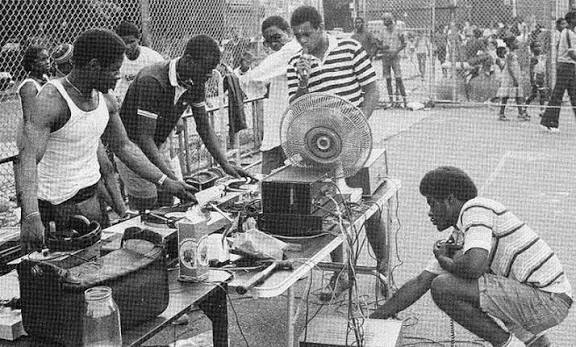
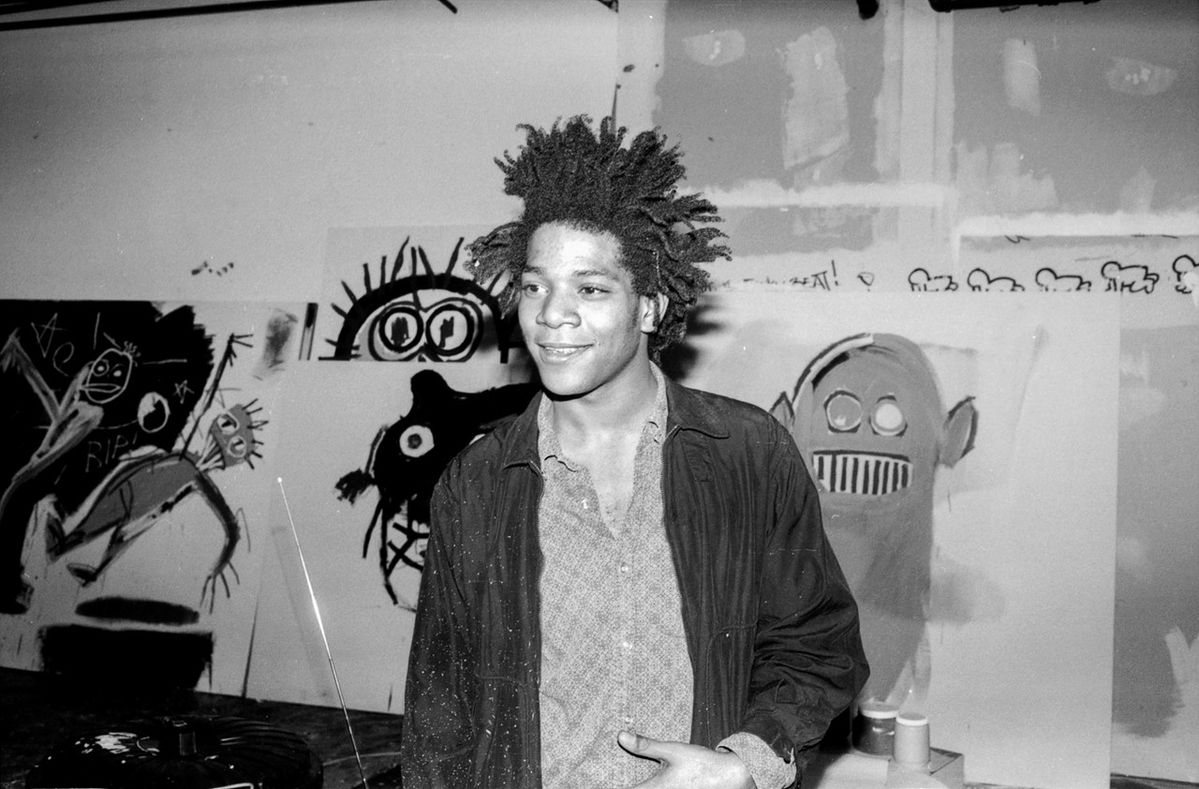
That night marked the symbolic birth of hip-hop. Over the following decade, another young New Yorker, this time of Haitian and Puertorican descent, would expand the scope of street culture to visual art. Emerging from the graffiti scene in 1970s New York, Jean-Michel Basquiat went on to exhibit his neo-expressionist paintings in the world’s largest and most prestigious galleries. This drew global attention to the issues of marginalisation and inequality plaguing the poorest communities where he himself had grown up. Not many years later, the first rap album to proudly assert its connection to immigrant culture emerged in the very same city that had given birth to that culture. “Wyclef Jean Presents The Carnival”, produced by the Haitian artist Wyclef Jean, is a musical ode to a cosmopolitan sound “carnival”, a bridge between the United States and Central America and a celebration of Jean's identity as an Afro-Caribbean immigrant. New York has thus given birth to and nurtured many children of the islands who have played an important role in American history and culture.
However, New York isn’t the only US city with a strong Caribbean presence, whose story in North America isn’t exclusively tied to urban centres. Born in Omaha, Nebraska, Malcolm X was raised by his mother: originally from Grenada, Louise Little was a staunch supporter of Marcus Garvey, a Jamaican who was a leading theorist of Black nationalism and Pan-Africanism. Garvey’s ideas strongly influenced the home environment in which Malcolm X grew up, contributing to his development as an activist and politician. Furthermore, Sydney Poitiers, who was born in Miami but raised in the Bahamas by a local family, was the first Black person to win an Oscar for Best Actor. The first African-American Attorney General and White House Press Secretary, Eric Holder and Karine Jean-Pierre respectively, have Barbadian and Haitian origins.
Then there are writers, athletes, politicians and artists. However, the history of Caribbean immigrants in the United States did not begin with 1970s art, 1960s activism, or films and books starring and written by Afro-Caribbean figures. This is a story that began long before that.
The Atlantic Slave Trade
According to estimates from the United Nations, between 12 and 20 million slaves were transported to the Americas via the Atlantic Slave Route over a period of around 400 years.
The Caribbean played a central role in the history of the “new world”. In fact, the first slaves transported via the Atlantic Slave Route arrived in the early 16th century on the island of Hispaniola, which is now divided between Haiti and the Dominican Republic but was then entirely under Spanish control. Over the next four centuries, 40% of the Africans who were enslaved and transported to the Western Hemisphere were unloaded on Caribbean islands, which soon became the world’s primary slave market. There, the slaves were treated inhumanely and saw their entire lives wasted away on sugar, cotton and coffee plantations, forming the foundation of the colonial economy while being progressively dehumanised and reduced to mere means of production. During the seventeenth century, European powers enacted strict laws governing the conditions of slaves in the colonies, limiting the rights of free Africans and extending the rights of white masters over their “properties”, thereby reinforcing the brutal social order in place. Barbados, which had meanwhile become an extremely wealthy colony thanks to slave labour, was the first to adopt the British Slave Code. It was soon adopted in all the British colonies in the Americas, closely followed by the French Code Noir. Together, these two sets of laws curtailed the remaining autonomy of slaves in the Caribbean.
However, in the context of the Enlightenment at the end of the 18th century, something had changed. In 1789, the slaves of the French colony of Saint-Domingue — the western half of the island of Hispaniola — rose up and forced the central government in Paris to abolish slavery, proclaiming the country’s independence under the name "Haiti", chosen to honour the indigenous inhabitants of the island before the arrival of Europeans. Thus, in 1804, the “Pearl of the Antilles”, which had imported more than half a million slaves during the previous century, became the world’s first Black republic, a feat achieved through the collective action of slaves weary of their inhumane conditions. While the events surrounding the French and Haitian Revolutions forced European states to gradually abolish slavery in the following years, the shadow of a new imperial power, the United States of America, began to loom over the Caribbean.
“All Men are Created Equal”
With these words, the United States had declared its independence in 1776 and had fought for eight long years to free itself from the grasp of British tyranny.
However, in the years following independence, the noble principles proclaimed by the Founding Fathers were disregarded. For the next hundred years, the country as a whole was a huge, heterogeneous group when it came to slavery. While the process of rejecting the practice gradually gained ground in the northern states, slavery nevertheless remained legal across the entire territory. The southern states, for example, whose agricultural economy was based on the belief that people of African descent were not human, remained steadfast in maintaining slavery. This internal contradiction (or hypocrisy) was equally evident in the country's relations with the rest of the world. Indeed, while the domestic debate over slavery raged—a topic on which the Washington elite often expressed critical views—a foreign policy was being launched that would profoundly shape the historical trajectory of the United States from that point forward, defining its warlike and imperialist character. Conceived by then-Secretary of State John Quincy Adams and formally articulated by President James Monroe in 1823, the Monroe Doctrine mandated the categorical rejection of any foreign interference in the Americas, pledging to defend the Western Hemisphere from possible colonial ambitions. Monroe aimed to put an end to the last remnants of European expansionism on the continent, at a time when European powers were desperately trying to maintain their influence in former slave-holding societies. Washington effectively sought to erect a wall — a sort of ante-litteram Iron Curtain — that Europeans were not to cross, lest they incur the wrath of the rising new power. With its eastern flank no longer under threat, the United States was free to adopt an interventionist policy in the Pacific and, above all, in what would become known as “its backyard” – Central and South America. The White House had staked its territory.
The Caribbean and Dollar Diplomacy
In the Caribbean heat, the abolition of slavery and the partial expulsion of Europeans had not turned out to be the blessings that had been hoped for. In fact, the United States had gradually expanded its control over certain countries. Specifically, throughout the 19th century, Washington engaged in a massive economic operation on the major islands and in some inland territories to exploit their resources. From the second half of the century onwards, several US companies began investing heavily in the Caribbean. The formula that entrepreneurs found the most effective involved the combined efforts of building railroads, such as the “Panama Railroad”, and establishing banana or sugar plantations: the only sections of the railroads that were served were those running from the plantation to the port and back. This created a highly efficient economic system that severely depleted Central America of its natural resources.
Interest in the region had grown steadily over the years, and so had predatory US capitalism, and when Cuban nationalist rebels rose up against the Spanish government in 1895, Washington — whose investments in Cuba amounted to an astronomical sum for the time (50 million) — chose to intervene to secure its capital in Cuba, driving out the Spanish and thereby securing control of Puerto Rico [1], Hawaii, the Philippines and Guam. However, when the United States decided to build an interoceanic canal to speed up trade through its newly acquired territories between the Pacific and Caribbean Seas, the Colombian government refused permission. The then-President, Theodore Roosevelt, subsequently unleashed a proxy war that led to Panama’s secession. Panama’s independence was contingent upon granting the United States control over the territory where the new canal would be built: the so-called Roosevelt Corollary was added to the Monroe Doctrine.
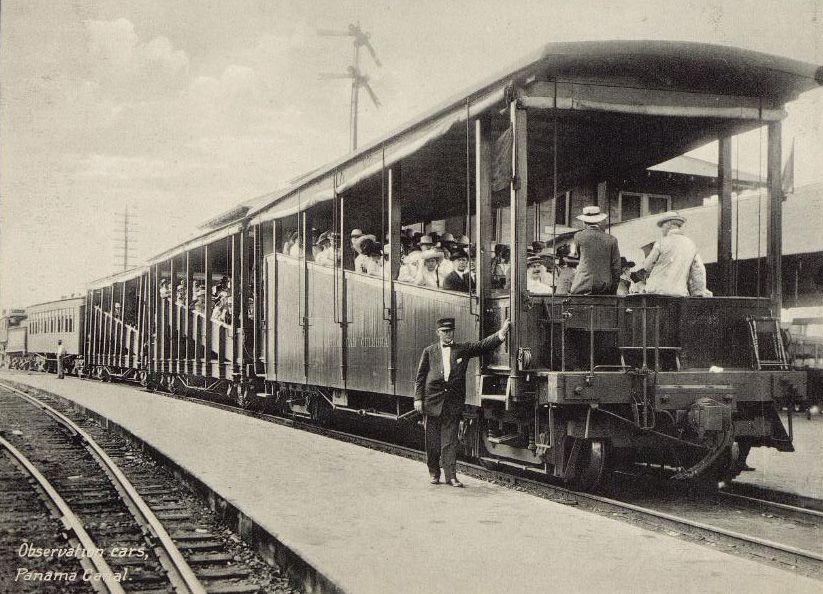
Roosevelt’s plan worked: during the decade that it took to build the Panama Canal, around 200,000 Afro-Caribbeans, primarily from Jamaica and Barbados, emigrated to the country to work on the project. However, what awaited them was the so-called “gold and silver roll”: a system of labour segregation whereby white employees from the United States were paid in gold-backed dollars, had access to housing and were entitled to holiday, while Afro-Caribbean employees were paid in locally-backed silver currency, which reduced their purchasing power and forced them to endure far worse working and living conditions. This type of neo-slavery system was perpetuated by US companies all across the Caribbean. In his book The Business of Empire: United Fruit, Race, and US Expansion in Central America (2011), historian Jason Colby describes the role of the United Fruit Company, a multinational that dominated the Caribbean fruit market: in short, when its Black workforce resisted white American authority, the firm adopted a strategy of labor division by recruiting Hispanic migrants.
United Fruit then relied on local dictators and the protection of the US government to avoid legal repercussions for its actions. However, United Fruit and the “gold and silver roll” were merely the tip of the iceberg of U.S. colonialism in the region. During those same years, in fact, appalling living conditions forced farmers on various islands, particularly in Puerto Rico, to sell their land to wealthy US companies established in the region. This allowed the companies to continue expanding their plantations and profits while the former local landowners became mere peasants. The devastating consequences of so-called Dollar Diplomacy on the Caribbean region and its people triggered an initial diaspora of Afro-Caribbean populations to the United States. Starting in the 1960s, the wave of decolonisation also reached the Caribbean, leading to the long-awaited independence of countries such as Jamaica, Trinidad and Tobago, Barbados, Guyana, the Bahamas and Grenada.
However, even over the second half of the 20th century, the realist approach that guided US foreign policy prevented Caribbean states from achieving true economic emancipation: the power imbalance between them and their northern neighbour was only partially mitigated by their formal independence. Meanwhile, direct interventions in the Caribbean continued, both militarily — for example, Operation Urgent Fury led to the invasion of Grenada in 1983 — and economically, with the launch of the Caribbean Basin Initiative (CBI) in 1982. Although presented as a development plan, the CBI ultimately intensified competition and fuelled economic dependence on the US, failing to resolve the structural problems of underdevelopment and consequently encouraging migration northwards. Given its proximity and easily accessible location for Washington, the Caribbean had already been the scene of American domination for a long time before the United States emerged as the sole hegemonic power on the global political stage with the end of the Cold War.
Bibliography
Batalova, Jeanne, and Rutland, Allison (2025), Caribbean Immigrants in the United States, migrationpolicy.org.
Colby, Jason M. (2011), The Business of Empire. United Fruit, Race, and U.S. Expansion in Central America, Cornell University Press, Ithaca (NY).
Colby, Jason M. (2017), The United States and the Caribbean, 1877–1920, Gilder Lehrman Institute of American History.
Lewis, Thomas Tandy (2022), Transatlantic Slave Trade Begins, Ebsco.
Missouri Sherman-Peter, Angela (2022), The Legacy of Slavery and the Journey Towards Justice, UN Chronicles.
Payne, Anthony (2000), Rethinking United States-Caribbean Relations: Towards a New Mode of Trans-territorial Governance, Review of International Studies, 26.1.
Tavernier, LaToya Asantelle (2015), On the Midnight Train To Georgia: Afro-Caribbeans and the New Great Migration to Atlanta, Cuny Academic Works.
[1] Puerto Rico is still organised as an unincorporated territory of the United States: despite having US citizenship, Puerto Ricans cannot vote in U.S. presidential elections, unless they reside in one the 50 US States or in the District of Columbia. Puerto Rico does not have voting representation in the U.S. Congress; instead, it elects one Resident Commissioner to the U.S. House of Representatives, who cannot vote on final passage of legislation on the House floor.