
The Urbanism of Hip Hop. How the Segregation of the Bronx Changed Music

Urban planning does not simply organize space. It also shapes the conditions through which cultures emerge. In his latest article, Cesare Alemanni explores the relationship between segregation, urban development, and the birth of hip hop. Starting with the legacy of Robert Moses, the architect of modern New York, the piece traces how highways, public disinvestment, and housing policies transformed entire neighborhoods and, in doing so, helped create the social landscape from which rap emerged. From the Cross Bronx Expressway to The Message, from Queensbridge to Compton, the article examines how Black music has documented, interpreted, and transformed the geography of American inequality.
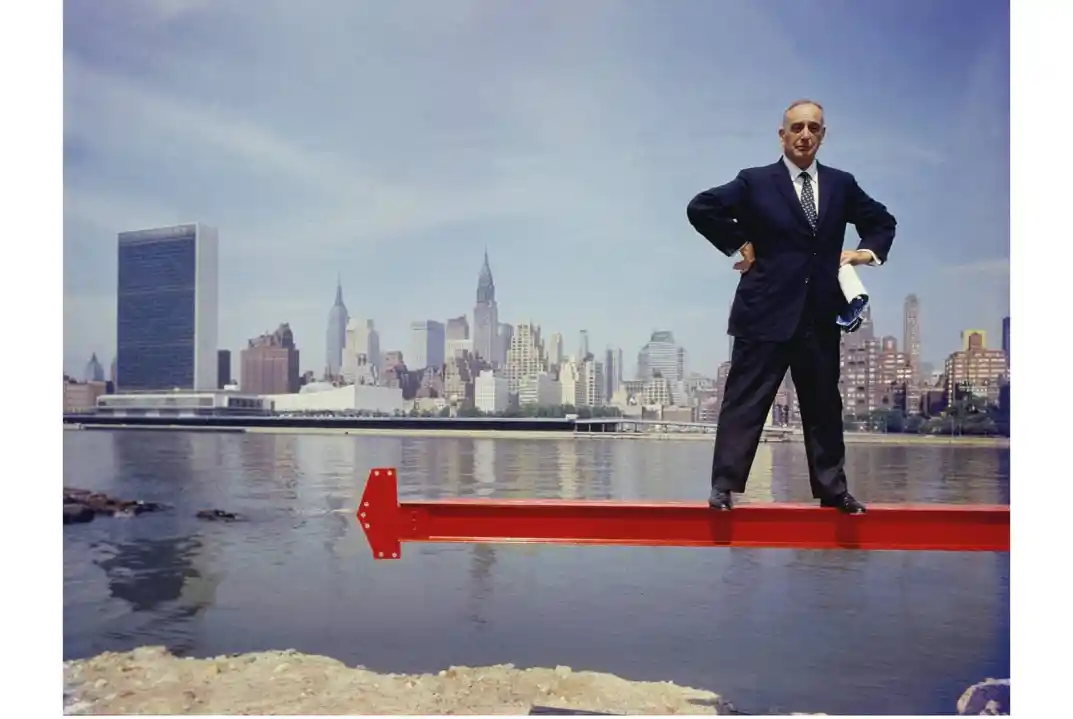
Robert Moses is the most influential man in 20th century America whom you have (perhaps) never heard of. Not least because he helped shape the face of modern New York with an urban planning vision that blended progressive ideas with prejudice, classism and populism. While the previous chapter of this series discussed how racial prejudices were incorporated — and “rationalised” — into the real estate market and the American credit system, examining Robert Moses means exploring how these same prejudices became the guiding principles for developing the city that symbolises the Western 20th century.
But who was Robert Moses?
The long answer is that Moses probably embodied the purest form of bureaucratic (and technocratic) power ever produced by American democracy. He never served as mayor of New York, nor governor of New York State, and never set foot in the White House. Yet between the 1930s and the 1960s, he exerted more influence over the city's transformation than any elected official. This was all thanks to his control over a system of public authorities and agencies that allowed him to decide almost unilaterally where to build bridges, tunnels, beaches, parks, public housing projects and, above all, highways. Moses believed strongly in the automobile (and not at all in public transportation). He believed that the free flow of private traffic was fundamental to the socio-economic efficiency of contemporary cities. Above all, he believed that it was necessary to sacrifice almost anything for this goal. The problem was that, in his mind, this “anything” often coincided with the quality of life of poor people and racial minorities.
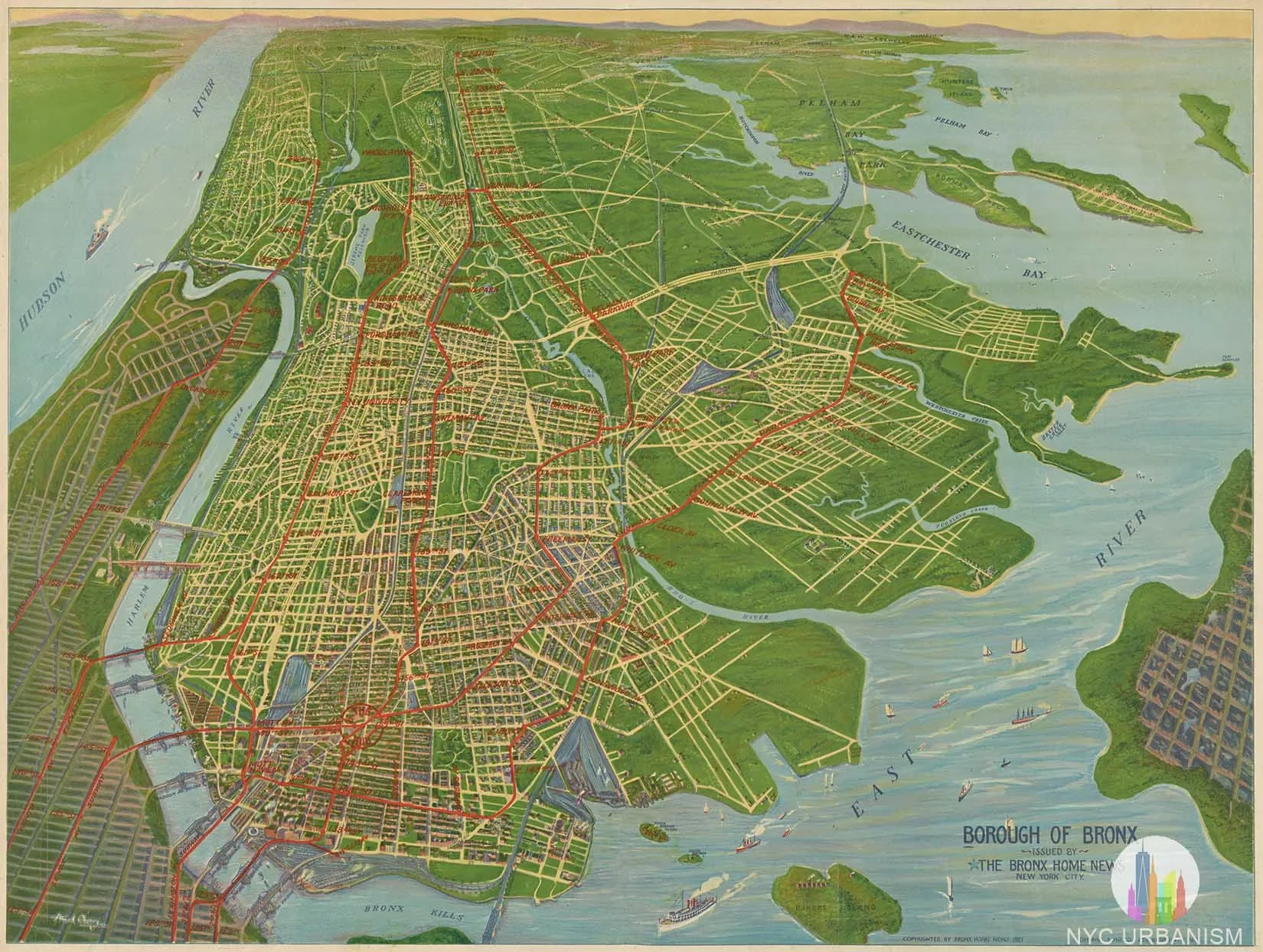
The most emblematic example of this mindset is the Cross Bronx Expressway, the elevated highway which still cuts through the Bronx from east to west. Between the 1940s and 1960s, Moses had thousands of apartments demolished and tens of thousands of people displaced to build it. He was perfectly aware that there were routes less destructive to the social fabric, but he deliberately chose to cut through the Bronx because it was the cheapest, most direct, and also politically convenient route: it passed through low-income areas, inhabited mainly by ethnic and racial minorities, and thus with limited capacity for political resistance. The result was that, within a few years, vast swathes of the South Bronx had become trapped in a spiral of impoverishment, disinvestment and urban decay. Businesses closed, public services dwindled, the tax base shrank and buildings fell into disrepair. By the 1970s, the Bronx had become the very embodiment of urban collapse in American imagery.
It was in this scenario that hip hop was born.
When DJ Kool Herc organised the first block parties in the Bronx in the early 1970s, New York City had progressively withdrawn investments, social infrastructure and economic prospects from entire Black and Latino communities. In this sense, rap has been inseparable from the geography of American segregation since its inception. It did not emerge 'in spite of' urban decay, but within a new urban ecology produced by residential segregation, Moses's highways and public disinvestment. While modernist urban planning envisioned certain neighbourhoods as transit zones or containment areas for poverty, hip hop transformed these "non-places" into "places". However, for most of the 1970s, rap retained a predominantly festive character. It was the music of parties, competitions, dancing and performances. The lyrics mainly focused on technical skill, style, and charisma. The neighbourhood represented the backdrop, not the main focus. Meanwhile, the material conditions surrounding that music continued to deteriorate. It was only a matter of time before the urban landscape became an integral part of rap's language.
This happened in 1982 with the release of The Message. The importance of this song cannot be overstated. In The Message, the neighbourhood is no longer merely the setting for events: it is the machine which produces anxiety, violence, alienation and psychological pressure. The song's imagery is deeply material: broken glass, public housing stairwells, suffocating heat, filth, noise, crowds, police, rats and crumbling buildings. The song portrays urban poverty without any sociological abstraction. Instead, it conveys the physical sensation of living in an environment designed to compress and divide. The Message introduces the idea that neighbourhoods are forces that directly shape emotions, behaviours, and existential possibilities, rather than neutral backdrops to social life. The reality of segregated neighbourhoods is no longer just an economic and demographic fact, but an experience and a mental landscape.
Following the release of The Message, the very same peripheral areas that American urban planners had treated for decades as suburbs to be contained, traversed or simply abandoned suddenly began to occupy the centre of the American cultural imagery — and subsequently the global one — through rap. It's not just the Bronx anymore. Every American city now has its own symbolic geography, consisting of housing projects, intersections, avenues, ZIP codes and residential blocks that are instantly recognisable far beyond local boundaries.
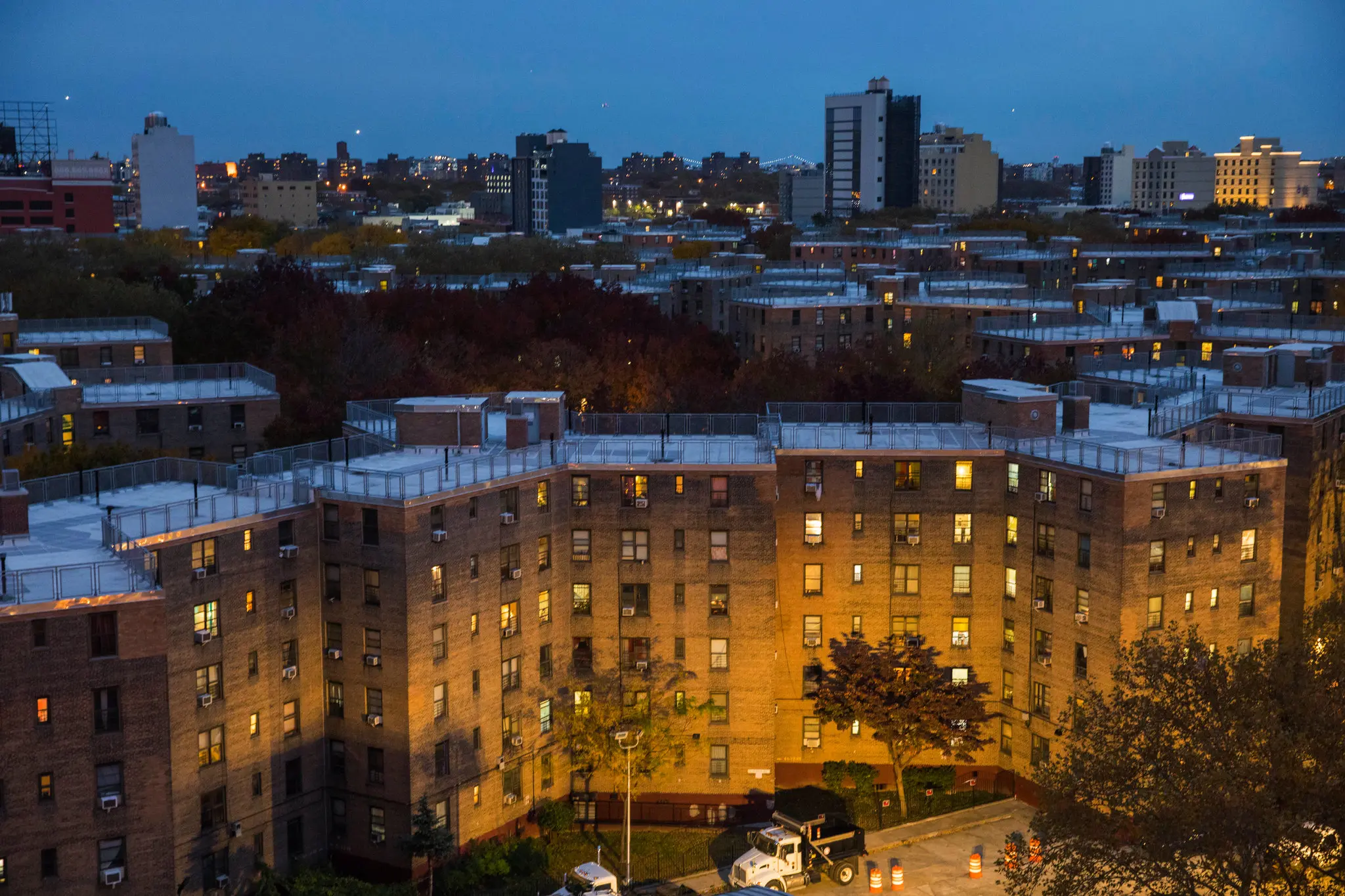
In Queens, for instance, the Queensbridge Houses — the largest public housing complex in North America — become, through rap, much more than just a housing project. In Nas's and Mobb Deep's albums, Queensbridge appears as a closed ecosystem, almost a city within a city, governed by social codes, informal economies and levels of violence that seem to follow rules independent of the rest of New York. Fire escapes and building hallways, basketball courts and rooftops: every architectural element becomes an integral part of rap’s narrative language.
Something very similar happened on the West Coast in Compton and South Central Los Angeles. Here, too, urban geography is not just a backdrop. It is the result of decades of residential segregation, discriminatory policies, the white suburbanisation, and the militarisation of the police. When N.W.A. depicted Compton in the late '80s, they were portraying a territory that had already been profoundly affected by economic and infrastructural isolation. A territory that, thanks to rap, ceased to be invisible.
This is perhaps the greatest cultural revolution of 1990s hip-hop: the transformation of urban invisibility into media hypervisibility. For decades, Black American neighbourhoods had primarily been represented through the external gaze of institutions, crime reporting or urban sociology. Rap breaks this pattern. For the first time, the residents themselves constructed the public narrative of these areas, dictating the vocabulary, aesthetics and narrative perspective. The “hood” simultaneously becomes both a real-life experience and a global cultural trope. Saying you’re from Queensbridge, Compton or Bedford–Stuyvesant no longer simply indicates where you live; it signifies a particular kind of authenticity and a particular relationship with the street, violence, poverty and urban survival. The territory became symbolic capital.
Naturally, this transformation also has a deep ambiguity. While rap brings globally recognised attention to historically marginalised neighbourhoods, those same communities often continue to live in conditions of segregation and neglect. It is a perverse mechanism: material marginalisation generates cultural authenticity, which generates symbolic desirability, which generates economic value. However, the profits from this process of valorisation are not reinvested in the places that generated them. Instead, they are extracted elsewhere by the music, fashion and “lifestyle” industries.
However, there is a point of no return. This is when the level of socio-economic devastation and alienation produced by the mechanisms of segregation becomes so great that it can no longer generate a specific symbolic value.
Trap and drill music and artists address this "compound" fracture. In the lyrics of rappers such as Future, Young Thug and Chief Keef, neighbourhoods are often portrayed as places of exhaustion, having long since ceased to be merely poor or violent and now being abandoned by any sense of a collective future. The industries that once provided jobs disappeared decades ago. The state is present almost exclusively in the form of the police, prisons or surveillance.
The urban landscape is changing as well. While classic hip-hop depicted public spaces such as project courtyards, playgrounds and block parties, trap music seems to depict far more isolated spaces such as car parks, petrol stations, motels, rundown shopping centres, dilapidated houses converted into drug dens (known as trap houses), and outskirts without a centre.
The difference is not just aesthetic. It’s urbanistic. The city portrayed by trap is a post-industrial city where segregation no longer produces stable forms of territorial community. Despite all their social violence, the huge, modernist housing projects were still dense structures: they concentrated population, relations, conflicts, informal economies. In contrast, the outskirts of trap and drill belong to a later stage of American urban capitalism: that of dispersion, of extreme precarity and absolute social atomisation. Much of the trap visual aesthetic is formed by liminal “non-places”: highways, flyovers, drive-throughs, petrol stations, neon-illuminated car parks. It's as if the culture that emerged in the neighbourhoods destroyed by Moses’ highways ended up fully internalising that infrastructural landscape decades later.