
Is Grime Part of Hip-Hop? Tracing the Cultural Lineages Between Grime, Hip-Hop, and Black British Music


Grime did not emerge in a vacuum. Born in the estates of London, it carries echoes of hip hop, sound system culture, jungle, and the lived realities of Black Britain. But where does grime sit within the broader Black Atlantic musical tradition, and can it be considered part of hip hop’s extended family? In this interview, writer and journalist Aniefiok Ekpoudom joins Naomi Kelechi Di Meo and Gabriel Seroussi to reflect on the cultural, political, and sonic connections linking grime, British rap, and hip hop beyond rigid genre boundaries. Drawing on his work documenting contemporary Britain, the conversation explores how music, migration, class, and Black British identity have shaped the evolution of these genres.
The question of whether grime belongs to hip hop is not simply a matter of genre classification. It is a question about cultural lineage, power, and recognition: who gets to define hip hop, whose histories are legitimised within it, and how Black diasporic cultures travel, transform, and root themselves in different national contexts. Asking whether grime is “part of” hip hop means interrogating how Black British cultural production has been positioned in relation to African American traditions, both within Britain and on a global stage.
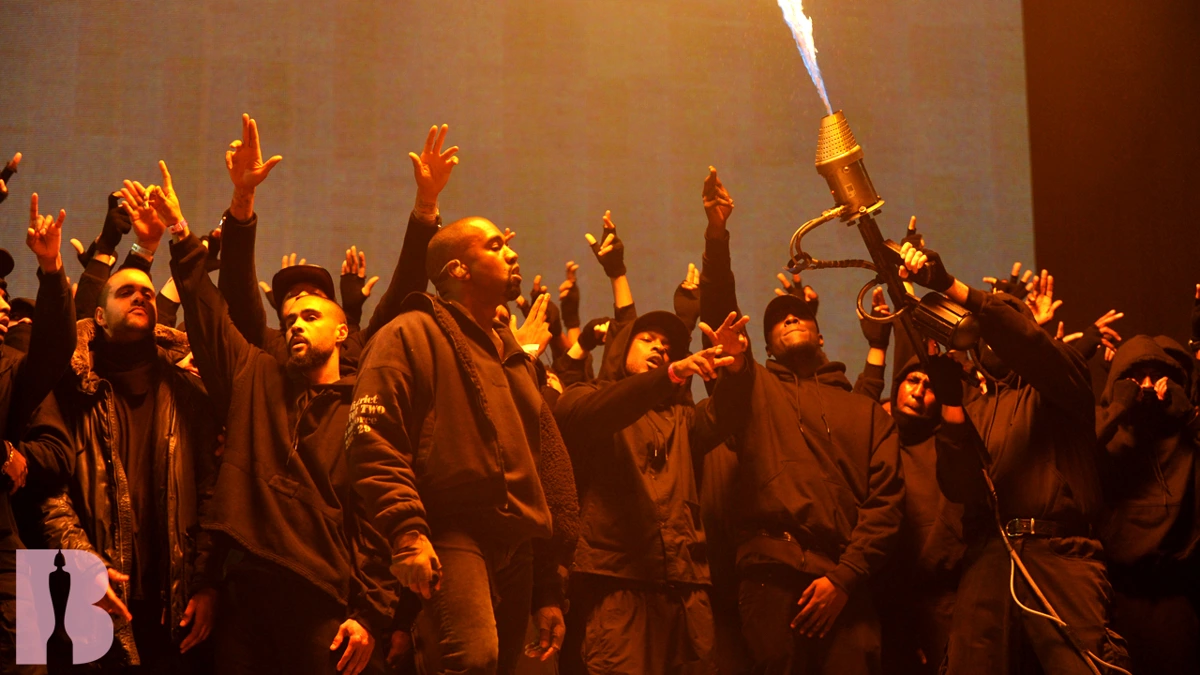
At the 2015 BRIT Awards, as he premiered his track All Day, Kanye West was flanked by what resembled a Greek chorus: more than forty men dressed in black tracksuits and hoodies. Among them, attentive viewers quickly recognised some of the most prominent figures in UK rap and grime at the time—Skepta, Jammer, Shorty, Krept and Konan, Novelist, Stormzy, and Fekky. For many, the moment felt celebratory: a symbolic takeover of one of Britain’s most prestigious stages by artists from a scene that had long been overlooked, marginalised, or softened by the British music industry. Yet the irony was unmistakable. None of those MCs would likely have been granted access to that stage on their own terms. The performance underscored a long-standing belief that British music operates far from a meritocracy, and that hip hop—and Black music more broadly—has historically found greater recognition and opportunity in the United States than in the UK. The scene’s visibility was mediated, authorised, and framed through an American superstar highlighting how proximity to U.S. hip hop has often functioned as a gatekeeping mechanism for Black British music.
A decade later, the cultural landscape appears fundamentally altered. Black British culture, and UK rap more broadly, has reached an unprecedented level of global visibility and influence. Artists such as Central Cee now rank among the most influential rappers worldwide, potentially marking a historic shift in the global narrative of hip hop. Drill has evolved into one of the most widely circulated rap genres internationally, while figures like Slawn have emerged as key protagonists within global urban culture. This transformation reveals much about changing power relations in the consumption of popular culture, particularly within rap music, and about evolving perceptions of Blackness on a global stage.
Yet this newfound visibility raises unresolved questions. Does global recognition translate into cultural autonomy, or does it risk flattening local histories into a broader, market-friendly idea of hip hop? And what happens to genres like grime, whose roots are deeply tied to specific Black British social and sonic conditions, when they circulate globally under the label of “rap”?
Despite this global reach, British rap—and grime in particular—remains an autochthonous musical form. It emerged from the specific historical and social experiences of Black communities in Britain, shaped by local cultural practices and sustained through ongoing dialogue with other Afro-diasporic traditions. Central to its development has been a continuous exchange with both African American and Caribbean cultural worlds. But not subordinated to it.
Understanding these dynamics requires listening not only to the music itself, but to the social worlds, migrations, and everyday lives that produced it. These continuities, frictions, and cross-pollinations are examined through the work of Aniefiok Ekpoudom, a writer and journalist from South London who documents the voices and communities of contemporary Britain. His book Where We Come From: Rap, Home and Hope in Modern Britain, published by Faber & Faber in 2024, offers a social history of British rap that situates the genre at the intersection of music, migration, class, and Black British identity.
How has the growing global visibility of UK rap reshaped the way Black British culture is perceived, both at home and internationally?
“I’d say the turning point was around 2015. Just before that, you could really feel momentum building in the UK, especially around grime. Grime was one of the first movements to push Black British music closer to the mainstream. Even then, though, these genres were still largely underground. That moment felt like the first major eruption of Black British music and MC culture into the heart of mainstream British culture. What made it especially striking was the amount of resistance and pushback it faced—something that’s been part of MC culture in the UK for decades. In that sense, it wasn’t new, but it was very visible.
Once grime entered the mainstream, a whole ecosystem of sounds came with it. UK rap gained new prominence, the Afro-swing wave took off, and then drill followed soon after. It was genuinely a golden period for British music, and especially for Black British music, because so many subgenres were peaking at the same time. What also mattered was the role of social media and the internet. This music was no longer confined to specific Black or working-class communities. It spread across the UK and began shaping how people dressed, how they spoke, and how they expressed themselves.
In many ways, this period exported a completely different idea of what Britain looks like. Before that, when I spoke to friends in the US, their image of Britain was still very traditional—tea, crumpets, the royal family, period dramas like Downton Abbey. That was the version of Britain being exported culturally. But the music, alongside shows like Top Boy that were deeply rooted in that same cultural reality, revealed a side of the UK that many people globally—especially in America—hadn’t really seen before.
It also helped people in the US realise how close the cultures actually are. American artists had been touring the UK for years. A$AP Rocky spent time in London, and those organic relationships led to collaborations. And it hasn’t just been about the US. The connection with Canada has been fascinating too—it almost feels like discovering a long-lost sibling. There are so many similarities: the Caribbean and African influences, the shared slang, the overlapping cultural references. Drake played a major role in that visibility, but the connection runs deeper than any one artist. And now, you can see these influences and exchanges spreading globally, well beyond the UK and North America.”
Some of the tensions and contradictions that Black British music is facing today were experienced earlier by Black American music, arguably the first to be globally popularized and commercialized. However, these are very different social, cultural, and political histories. What interests us most are the cultural relationships between these worlds. How have Black British and Black American communities influenced one another, politically, socially, and culturally?
“I see British MC culture as distinct from American hip hop, even though American hip hop has obviously been one of its most important influences since the 1970s, 80s, and 90s. British MC culture feels more like a blend: Caribbean sound system culture from Jamaica, British dance and club culture, and American rap all mixed together. Then, from the late 80s and 90s onwards, as more African migrants arrived in the UK particularly from West and East Africa you started to see those influences increasingly shape the music. Over the past 10 to 15 years, that influence has become especially visible.
That said, the US has always played a huge role. For a long time, Black British artists weren’t recognised or represented in mainstream British media whether in music, television, or film so people naturally looked to the US as a reference point. You could watch Black American TV shows, listen to hip hop, and see representations of Black life that simply didn’t exist in the UK’s mainstream. And because of the shared language, it felt accessible. While Black British identity was still being formed and articulated, it made sense to look across the Atlantic and adapt some of those cultural templates. You can hear that influence clearly in the music, especially in the shift from grime to UK rap. Artists who had been grime MCs began slowing things down, focusing more on storytelling in ways that grime didn’t always allow. That transition shows a very direct American influence.
At the same time, there are important differences. A lot of American hip hop is rooted in the idea of the American Dream aspiration, upward mobility, “get rich or die trying.” That mentality is deeply woven into the music. Britain, as a country, is very different. Culturally, it’s often more reserved, even resistant, to overt ambition. But that mindset doesn’t always align with the experiences of immigrants. People who moved from Jamaica, Nigeria, or elsewhere to start a new life often carry a strong sense of aspiration with them. Speaking personally, as someone who is half Nigerian, I see that clearly. Nigerians are often extremely ambitious and driven, and that energy doesn’t always sit comfortably within British cultural norms. In that sense, it’s understandable that people looked to the US not just musically, but culturally as a place where ambition, success, and self-belief were more openly expressed and validated.”
In your book, you trace these connections back to earlier generations, starting with the Windrush generation. Even within a limited time frame, could you outline a kind of genealogy of UK rap? Which musical genres and cultural movements have been most influential in shaping it?
“One of the biggest distinctions I always make between the US and the UK is how rap is categorised and understood. In the US, hip hop has always functioned as an umbrella term. Even though there have been many different regional sounds and waves - West Coast rap, Southern rap, Atlanta, jazz-inflected rap - everything still falls under the single banner of hip hop. The sounds may differ, but they’re understood as part of one genre. In the UK, things developed differently. Here, you have a series of interconnected sounds, but each one has been given a distinct name. From the outside, they don’t appear to belong to a single lineage, even though they clearly feed into one another. Sound system culture, jungle, garage, grime, UK rap - they’re all intimately connected, but there isn’t one overarching label that ties them together in the way hip hop does in the US.
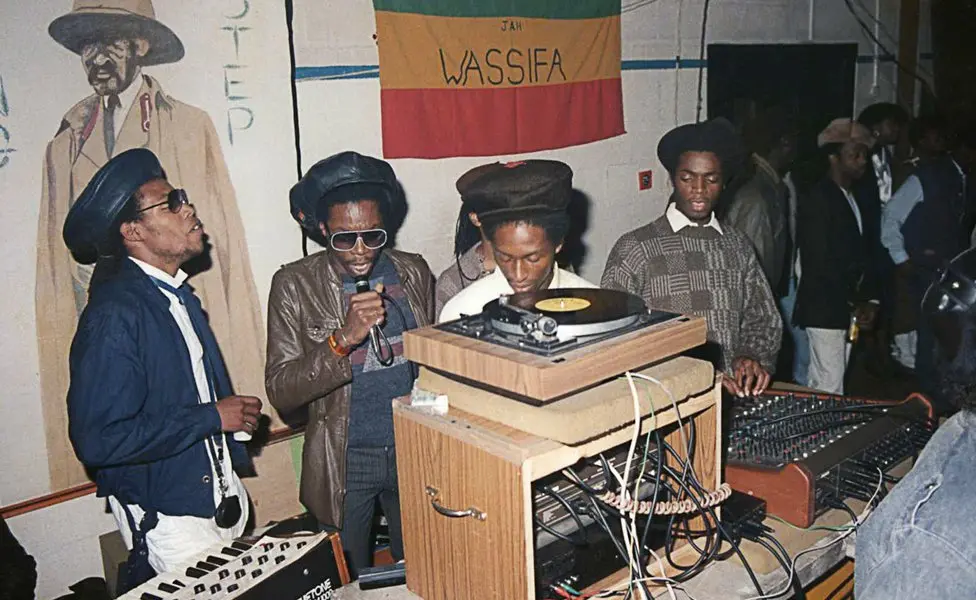
It all starts with sound system culture, which arrived with Caribbean migration in the 1950s and 60s, particularly from Jamaica. People brought the practice of building sound systems with them, and that became the foundation for a huge amount of Black British music and MC culture. Sound system culture is inherently live: it’s about parties, dances, clashes, and community gatherings. Events like Carnival are central to that tradition. From that live environment, you naturally get the emergence of the MC originally referred to as DJs or “toasters” speaking over records. In the UK, you had artists like Smiley Culture, who wouldn’t have been called rappers at the time but were essentially MCs performing over reggae instrumentals. They were talking about the lived experience of first- and second-generation Caribbean communities in London. Smiley Culture’s track Cockney Translation is a great example: it highlights how Black British communities spoke differently from white working-class East Londoners, translating everyday language into a distinctly Caribbean-British expression. That record was one of the first to articulate a Black British voice and identity through music. Even if he wasn’t labelled a rapper, he helped lay the groundwork for British rap.
As time went on, sound system culture laid the foundation for jungle, garage, and eventually grime. You can hear that lineage clearly in grime: the clash culture, the battling, the emphasis on live performance, pirate radio - all of that comes directly from sound system traditions. What changed over time was the influence of American rap, particularly in the move toward structured songs. Artists began crafting three-minute tracks, narratives, and albums, not just live performances or freestyles. That’s where the US influence becomes more visible.
But the genealogy of British rap still comes from sound systems and British club culture. Even with UK drill which is probably the first British sound where rap itself is as dominant an influence as sound system culture you can still hear that legacy. The aggression, the delivery, the way MCs attack the instrumental - all reflect decades of British MC tradition. Even the faster BPMs of UK drill compared to US drill reflect that intensity and live-performance energy that’s been present since jungle and grime. You still see this tradition today in platforms like freestyle cyphers and end-of-year sessions. Freestyling remains central, mixtapes still matter, and live energy is still prized. That emphasis on being able to perform in real time to have your bars ready in a live setting is a throughline across all these genres.
There’s also a strong generational element. When you trace artists’ backgrounds, you often find that their parents or relatives were involved in earlier scenes: garage MCs, jungle MCs, sound system operators. Some grime artists came up through jungle; others had family members running sound systems at Carnival. Even among drill artists, there are cases where their parents were MCs or musicians. The culture is often passed down, not just musically, but socially and communally.”
Focusing more specifically on grime, I’d like to explore its origins in greater depth. In the book, you describe how a pioneering group like So Solid Crew represented the first generation of British-Caribbean artists whose parents were born and raised in the UK, and how they were shaped by distinctly Black British institutions—from pirate radio stations to sound system culture. Could you expand on how Caribbean culture, in particular, influenced grime, especially in ways that echo the early development of American hip hop?
“Yeah, absolutely. Caribbean culture has been hugely influential, both in the UK and globally. In Britain especially, Caribbean culture and Jamaican culture in particular has become deeply embedded in mainstream life. You see it in food, in music, and especially in language. What people often describe as Multicultural London English or Black British English is heavily shaped by Caribbean vocabulary and rhythms, particularly Jamaican patois. What’s fascinating is how widespread that influence is. You can go to almost any town in the UK and hear young people speaking in that dialect - Black, white, Asian, regardless of background - even in places where there are very few Black residents. That speaks to how long this influence has been developing and how deeply it’s travelled. Social media has only accelerated that process, but this cultural exchange has been happening for decades.
There’s also the broader point that Black music has historically been associated with cool, for better or worse. You saw that in the US with how hip hop moved from Black communities into the mainstream and became attractive to white audiences. A very similar process has happened in the UK with British rap. That dynamic has played a big role in how these cultures spread and gain visibility.
When it comes to the relationship between UK drill and Brooklyn drill, I think geography and demographics matter a lot. New York is obviously part of the US, but it’s very different from many other American cities. The Black communities there are incredibly diverse Caribbean, African, African American and that diversity creates cultural overlaps you don’t always find elsewhere in the country. That’s why cities like New York, London, and even Toronto share a kind of kinship. The demographic mix is similar, and so are the cultural reference points. When UK drill began to emerge, New York audiences could more easily understand it linguistically, culturally, even sonically. The slang didn’t feel completely foreign, because it wasn’t disconnected from their own lived reality.
There’s also a longer, often under-told history of Caribbean influence within hip hop itself. Growing up, I didn’t realise how many major figures people like Busta Rhymes or The Notorious B.I.G. had deep Caribbean roots. It was only later that I began to understand how central Caribbean culture has always been to hip hop’s development. That’s not to take anything away from the foundational role of African American culture, which remains central, but rather to acknowledge how layered and interconnected these histories really are.”
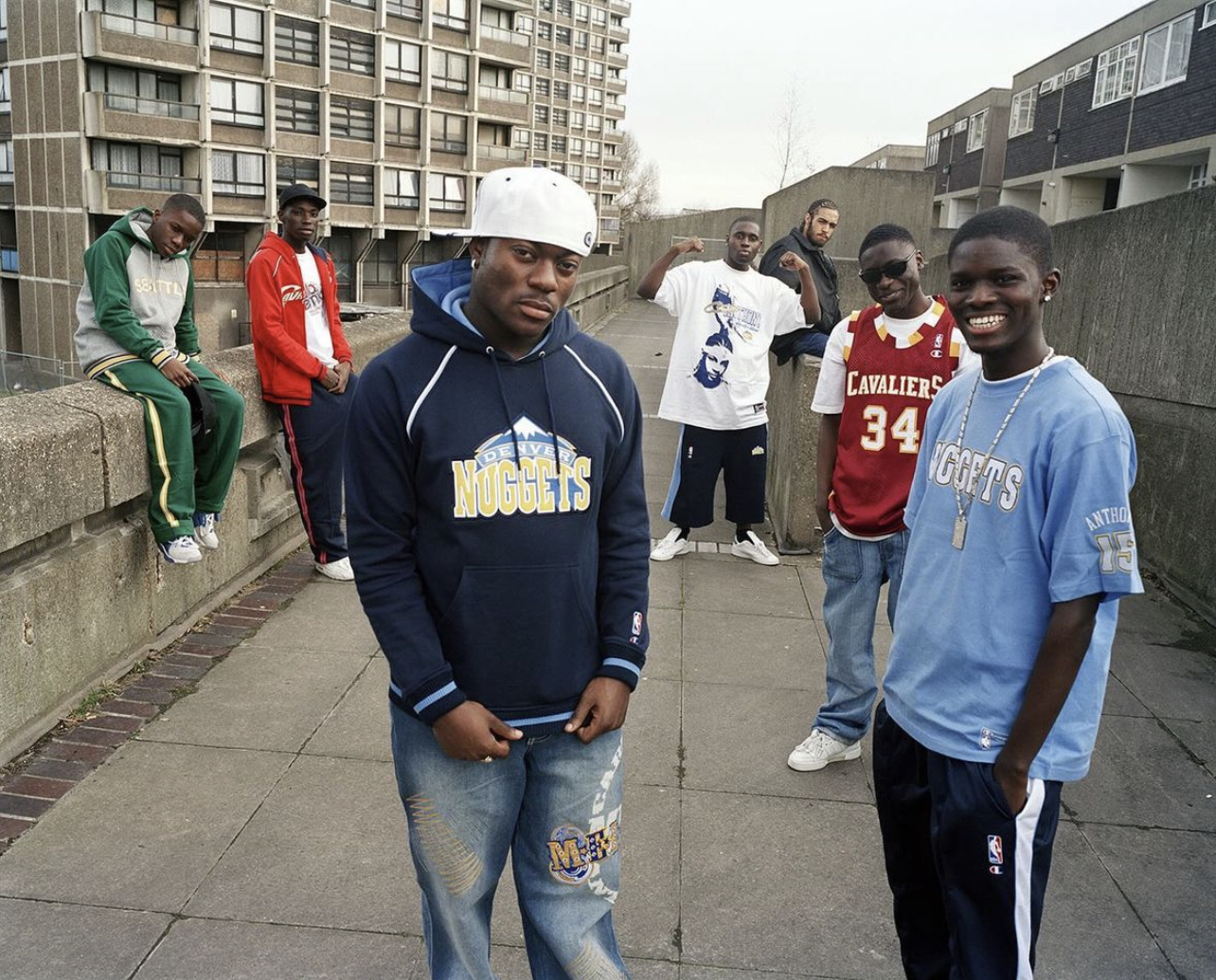
Perhaps the question of whether grime belongs to hip hop is, in the end, less important than what grime has made possible. For many of us who grew up listening, watching, rewinding sets on YouTube, grime was never about fitting neatly into a genre category. It was about recognition, about hearing something that sounded like home, like the streets we knew, like voices that didn’t ask permission to exist. As listeners, grime didn’t arrive as an export or an imitation. It arrived as something immediate and local, shaped by accents, tempos, frustrations, humour, and urgency that felt unmistakably British and unmistakably Black. At the same time, it carried echoes of hip hop, of sound system culture, of diasporic memory that made it legible beyond its point of origin. That tension, between rootedness and openness, has always been its strength. Watching the scene grow, fracture, globalise, and mutate over the past decade has been both exhilarating and uneasy. There is pride in seeing artists from once-marginalised scenes command global stages. But there is also a quiet awareness that visibility does not erase struggle, and that success does not automatically resolve the questions grime has always asked about power, belonging, and voice. What grime offered was never just representation, but a way of speaking back, sometimes messy, sometimes abrasive, always alive.
Maybe grime doesn’t need to be claimed by hip hop, nor set apart from it. Maybe it sits in that productive in-between space, where cultures meet, clash, and reshape one another. For those of us who have listened closely, followed the transitions from grime to UK rap to drill and beyond, the throughline isn’t purity: it’s continuity. A continuity of Black British expression that refuses to disappear, even as its form changes.
And perhaps that’s the most important thing to hold onto as fans: not whether grime fits into a lineage cleanly, but that it continues to speak. To adapt. To make room for new voices without forgetting the old ones. To remind us that scenes are not static histories, but living conversations and that listening, really listening, is part of how those conversations survive.