
The Border Game. Soccer, Race and Immigration in pre–World Cup America

In the United States, soccer has grown largely through migrant and diasporic communities. Its strongest roots lie within Latin American communities, for whom the game has long been a cultural anchor, a space of belonging, and a link to home. In this context, stadiums have often become more than sporting venues, turning into arenas where questions of race, migration, and visibility are openly negotiated. This article explores how soccer culture intersected with immigration politics in pre World Cup America, including moments when stands and terraces became spaces of protest against ICE and the criminalization of migrant lives.
European hip hop has been obsessed with the football aesthetics for years. Yet, the rapper who has built his imagery around this sport more than anyone else is neither French, English nor Spanish. Cousin Feo is a South Central MC who raps over classic productions, with a New York flavour rather than a Los Angeles one.
Above all, he uses football as a prism through which to talk about the streets, hip hop and his personal life. Cousin Feo has taken the most popular sport in the world and made it his own stylistic signature, not only in his rhymes. In fact, the concept of his main releases, from the cover to the track titles, refers to different football cultures, particularly Argentinian, but also French, Dutch and even Danish. He is such a football nerd that he even uses as a skit an excerpt from an old derby between Genoa and Sampdoria, commentated on by an ecstatic Maurizio Compagnoni, celebrating Diego Milito’s hat trick.
Cousin Feo epitomizes the typical profile of the American football fan. A Guatemalan, and therefore Latino, like most people who follow football in the United States, he is interested in overseas leagues, but he supports his hometown team, the Los Angeles Galaxy. The former club of Beckham and Ibrahimović has been part of the MLS since its foundation in 1996 and in recent years it has found a new city rival. Los Angeles FC has also joined the MLS in 2018, giving rise to a city rivalry known by the ironic nickname El Tráfico (a portmanteau of Clásico and the typical traffic of the City of Angels).
The Los Angeles derby is emblematic of how difficult it is for European audiences to decipher the dynamics of American football. The LA derby is one of the most heated in the MLS, and there have even been clashes in the past, but is it really possible to feel a rivalry just six years after a team was founded? It's difficult to get an idea from the outside, given the importance we attach to identity and tradition in Europe. A more immediate point of contact between our football and the American one emerges in the way that fan support can be linked to social issues.
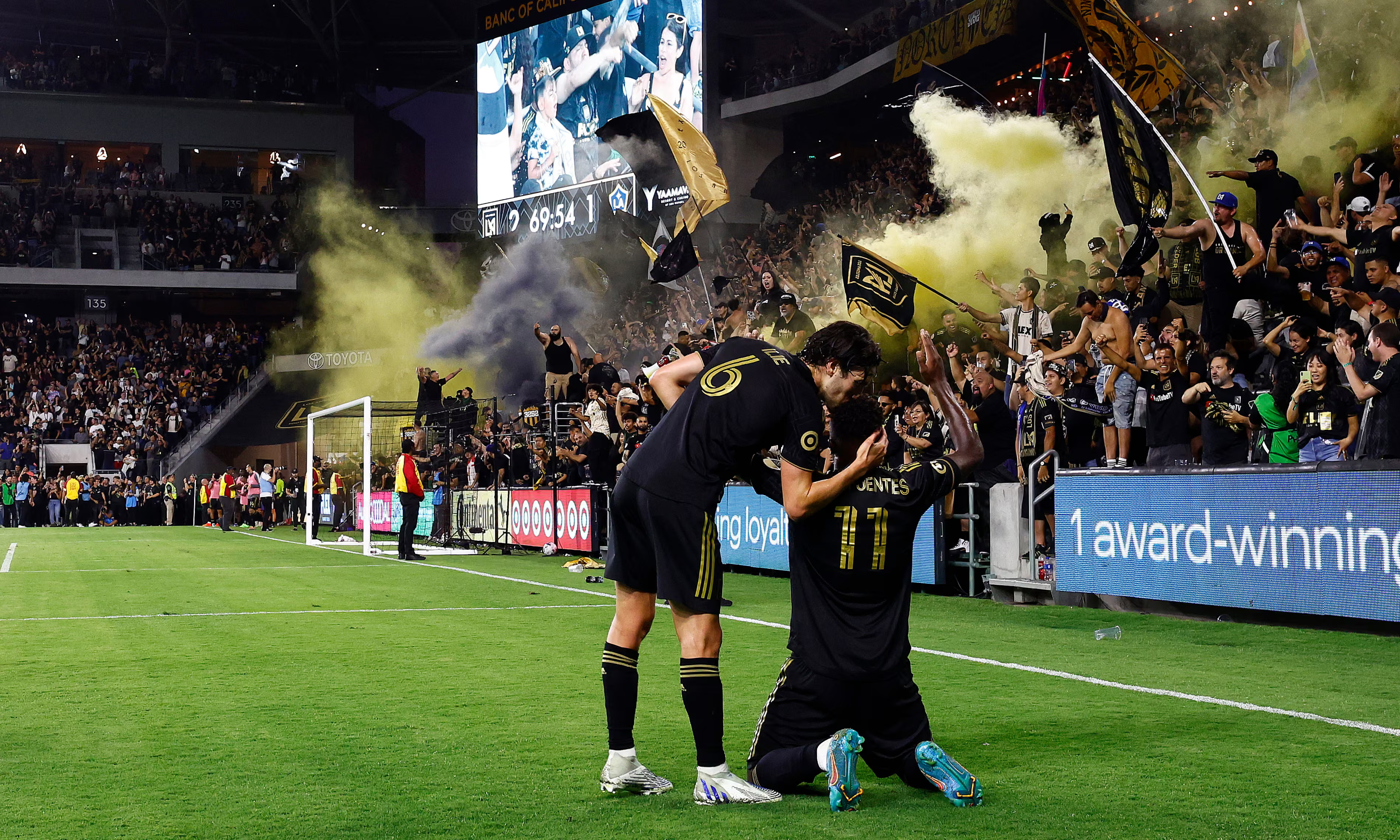
Last June, when Immigration and Customs Enforcement raided Los Angeles, arresting 2700 people most of whom had no criminal record, fans of both the city's teams rallied against the intervention of the armed forces in defence of their communities. While some Galaxy fans were banned from the stadium by their club during the protest, their counterparts fared much better. Los Angeles FC fans were not only able to peacefully display banners against ICE and in support of immigrants, but they also received the club’s support in an official statement. In all likelihood, such a move would be unthinkable for many European clubs, who are often reluctant to take a stand on social issues.
The Los Angeles FC management succeeded in grasping that the crackdown on immigrants by ICE was, in a collateral way, an attack on those who actively support the club. In fact, as Los Angeles Times journalist Kevin Baxter points out, football was born and thrived in the United States primarily as a sport for immigrants. Latinos, in particular, form the core of the fan base in American stadiums. Football helped «bridge that gap between the Americans and the Latinos and cultures in general», stated Abel Acosta, one of the founders of La Brigada de Oro, Nashville SC’s most important supporters group. Like Los Angeles, Nashville has also been targeted by ICE operations. Like those in Los Angeles, or the Chicago Fire ones, Nashville fans have fearlessly stood up for the victims, who are probably people they stand shoulder to shoulder with at the stadium on match days. This is not surprising in the world of American football, where fans are much more politically engaged than those of any other sport in the country. This reflects the difference between the typical fan-customer of American sports and the spontaneity of football fandom, resulting in organised support that can have a voice beyond the pitch.
During those May days, it was not only the Brigada de Oro that showed solidarity with those arrested or detained, but other, less ethnically connoted organised groups too. However, little support came from the club, revealing the increasingly clumsy manner in which football tries to separate sport and politics. «It’s understandable to a degree in a way, but at the same time… When it’s Pride Month, when it’s Hispanic Heritage Month, when it’s Black History Month, certain events of that type, they’re out there promoting and celebrating it. But when something is truly happening, and it’s to us: this is not so much a political matter. This is something that is injustice happening in our society, in our community», Acosta told the New York Times.
The Brigada de Oro is one of the most recognisable organised groups in the US, not only because of their flamboyant yellow colour, but also because they wear lucha libre masks to showcase their Mexican roots. Acosta and the other founders felt the need to represent their culture within the stadium. It was not so much to stand out from the other fans, but rather to set an example and create a more authentic fan base. After all, there must be a reason why football was originally mainly popular among immigrants. It is no coincidence that, for decades, the most popular tournament in the US was not the MLS, but the Mexican league.
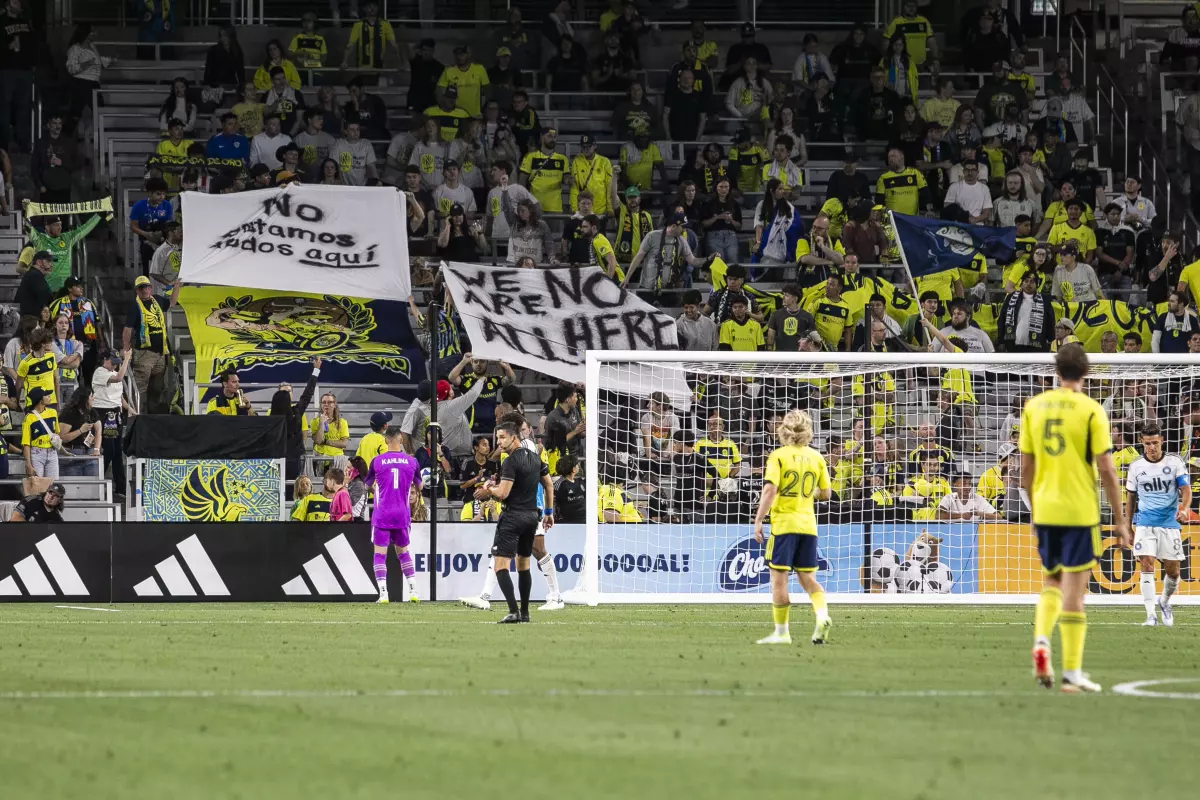
For many Hispanics, who have been accustomed from an early age to experiencing football as their primary sport and viewing it as a ritual, the stadium has become a carte blanche space. «We just wanted to bring that flavor to NSC when we first started. You know that cultural flavor, the aspect of our music, our food, our passion for the game, how we live it and breathe it every day». For cultural reasons, it was therefore more natural for people of Latin origin to become passionate about football. However, it is undeniable that the sport’s popularity has grown in the United States, with supporters from all communities and social classes. Of course, football does not have the same level of popularity as other national leagues, nor does it produce the same level of excellence as other sports. Nevertheless, it has expanded, and there are several factors that explain this growth.
The most superficial of these could be related to video games and the glamour of football: the growing popularity of FIFA, for example, which appeals even to those who have never played the sport. Then there is the aesthetic aspect: soccer jerseys have somewhat replaced NBA jerseys as fashionable sportswear. Not to mention the hegemony of the Premier League, which, in 2023, surpassed the Mexican league for the first time as the most-watched tournament in the US, partly thanks to the shared language. English football’s overseas expansion started a long time ago and has been amplified by the fact that, in addition to matches, football now entertains by creating content. Furthermore, an increasing number of American owners are entering the English and European markets, and so there is a growing interest in making US citizens more interested in football.
However, despite its growth, football’s popularity is still far from that of major American sports. The reason for this is not to be found at the top of the pyramid — in the enjoyment of football as entertainment — but at the bottom. The reason for its success across all latitudes is its simplicity: no special equipment is needed to play it. The global following of elite football is simply a consequence of the fact that a large proportion of the world’s population plays or has played it. Football is the people’s game par excellence, but this is not the case in the United States, where it remains inaccessible, both economically and geographically. The communities for which the barriers are highest are Latino and African American ones. As Henry Bushnell, now a senior writer for The Athletic, wrote: «Soccer, in its purest form, is the most accessible and racially diverse team sport in the world. But American soccer [...] is not. It’s disproportionately white and upper-middle-class».
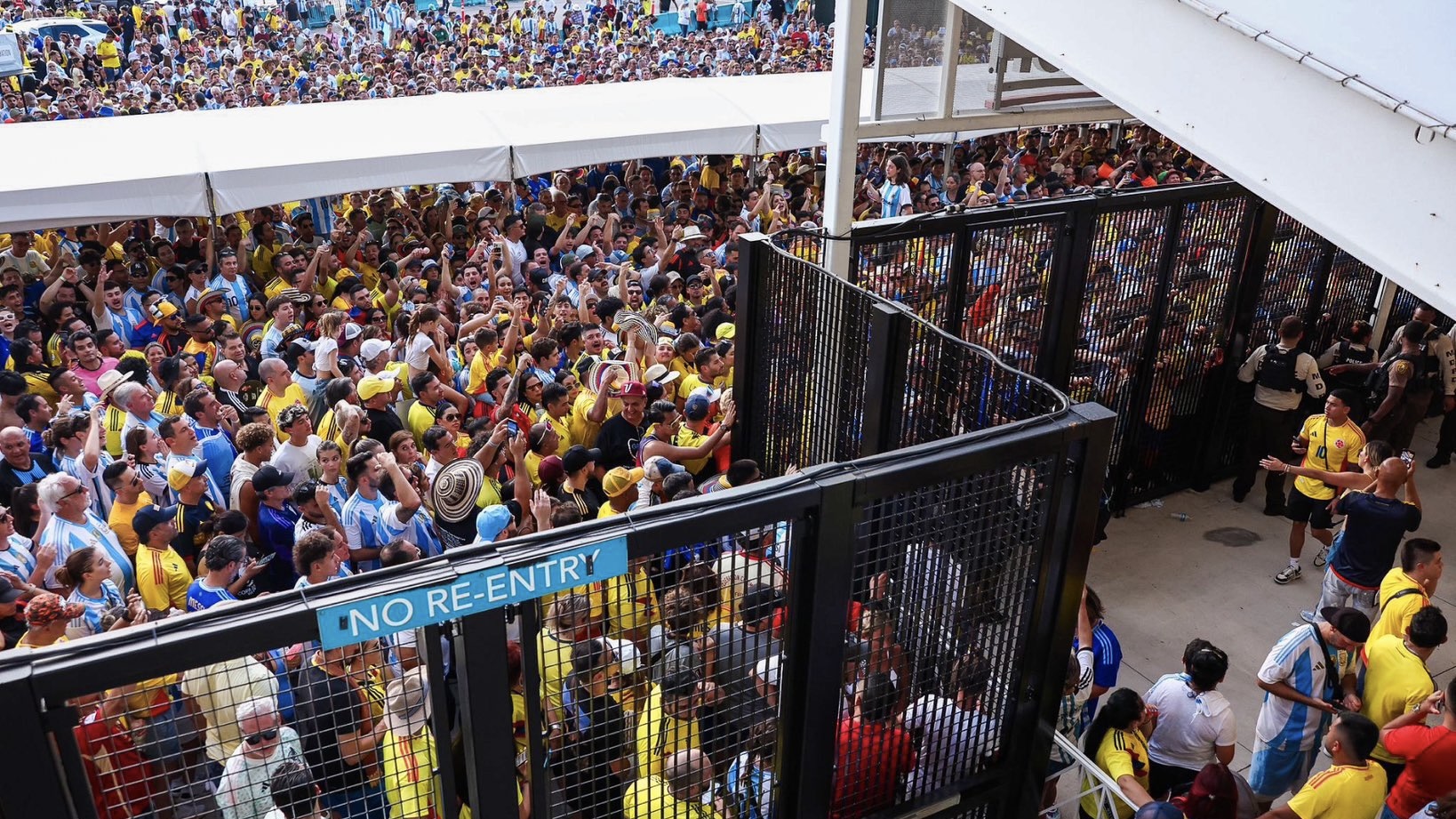
In America, the pay-to-play system is in place. It’s not that other countries don’t charge tuition fees for football academies — even in Italy, where football is the national sport, it is becoming increasingly exclusive, which is one of the main causes of its decline. In the United States, however, the cost of football academies often becomes unaffordable. A 2017 article by the Aspen Institute reported that, according to a study by Utah State University, the average annual cost of sending a child to a soccer team in America was $1,472. Such high costs are also likely due to the fact that fields, and therefore football schools, are not widespread in US cities. This creates another obstacle: geography. Not everyone can afford to travel daily for training in terms of both distance and time. Children cannot do it, nor can parents who work inflexible hours. Imagine having to take a plane to a tournament in another state, where there might be scouts in the stands.
Thus, children from marginalised communities, who are often Latino or African American, end up off the radar in favour of their less talented peers who can afford college. In such a system, which hinders bottom-up development, scholarships alone are an insufficient remedy. Consequently, football also becomes an indicator of a systemic socio-economic gap for certain ethnic groups. «There are more kids playing unorganized soccer in this country than organized soccer. We’re not even close to touching those kids», stated Doug Andrassen, former director of the U.S. Soccer Federation’s Diversity Task Force, which was set up to make football more inclusive. The root of this issue has repercussions at the highest levels. Even the senior national teams (men's and women's) have a representation problem. A 2013 study by the University of Chicago examined the impact of pay-to-play on professionalism. By comparing players who had worn the senior men's national team jersey between 1993 and 2013 with those who had participated in the NBA All-Star Game and its NFL equivalent during the same period, it was found that there was a much greater presence of white players from wealthy backgrounds in soccer.
Today, the situation has improved somewhat and, looking at Mauricio Pochettino's national team, one might think that the Black and Latin American players are quite numerous. However, there is still a long way to go. Without touching on the sensitive topic of the lack of non-white representation among coaches and managers — an issue in which Europe is also sadly lagging behind — the backgrounds of some of the most famous African-American players demonstrate that certain regions of the country remain on the margins of the footballing system.
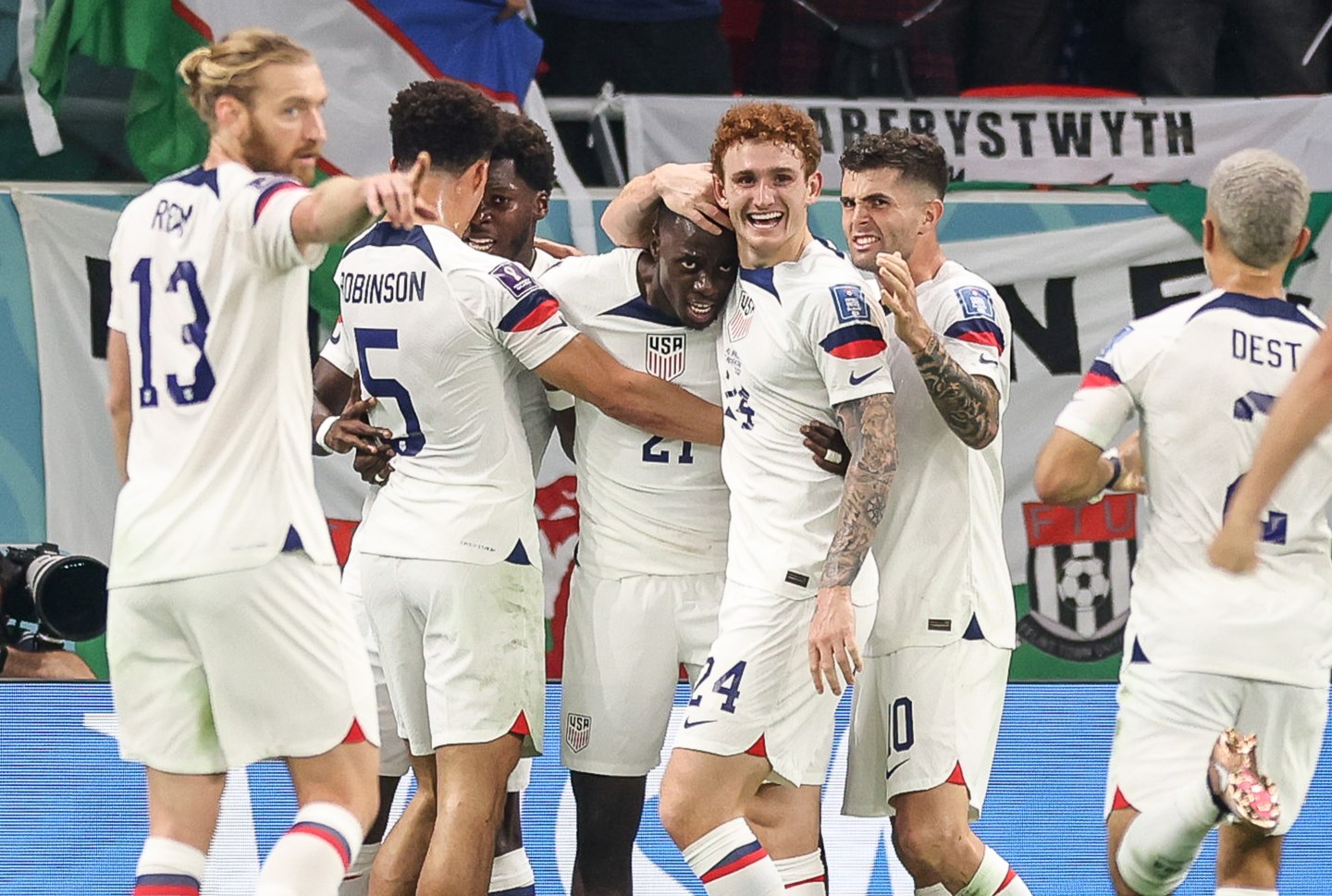
Weston McKennie, for example, is a military brat and spent part of his childhood in Germany before moving to Texas. He certainly does not come from the most disadvantaged of backgrounds. Sergiño Dest, the former Milan full-back, was born and raised in the Netherlands. Malick Tillman, one of Europe's most promising attacking midfielders, wasn’t even born in the United States: the son of an American father and a German mother, he trained in Bavaria and played for Germany's youth teams before choosing to play for the US national team. Folarin Balogun, who was a transfer target for Inter Milano a couple of summers ago, was born in Brooklyn, but moved to London at the age of one and grew up in England. Alex Freeman, one of the most exciting prospects in MLS, is the son of a former NFL player. Timothy Weah's father - well, he needs no introduction.
The American dream seems like a pipe dream in football. Therefore, African Americans and Hispanics who manage to break into the right circles of the US football system often find themselves in the same position as Chris Richards, who is now a defender for Crystal Palace in the Premier League, in that they are the only non-white players in their team. When talking about his experience, Richards highlights an important point: the value of inspiring the next generation of African Americans. People tend to look up to those who are similar to them. The more African Americans or Hispanics from marginalised backgrounds who appear at the highest levels, the more young people will realise that, as well as traditional American sports, football is also an option — not necessarily to become professionals, but simply to enjoy playing it. «[My brother's best friend's dad] was like, “You have no idea how big this is, not just for kids in Birmingham [Alabama, Editor’s note], but kids of color in Birmingham”. It’s something that they never had seen on TV and something that they never really aspired [to] because they’d never seen it before».
Major events often trigger changes of this kind. In this sense, the 2026 World Cup could present an opportunity. However, it seems impossible to ignore the issues surrounding the event, such as the looming threat of ICE and the travel ban affecting women and men from countries that are due to participate in the World Cup. Then there is the risk of failure, given that the US national team is certainly not enjoying its best moment, despite the big names. We saw in England what happens to Black players when they lose. The United States does not have to live up to the same expectations, but this is still a possible outcome.
In any case, the positive effects of the World Cup would be negligible without changes to make the game as accessible as it is elsewhere. Currently, in the United States football is a people’s sport on the bleachers, but not on the pitch. Only a transformation from the bottom up can turn the United States into a country with a true football culture. In the end, it will matter little whether it’ll be called soccer or football.