
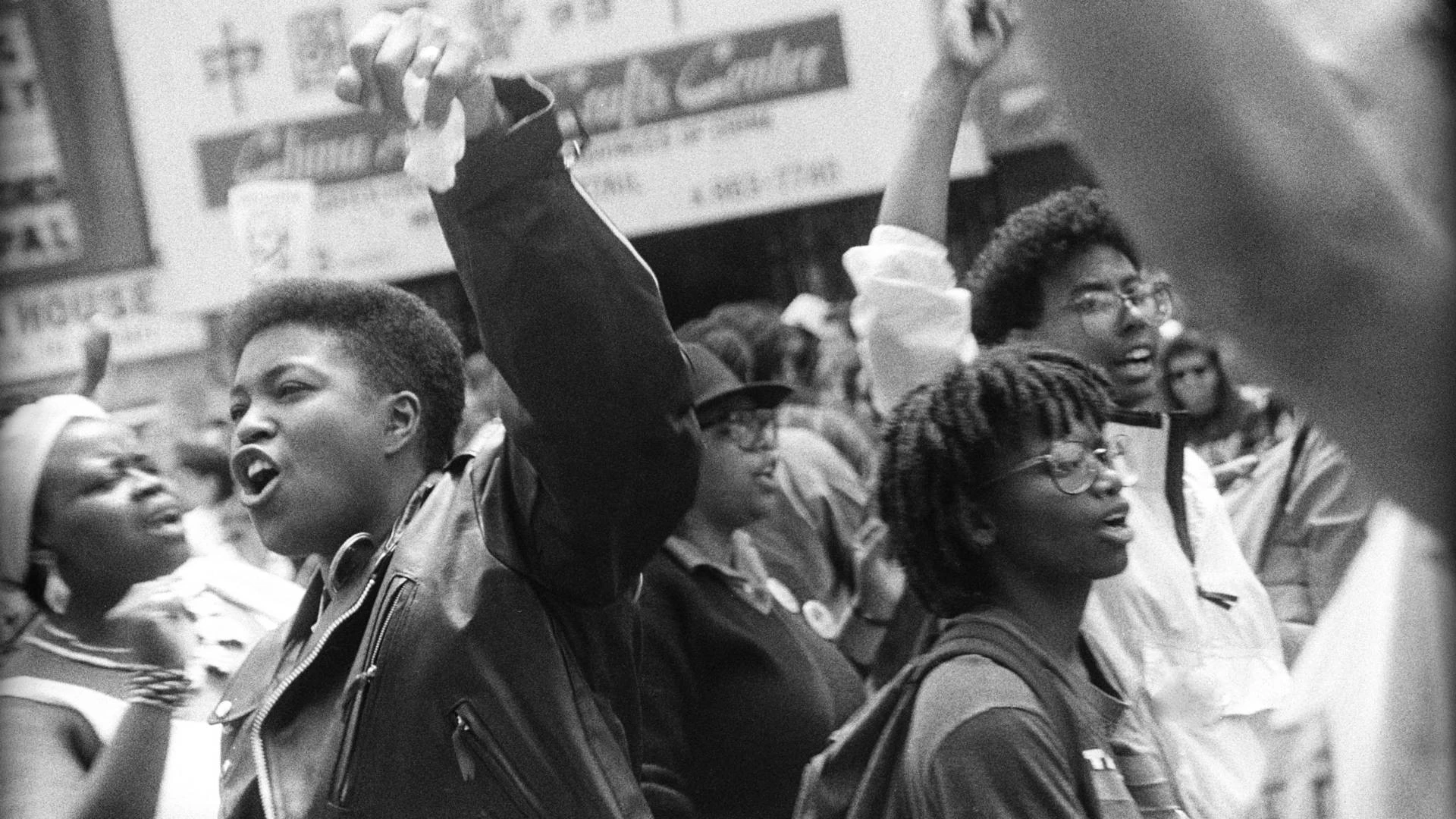
Onyx. A Black Lesbian Newsletter
Before social media and mainstream visibility, Black queer women created their own spaces to speak, connect, and survive. Onyx, a Black lesbian newsletter, was one of those radical platforms, a site of storytelling, cultural production, and political resistance. Selam Tesfai revisits the history of Onyx, highlighting its importance within Black feminist and queer archives. Read the full article for free via the link in bio and in our stories.
Between the late 1970s and the 1990s, queer communities of African descent in the United States developed autonomous forms of cultural and political survival in response to near-total marginalization. Being Black, lesbian, and visible meant navigating a space of constant tension: the structural racism of mainstream society, sexism within Black liberation movements, homophobia in family and religious contexts, invisibility and racism within predominantly white queer communities.
In California, and particularly in the San Francisco Bay Area, this condition generated an extraordinary flourishing of community-building practices: informal collectives, home archives, park meetings, and, above all, fanzines. It was in this ecosystem that Onyx: Black Lesbian Newsletter was born, one of the first publications created by and for African American lesbian women.
Founded in 1982 and active for several years in San Francisco, Berkeley, and Oakland, Onyx was not simply a magazine: it was a tool for finding, recognizing, and asserting oneself in the public space through self-narration.
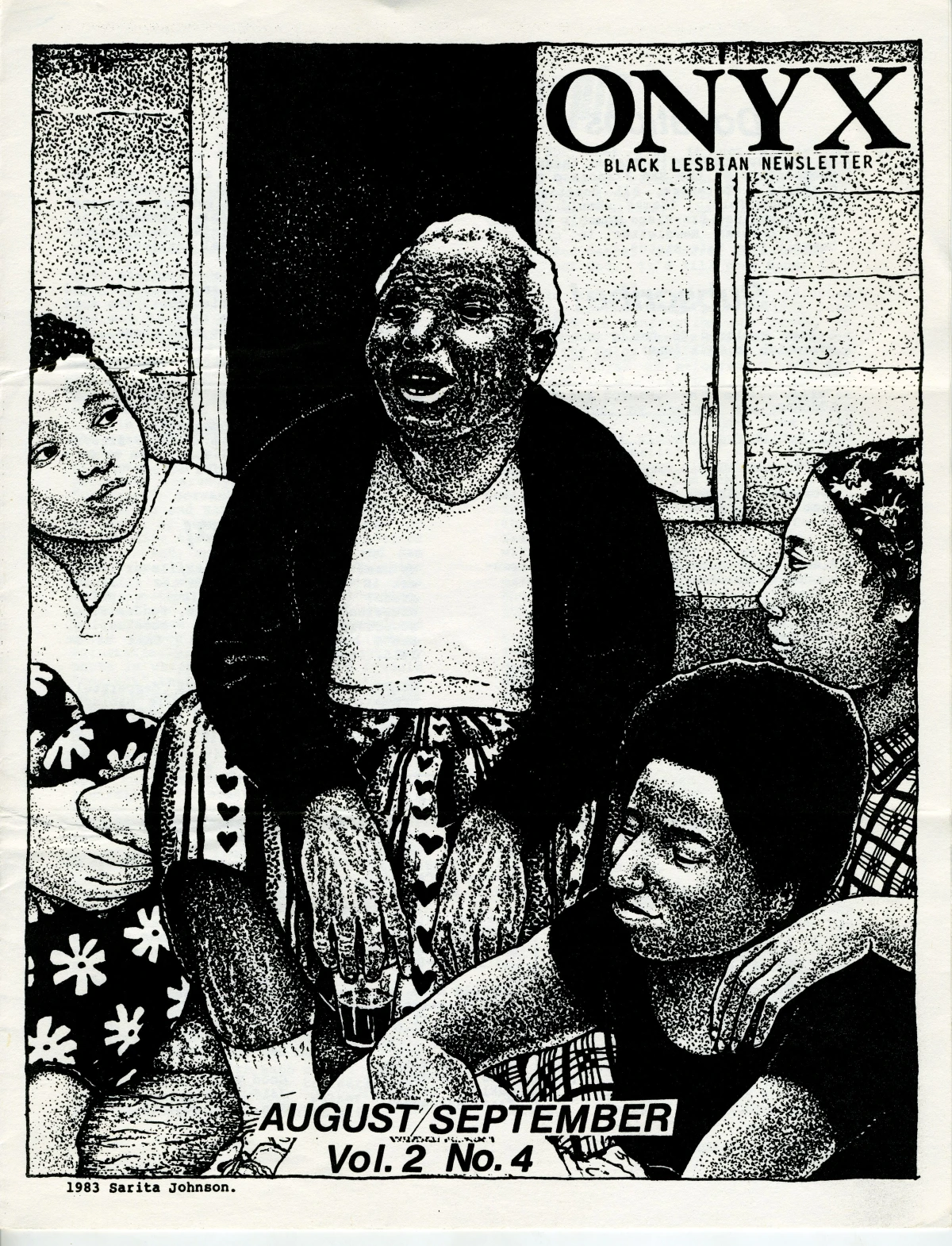
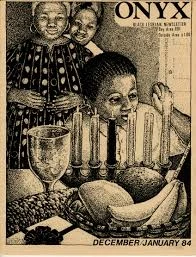
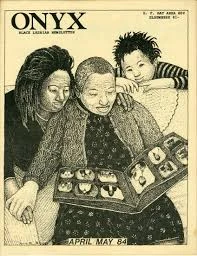
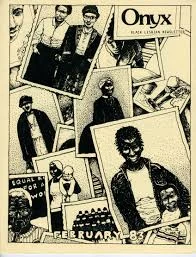
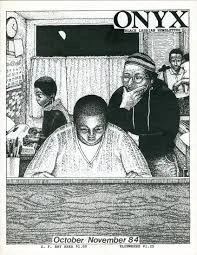
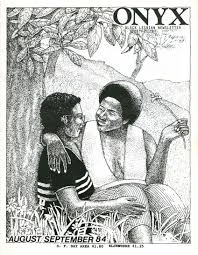
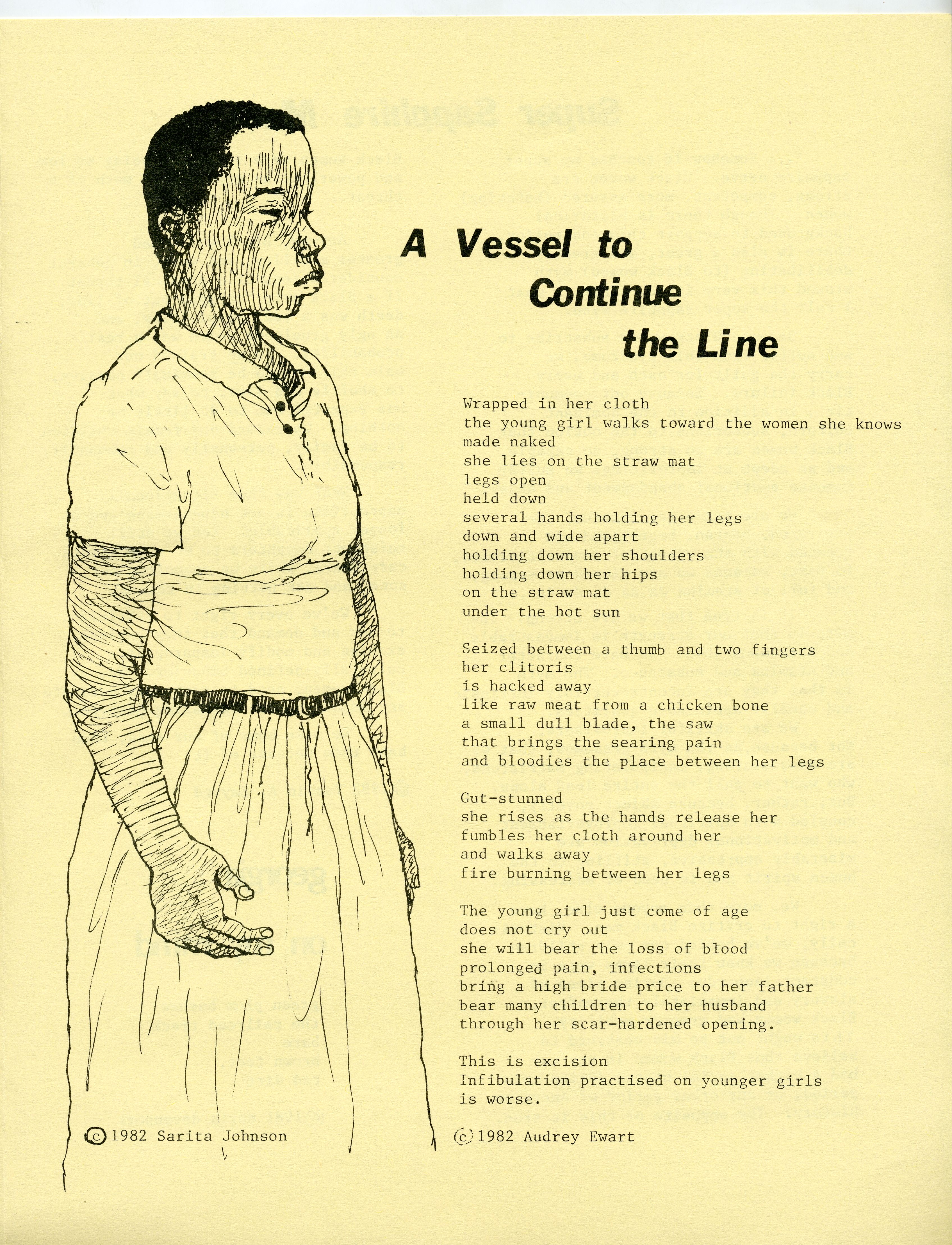
Born in Berkeley and distributed throughout the greater San Francisco Bay Area, Onyx was edited by a collective founded by Laverne Gagehabib, A.C. Barber, and Vivienne Walker-Crawford. The newsletter featured a mosaic of content: opinion pieces, fiction, poetry, book and film reviews, photography, visual art, personal ads, and local events. The covers were illustrated by artist Sarita Johnson, who in a 2023 interview described the Onyx editorial team as a group of women who did not know each other deeply, but knew they were united by the same purpose. For this reason, discord was not an option.
Living Under Scrutiny
In the United States of those years, for many lesbian women of color, everyday life was marked by a real “storm of scrutiny”: the fear of being discovered at work, informal checks, private investigations commissioned by conservative families, accusations of “improper conduct,” emotional and social isolation. Love between women in society was described as deviant, dangerous, incompatible with family expectations.
Choosing to live openly as oneself came at a real cost: the loss of relationships, economic insecurity, and imposed loneliness. In this scenario, many women found refuge in co-living experiences, in deep friendships that could replace their biological families, and in emotional networks that allowed them to resist. Choosing honesty over fear became a daily practice of resistance.
Onyx and the Galaxy of Black Lesbian Fanzines
Onyx is part of a wider constellation of Black lesbian fanzines and magazines that emerged in the United States between the 1970s and 1980s: often self-produced, limited edition publications, distributed by hand or by mail.
What sets Onyx apart is its explicit intersectional approach. It is not only an expression of the African American lesbian community, but a collective practice that is radically aware of the intertwining of race, gender, desire, and class. For many Black lesbian women, this newsletter represented an opportunity to break free from standards designed for white women.
The editorial team was collective and open. There was no rigid separation between writers and readers: anyone could participate, submit texts, share poems, stories, and reflections. This openness was a deliberate political choice. The fanzine format allowed for total freedom: no institutional filters, no editorial line imposed from outside. Writing meant affirming one's existence, giving shape to experiences that would otherwise have remained invisible.
In Onyx, art is never separated from life. Writing is not an aesthetic exercise, but a practice of survival. Putting silent pain, friendship, desire, and constant fear on paper meant creating a space of legitimacy.
In a world that demands silence, words become home.
From the Park to the Press: Community and Friendship
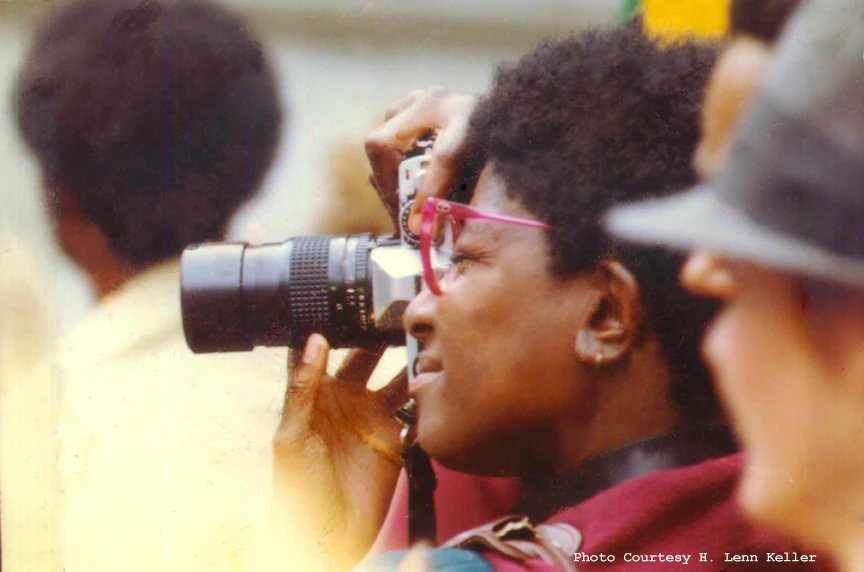
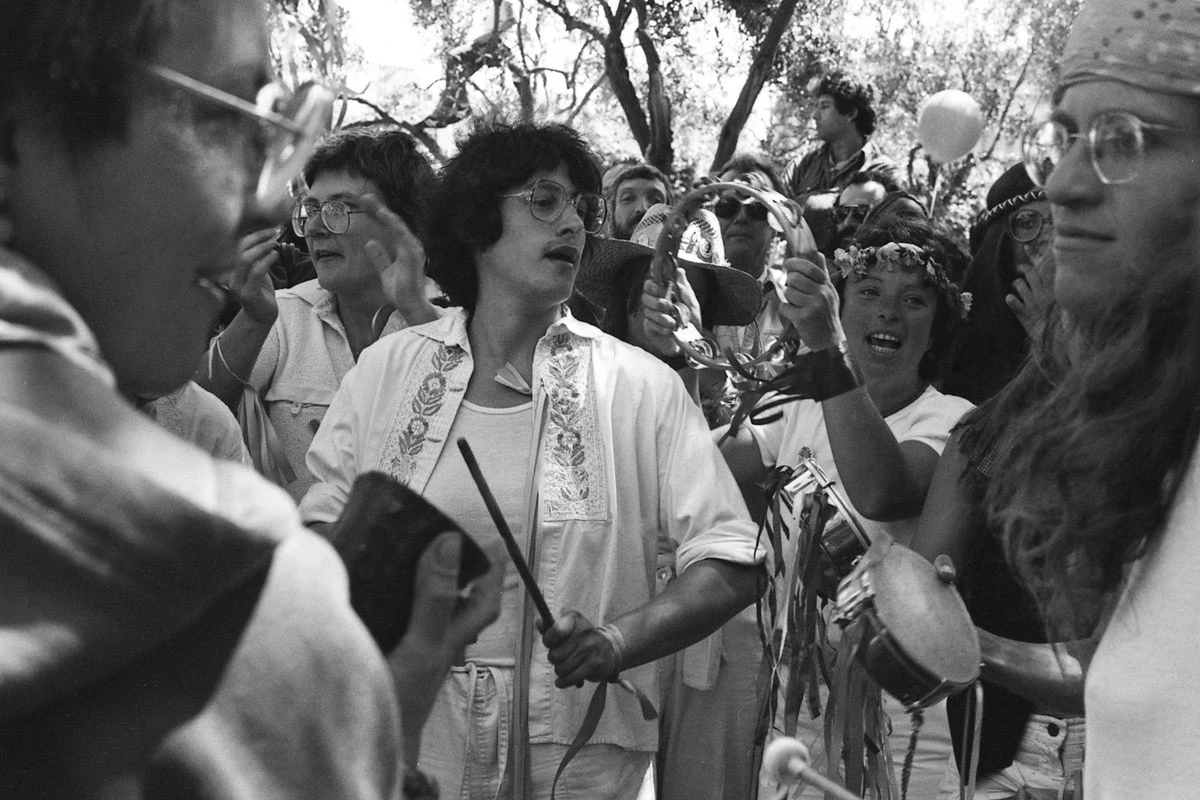
The Onyx editorial staff was not an office, but a collective body in motion. On sunny days, meetings took place in a park in Oakland, halfway between Berkeley and San Francisco. African American lesbian women gathered to discuss ideas, read texts aloud, and imagine new issues of the newsletter. There was no desire for conflict, but a desire to build something substantial, rich, proud, free, and irrepressible.
As bell hooks writes in All About Love: New Visions, love is not an abstract feeling, but a practice made up of care, responsibility, respect, and commitment. Onyx embodied this vision: community as a choice, as a repeated act of mutual presence.
The Power of the Archive: Writing to be Found
Looking at Onyx today means confronting the power of the archive. Not as a neutral repository of the past, but as a living space where genealogies of political bodies are constructed. The archive does not only preserve documents: it preserves possibilities. It is the place where the affirmation of the self becomes a trace, and the trace becomes a legacy.
For those women, telling their stories was not an autobiographical exercise, but an act of survival. Self-narration allowed them to construct new forms of rituality, family, and chosen communities. Writing also meant making themselves traceable: telling their stories allowed them to leave a trace, making it possible to meet those who, over time, would seek the same words.
Black queer archives—often born in domestic spaces, in personal collections stored under the bed—now allow us to recognize ourselves in the words, desires, and wounds of others who came before us. They are not archives of heroism, but of everyday life: letters, poems, ads, reviews, collective reflections. In this sense, Onyx is an archive from the very moment it is produced.
Letters, Poetry, and Public Intimacy
One of the most radical sections of Onyx was Letters to the Editor. Here, the collective dimension of the fanzine intertwined with the intimacy of those who wrote alone, opening their hearts and abandoning all reservations. The letters were confessions, political statements, acts of love.
«I am glad to see a publication of this kind in my life-time. It will give our younger sisters some history on Black Lesbians past and present», writes Delcina.
The awareness of “making history” runs through many of these voices, along with a strong sense of responsibility towards those who will come after them.
In 1983, Yasmin A. Sayyed stated:
«As lesbians we do not have any culturally defined constructs… What we do have is a unique opportunity to create structures that respect our individuation.»
The absence of models is not a shortcoming, but a space for radical invention: the opportunity to courageously ask ourselves what form of family, home, community, and joy is truly necessary.
Virginia Barris, reflecting on a lesbian conference of women of color, wrote:
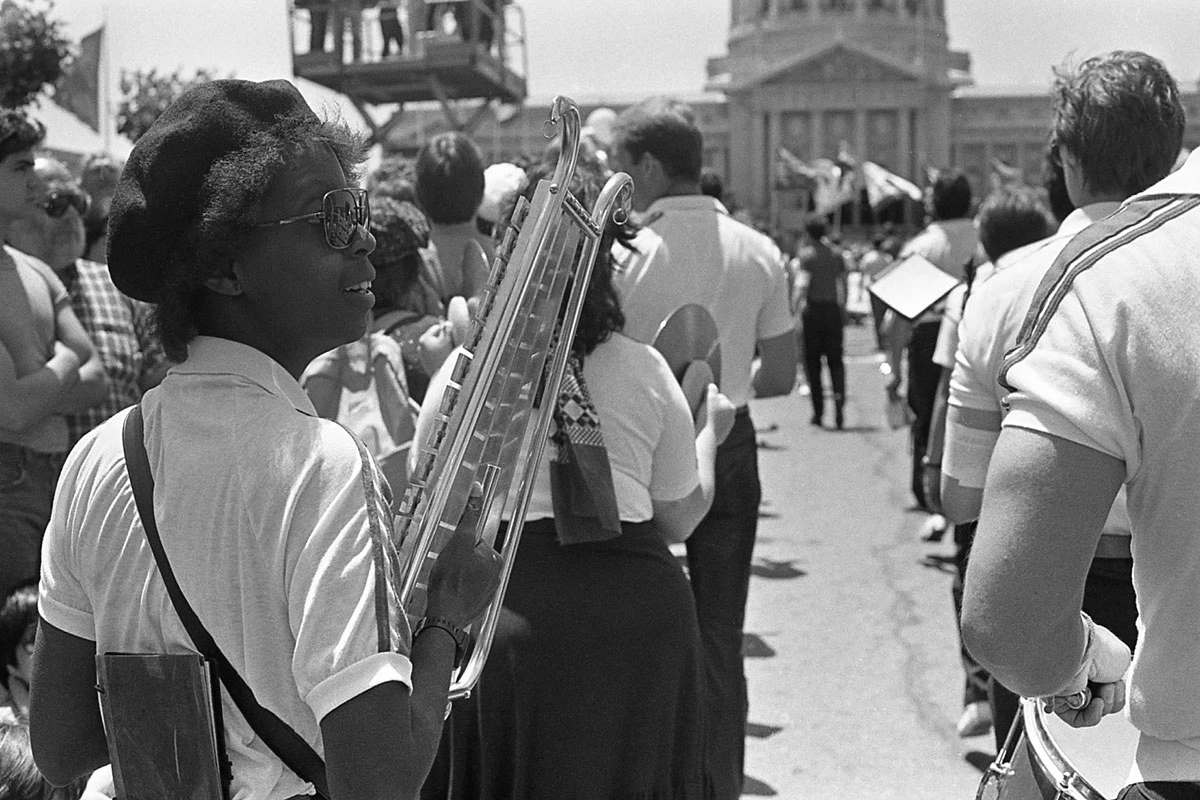
«For 200–300 women of color to be together at the same place at the same time is in itself a political act.»
The simple collective presence becomes a subversive gesture.
Gale Golden captures a central dimension of the Onyx project when she writes that before we can change—or create change—we must perceive the need for it, in a solitary moment of clarity and conviction, or sometimes through the printed word, thanks to the commitment and intelligence of those who dedicate themselves to keeping the best part of consciousness alive.
Poetry, Vision, Freedom
Poetry runs through Onyx like an underground stream. In Doris Davenport's verses, taken from It's Like This (1980), a vision emerges that is both desire and promise:
I need to see you free
see u running
thinking
flying
being
so I will have some company
Freedom is never individual: it is a shared condition.
In 1982, the release of Alice Walker's The Color Purple sparked a heated debate within the cultural galaxy that revolved around Onyx. The novel—made iconic by Whoopi Goldberg's film rendition—broke the silence that had enveloped the lives of African American women for decades, naming racism, misogyny, love between women, and the desire for transformation. One reader wrote:
“I am especially proud to be a Black woman, agreeing more than ever that Black womyn have the potential to alter significantly the world we live in.”
Here, literature is not escapism, but a revelation of power.
An Honorific Title
In 1984, Yasmin A. Sayyed wrote:
I am a black lesbian.
An honourific title!
I’m not too modest to wear.
These words encapsulate the entire Onyx project: to transform what the world marks as a stigma into a title of honor. To name oneself, and to do so together.
This is why Onyx is not just an archive of the past. It is a living reminder: the community writes itself, even before it is recognized. And by writing itself, it creates the conditions to be found — then as now.