
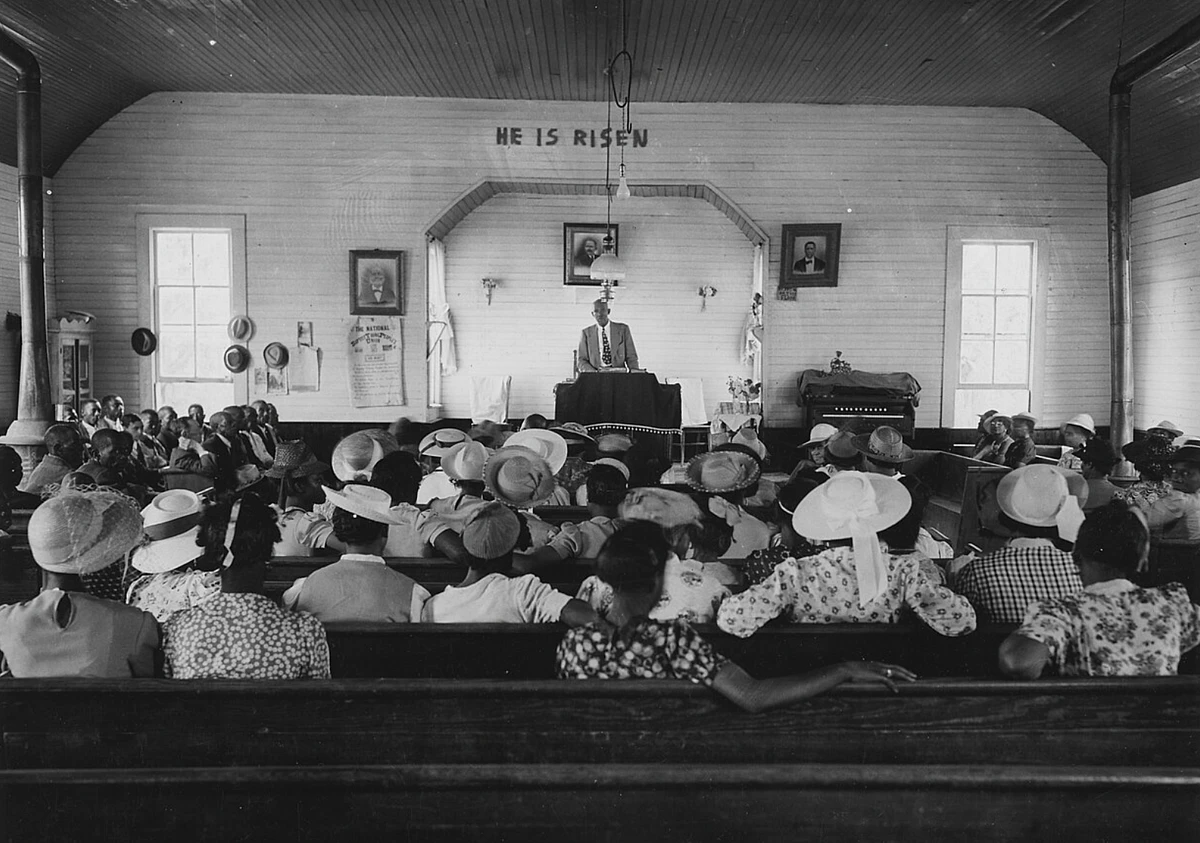
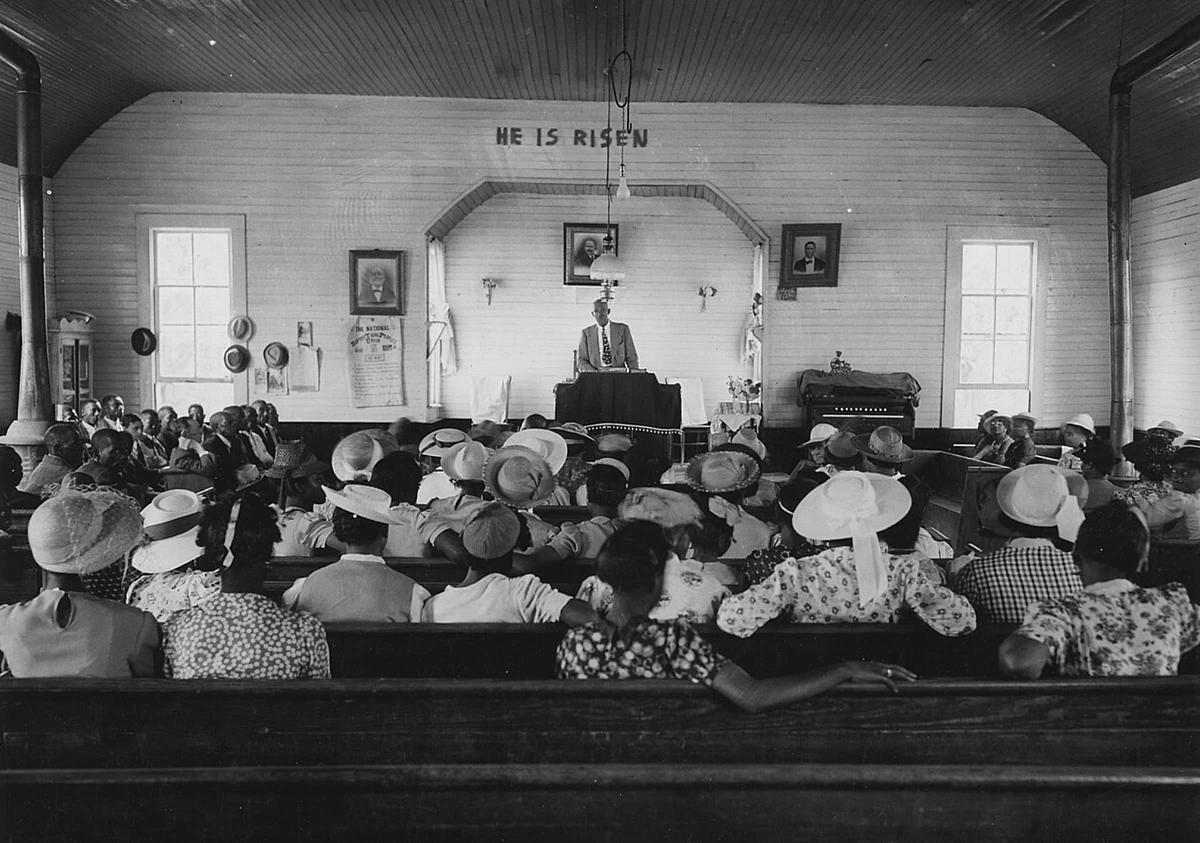
Let My People Go. How the Book of Exodus Has Shaped African American Political Thought

Few stories have resonated within African American political imagination like the Book of Exodus. From slavery to the civil rights movement, the biblical narrative of liberation has offered language, symbols, and moral frameworks to articulate resistance against oppression. This article examines how Exodus became a foundational text in African American political thought, not as theology alone, but as a living tool for collective struggle.
Go down, Moses
Way down in Egypt's land
Tell old Pharaoh
Let my people go
Composed in Virginia around 1850 and transcribed only a dozen years later, Go Down Moses is one of the most famous African-American spirituals. Its symbolic value is enhanced by the fact that members of the Underground Railroad used the lyrics of the song as a coded message.[1] Identifying the Israelites persecuted in Egypt with slaves in the United States and slave owners with Pharaoh, the song embraces the most pertinent aspect of the biblical text: the concrete will to end the injustice and suffering of slavery.
However, the imagery of the Exodus is not exclusive to the abolitionist political tradition. In fact, it has permeated American society since its inception: both Benjamin Franklin and Thomas Jefferson proposed images from the biblical book for the nation's great seal - Moses raising his staff as he closes the waters over the Egyptian army and the march of the Israelites through the desert, respectively. The relevance of the second book of the Pentateuch actually predates the founding of the United States itself, having arrived in North America with the Pilgrim Fathers. They reinterpreted their own story of persecution and emigration to a new world as a re-enactment of the story of Moses’ people; a faithful reenactment even in its most colonial aspects. Thus, the Exodus is both an ideological reference point for colonisers and masters and the conceptual backdrop for the forms of struggle and resistance of African Americans, a fact that only appears to be a contradiction.
The history of European colonialism, and therefore that of the United States, is in fact the history of an anomaly. In the classical world, enslaved populations retained their own gods and were expressly forbidden to worship those of their masters. By contrast, the late ancient and medieval worlds arrived at the formal abolition, or rather remodelling, of slavery precisely because of the Christian precept of universal brotherhood among men. However, on cotton plantations, masters and slaves worshipped the same God. Christianity's promise of happiness in the afterlife is simultaneously the opium of the people and “the sigh of the oppressed creature”, both an imposition and a consolation. Therefore, the Christian faith has an ambivalent role: it is both an instrument of oppression and a form of relief. However, this relief can take on offensive connotations of resistance, and Exodus plays a decisive role in this sense.
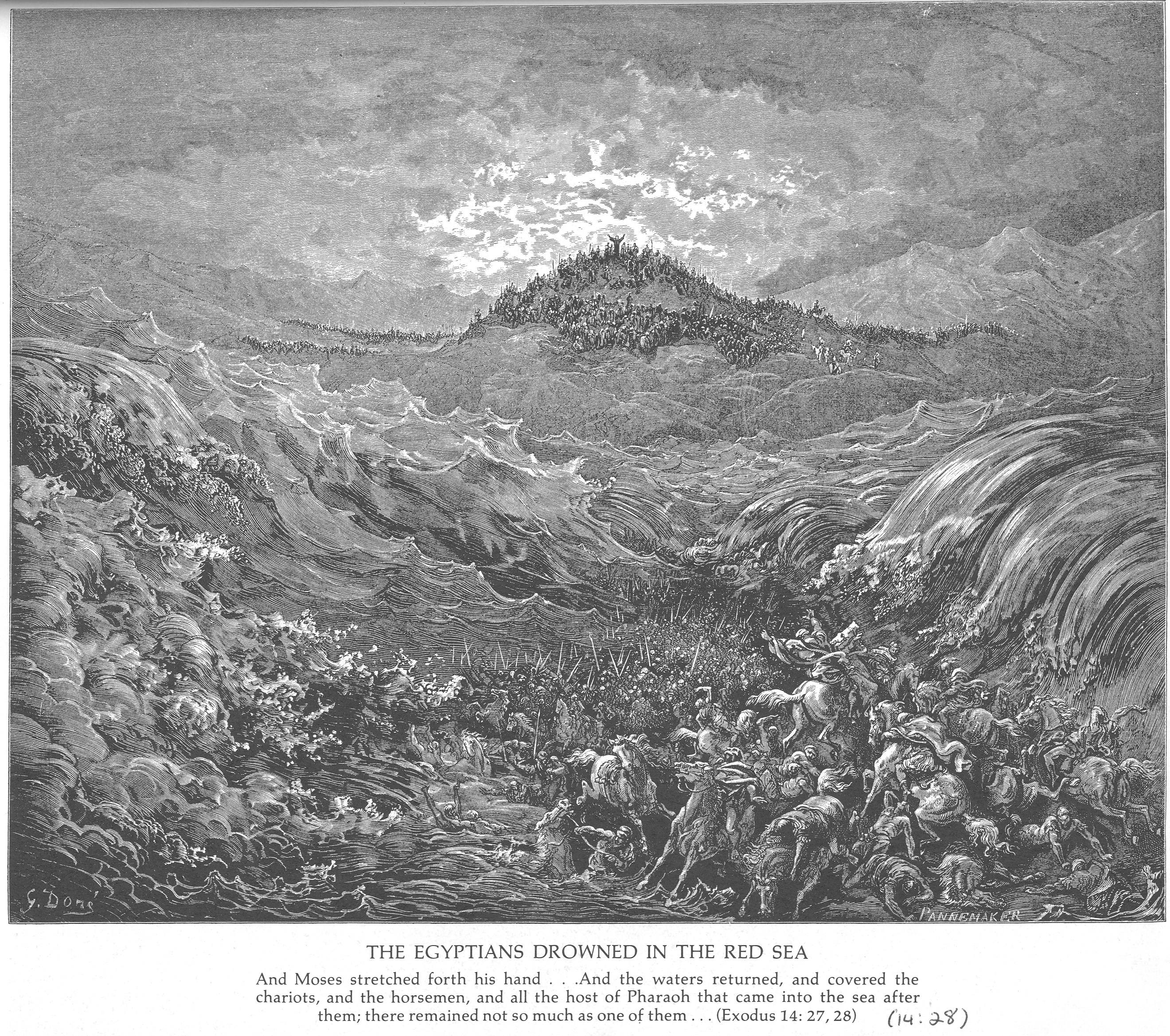
The second book of the Bible is in fact a story of radical hope and this-wordly endeavor: unlike the Greek tradition, which views slavery as either the natural state of some human beings or as the consequence of a reversal of fortune, Jewish thought underlines that slavery is not only oppressive, but above all unjust. The Exodus makes misfortune a historical and ethical fact, rather than an existential destiny or an immutable condition: the white man’s Bible, which instills resignation, which teaches submissiveness, contains within itself the irresistible germ of Liberation. It is no coincidence that the book of Exodus is one of the most reworked in the so-called Slave Bible, an anthology of the Bible produced in England in 1807 to teach slaves selected parts of Christian doctrine: of its forty chapters, only the 19th and 20th are included - the episode of the burning bush and the promulgation of the Commandments. There is no mention of the Israelites’ enslavement, and the only reference to Egypt is in the vaguely threatening words with which God recalls the nine plagues:[2] the slaves’ God must speak of obedience and fear, not liberation.
Yet the disruptive force of the Exodus transcends the intentions of the colonisers, becoming the ideological fulcrum on which Black churches, and later the Civil Rights Movement, will base their theology. Evidence of themes and allegories drawn from the Exodus can be found in the writings and sermons of most post-Civil War African-American abolitionists and activists. The figure of Moses, the prophet raised by God to free his people, has particular symbolic importance and is often used as a yardstick for other figures. For instance, in his autobiography, Frederick Douglass identifies the white abolitionist William Lloyd Garrison — whose pamphlet The Liberator was decisive in his political formation — with Moses[3], a title that was also attributed to Harriet Tubman by Garrison and others.
Perhaps the most famous example of this dynamic is the so-called “Mountaintop speech”[4], delivered by Martin Luther King a few hours before his assassination: in full identification with Moses, the baptist reverend announced that he had been on the mountaintop and had seen the Promised Land of liberation, inviting his listeners to keep on the struggle with joy and confidence. In this speech, which is full of biblical quotations, there is a further reference to the Exodus. King points out that the Pharaoh’s favourite tactic for preventing the Israelites from freeing themselves from slavery was to create conflict amongst them, thus stopping them from uniting against their common enemy. Unity is therefore the main weapon of liberation for the oppressed, as suggested by the biblical text itself. Interestingly, although the Book of Exodus is the second book of the Bible, it is only here that the Jews are referred to as the “people of Israel” for the first time, as Michael Walzer points out in Exodus and Revolution. Walzer traces the origins of some of the most fundamental and distinctive concepts of Western thought, such as linearity, progress and revolution, to the second book of the Pentateuch. He finds in the political category of the Covenant the precursor of political contractualism and the text's most original and innovative element. The Exodus is a journey forward, a “Long March” and an irreducible transformation involving places and political structures, as well as the human beings who participate in it: in the Exodus a new subjectivity coagulates and emerges, that of the people of Israel. It’s revolutions which make peoples, not peoples who make revolutions.
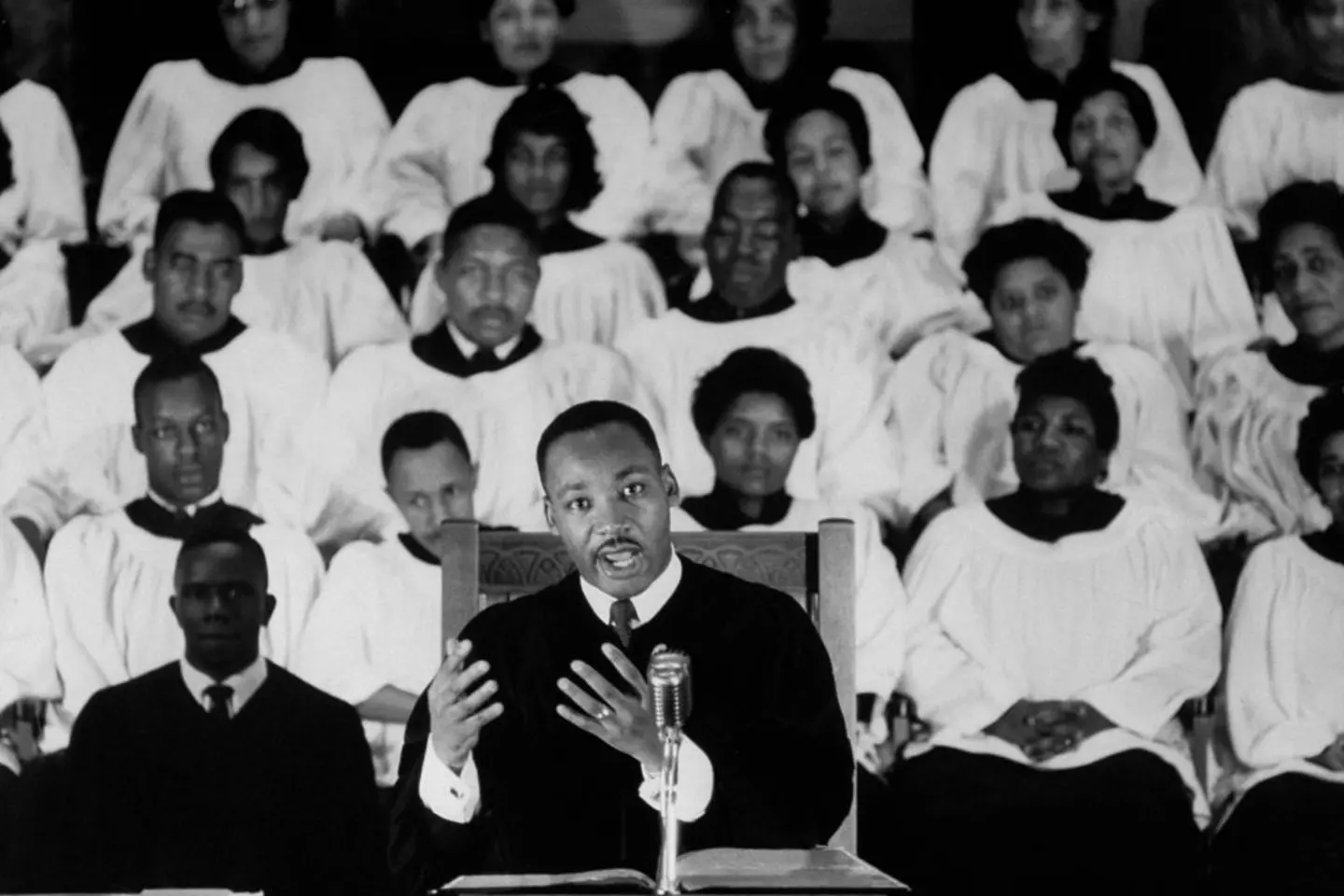
The success of the Exodus in African-American political movements also lies in this dimension: the collective nature of slavery in Egypt is a prelude to a call for a collective response that is not limited to individual emancipation, but becomes a factor in the subjectification and recomposition of a people who is not yet such[5]. As well as the alienation of their labour and their condition of being dominated, African-American slaves experienced a further factor of identity fragmentation. Unlike the Jews, who were already a cohesive ethnic and cultural body, albeit not yet a collective political subject, African-American slaves came from myriad different cultural and geographical places. They were alienated from these places both physically, through deportation, and immaterially, through the prohibition of speaking their native languages, for example: their only common denominator was the shared experience of slavery. As King pointed out, unity in the struggle for liberation from both slavery and segregation is a factor in creating community, subjectivity and a people. Another of King's sermons that explicitly refers to the Exodus is The Death of Evil upon the Seashore[6], in which the identification between biblical and present events is total: starting with a discussion of the problem of evil in the Bible, King interprets the parting of the Red Sea allegorically, viewing the death of the Egyptian army as a metaphor for the demise of evil and «inhuman oppression and ungodly exploitation». For years, Black people were «thrown into the Egypt of segregation», desperately struggling to escape but terrified of failing. There were always «Pharaohs with hardened hearts who, despite the cries of many a Moses, refused to let these people go», until the «nine justices of the Supreme Court [...] and an awakened moral conscience of many White persons of good will, backed up by the Providence of God», parted the waters and allowed the forces of justice to cross over.
The Christian and Jewish exegetical traditions have long held different interpretations of the Book of Exodus. The “rivers of milk and honey” of the Promised Land are respectively interpreted as a metaphor and a material promise; an allegory of otherworldly bliss and authentic riches guaranteed by the Covenant between God and his people. This difference is one of the cornerstones of Christian anti-Semitism, with Jews being seen as less rational and more animalistic because they are more attached to outward appearances and material things; in contrast, the followers of Christ are capable of grasping the transcendent and spiritual nature of salvation. In this sense, the encounter between the Christological message and Greek thought is pivotal: in fact, «Jews demand signs and Greeks look for wisdom»[7]. In the civil rights movement and liberation theology, the two interpretations of Exodus are reunited: the Christian interpretation, which emphasises liberation as a spiritual journey and Canaan as a place of the soul, and the Jewish interpretation, which remains anchored to materiality and interprets the “rivers of milk and honey” as earthly rewards. The spiritual and socio-political dimensions are inseparable, each a consequence of the other. Instead, in King’s thought, it is the spatial dimension that is rarefied into a symbol: the Promised Land is not an elsewhere, but rather the United States itself — the Canaan of the Pilgrim Fathers. The departure from Egypt is not a territorial movement, as in Carmichael and Malcom X’s thought, who advocated a return to Africa which would put an also spacial end to the experience of segregation. In a speech delivered in 1961[8], Malcolm X also used the Exodus as a rhetorical weapon: the NOI activist used the theme of the flight from Egypt to dialectically demonstrate how the quest for Black liberation is also legitimised by the religion of the white masters themselves. Like Moses and Jesus, Elijah Muhammad is a man of humble origins chosen by God to liberate his people through truth and action. If Caucasians are unwilling to educate themselves and accept the twenty million former slaves as equals, then they should separate from them and give them «some territory here that [they] can call [their] own, and live in peace among [themselves]». Not only is it religious faith that separates King and Malcolm X, but also their sense of belonging to a Nation. While King sees the political struggle for civil rights as quintessentially American — he even begins his most famous speech with a reference to the Constitution[9] — Malcolm X reiterates that he is not American, but «one of the 22 million Black people who are the victims of Americanism, [...] the victims of democracy, nothing but disguised hypocrisy[10]».
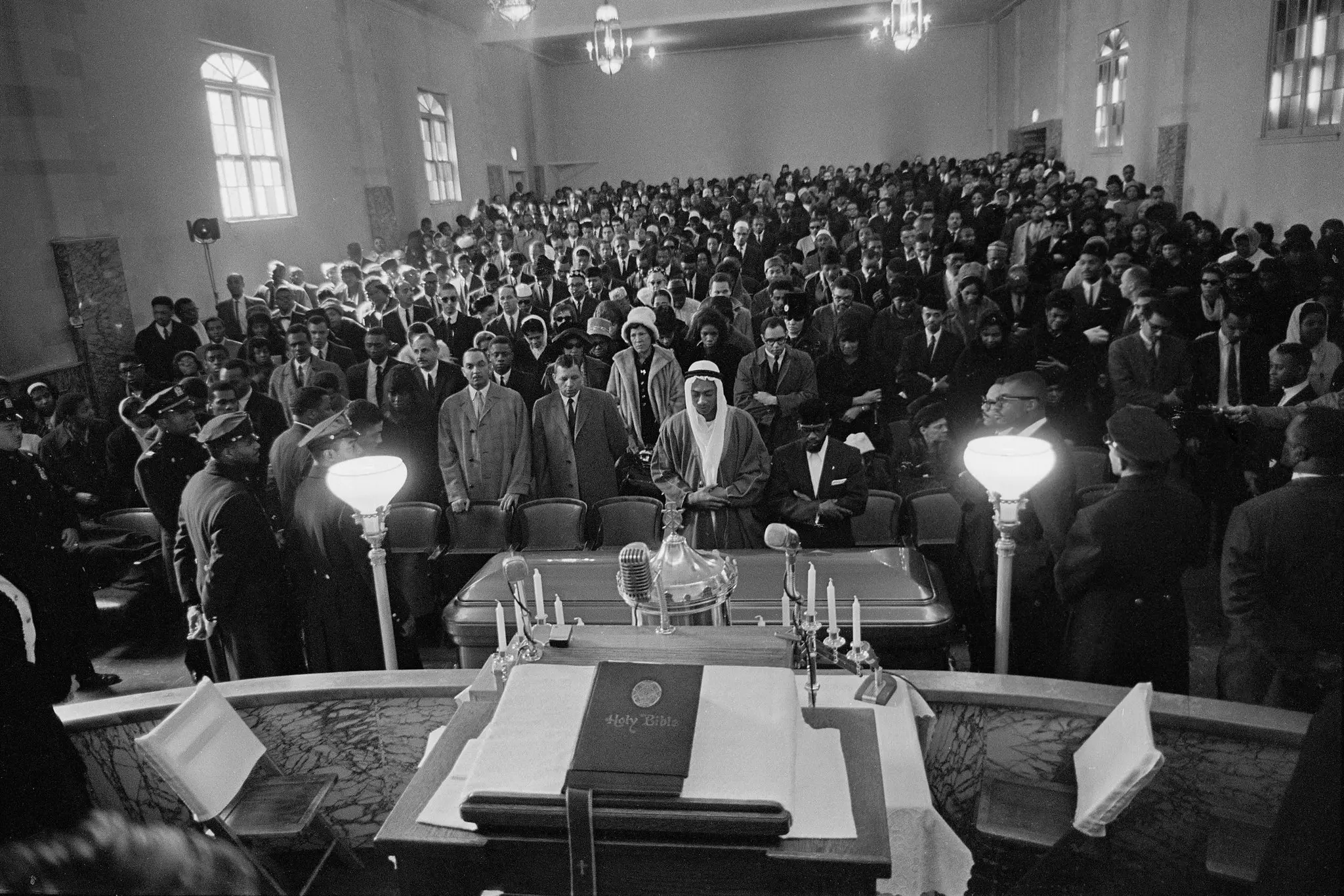
Another dimension of the Exodus disappears in King’s thought, and more generally in abolitionist and Civil Rights movement’s tradition: the desert. The forty years of wandering serve to educate the Israelites to freedom: those born into slavery, those who identify so strongly with it that they contest Moses’ decision to lead them away from the lands of Pharaoh, must die so that a new generation capable of living as free human beings can arise. The pedagogy of the desert creates a new humanity, and it is no coincidence that the Marxist tradition has focused more on this process of subjectivation when reading Exodus. This process can sometimes take on the characteristics of a purge: while Moses is on Mount Sinai, some Jews, with Aaron’s permission, decide to erect an idol in the shape of a calf using the jewels acquired in Egypt, and they are then slaughtered on Moses’ orders. It may seem strange that a people who have just escaped slavery should regret it or have material wealth: in fact, in Egypt the Jews are not technically slaves, but guests who were denied the rights guaranteed to them by the Pharaoh. They were repressed, alienated from the fruits of their labour and treated as second-class humans: their legal and political inferiority to the Egyptians is absolute, albeit offset by the availability of material resources. Egyptian slavery is the collective and comprehensive history of an oppressed ethnic group in a foreign land, rather than the history of individuals reduced to slavery: this is why, in Jewish exegetical tradition, the Exodus is often used to defend the stranger rather than the slave[11]. Egypt is a land of both oppression and corruption: the Jews have become morally corrupt, internalising an image of weakness while feeling a sense of fascination and inferiority towards the culture of their masters. This is why «the first phase of liberation is the decision to reject the image of [themself] which the slave-owner has painted, [...] to reject [themself] as slave. Here the problem of freedom leads us directly into the question of identity[12].». The “murmurers” regret the “fleshpots” of Egypt, which refers to material riches and food, as opposed to the desert's rigidity and aridity, but also to the sensual and “carnal” riches of a culture that is more lascivious than what Walzer defines the “desert puritanism”. However, regret irreparably alters memory: in Egypt, the Jews sat “by” the fleshpots, “[eating their] fill of bread[13]”. The Egyptian way of life confronts the Israelites, corrupting their vision and compelling them to eliminate their own subjectivity and forget themselves. However, they cannot fully participate, remaining excluded both politically and materially. The Israelites who stare with desire and frustration at the fleshpots reflect, in a game of centuries, the Martinicans of the first chapter of Black Skin, White Masks, who unsuccessfully attempt to emulate the French accent first by exaggerating and then completely eliminating the pronunciation of the letter r[14].
This dimension seems absent from King's thinking: even when he mentions the hardships of the desert and the sacrifices that freedom requires, these are always seen as external factors that the liberated people have inherited, without internalising them, from slavery. In his sermon The Birth of a New Nation[15], delivered in Montgomery after Ghana's liberation, among the wilderness that the Ghanaian people will have to confront, the Baptist reverend points to agricultural and industrial reforms aimed at freeing the country from the cocoa monoculture imposed by the colonisers, as well as literacy and education campaigns. These are undoubtedly complex and delicate processes which aim to heal the legacy of the extractive policies of British rule, but they should not be seen as waste to be deconstructed and unlearned. Even in the harshness of the desert, the people are already free; they face political and social challenges, but not subjectification. King joyfully welcomes the independence of the former Gold Coast and hopes that it will serve as an example to the African-American community in its struggle for liberation. He reiterates that «the oppressor never voluntarily gives freedom to the oppressed», who must instead conquer it through struggle. However, unlike Moses, he sees the parting of the Red Sea, rather than the desert, as the time and place to learn a new humanity. «Before you get to Canaan you’ve got a Red Sea to confront»: the mission is to fight with love, to desire the defeat not of one's enemies, but rather of the evil within them, and win their friendship through sacrifice, perseverance and non-violence. Egypt and Canaan are places of the soul, not geographical spaces. The purges and the pedagogy of the desert - the isolation which is functional for conquest - are not needed; but rather, the internal and social storms necessary for the subsequent calm of reconciliation. Similarly, in 1887, Edward Bryant spoke of the wilderness of segregation that Black Americans still had to face[16]. They had left the Egypt of slavery, but had not yet reached Canaan. The harshness of the desert once again presents an external obstacle to consciousness and the subject.
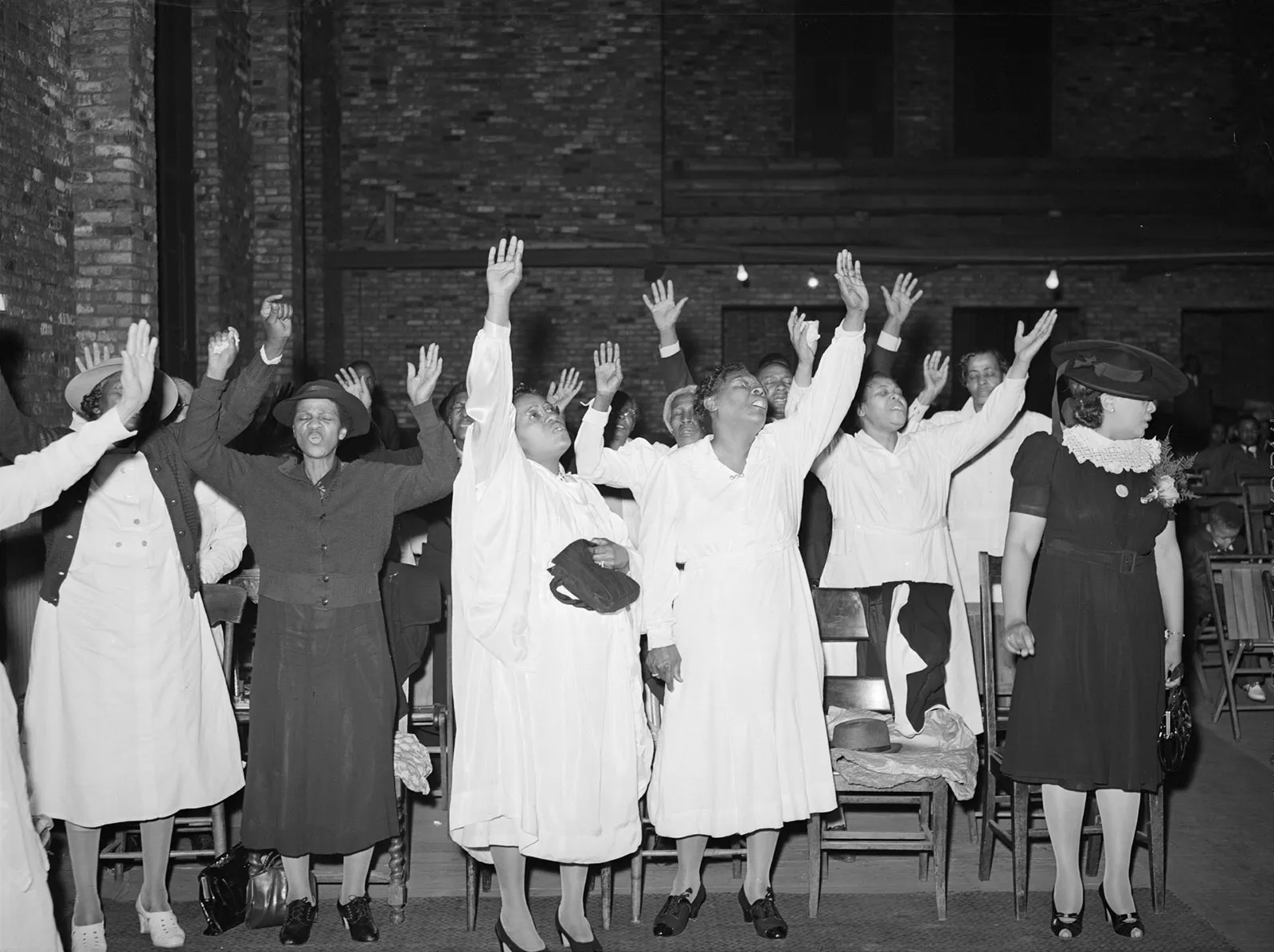
The desert also features in Adam Clayton Powell Jr. 's sermon, Stop Blaming Everybody Else[17], where it is stripped of its darker and bloodier characteristics. It is no coincidence that the dimension of the new humanity, closer to Marxism than the Baptist tradition, emerges in the speech of the Civil Rights Movement leader closer to communist positions: however, this does not become the ideological focus of the issue. The Reverend's polemical targets are McCarthyism and repressive anti-communist and anti-worker policies. His invitation to the Black community is not to wash their hands of the issue as Aaron did in the desert when faced with Moses' wrath. Not only is the dimension of purging completely absent, but Aaron is fundamentally transformed from an accomplice and purveyor of moral corruption into an indifferent bystander.
The violent and ruthless dimension underlying the pedagogy of the desert is one of the issues highlighted in Robert J. Patterson's book Exodus Politics. In it, he exposes the blind spots and contradictions of African American political thought inspired by the biblical text, as well as the leaderist and macho views that emerge from it. According to the author, «some appropriations of the Exodus narrative not only justify heterosexism and heteronormativity but also excuse the gender and sexual oppressions of black women and LGBTQ communities[18]». Patterson mentions the 1939 novel Moses, Man of the Mountain by Zora Neale Hurston as an example of feminist literature which is skeptical about Moses’ leadership. In the book, Moses is a somewhat grotesque figure whose authority is shaped by the cultural contest around him rather than by God’s call: the figure of Miriam, Moses’ sister, who in the Exodus is punished with leprosy for challenging and questioning her brother’s male authority, is particularly relevant[19].
On the one hand, the leadership dimension inherited from the biblical text has inextricably linked the civil rights movement to the 1950s and 1960s: this has made the end of racial segregation the sole objective of the struggle, as well as the only sufficient remedy for resolving the problem of racial injustice. On the other hand, however, this has created a total identification between the movement and its leaders, thus making the movement vulnerable. A discourse that ignores nuances, suppresses internal opposition and standardises tendencies can only centralise power, with all the ethical and strategic issues that this involves.
However, Moses' violence is not only directed against the Israelites who rebel against his power, but also, and above all, against the peoples inhabiting the land of Canaan, who will be massacred to allow the Jews to enjoy the rivers of milk and honey. It is no coincidence that the Exodus is one of the ideological cornerstones of Zionist thought. One of the most recent explicit references was Netanyahu's conclusion of his speech to the United Nations on 2 October 2024 with a Mosaic quotation: the people of Israel must have no fear, because God himself marches with them and will lead them to victory[20]. Centuries later, from the Midianites to the Palestinians, via the Native Americans, the “promised land” continues to be an ideological premise and justification for genocide.
Bibliography
Books:
Fanon, Frantz (1986), Black Skin, White Masks, translated by Charles Lam Markmann, London, Pluto Press.
Marbury, Herbert R. (2015), Pillars of Cloud and Fire. The Politics of Exodus in African American Biblical Interpretation, New York, New York University Press.
Naso, Paolo (2021), Martin Luther King. Una storia americana, Bari, Laterza.
Patterson, Robert J. (2013), Exodus Politics. Civil Rights and Leadership in African American Literature and Culture, Charlottesville and London, University of Virginia Press.
Selby, Gary S. (2008), Martin Luther King and the Rhetoric of Freedom, Waco, Baylor University Press.
Walzer, Michael (1985), Exodus and Revolution, New York, Basic Books, Inc. Publishers.
Speeches, Sermons and Lectures
Davis, Angela (1969), Lectures on Liberation, introductory lectures for Recurring Philosophical Themes in Black Literature, Davis’ first course at UCLA, held during the Fall Quarter of 1969].
King, Martin Luther Jr. (1956), The Death of Evil upon the Seashore.
King, Martin Luther Jr. (1957), The Birth of a New Nation.
King, Martin Luther Jr. (1963), I Have a Dream.
King, Martin Luther Jr. (1968), I’ve Been to the Mountain Top.
Malcolm X (1961), Speech at Harvard Law School Forum, March 24th 1961.
Malcolm X (1964), The Ballot or the Bullet.
Powell, Adam Clayton Jr. (1953), Stop Blaming Everybody Else.
This is according to Sarah Bradford in her authorised biography of Harriet Tubman, Scenes in the Life of Harriet Tubman (1869). Tubman was an abolitionist activist who, after escaping slavery, became one of the leading members of the Underground Railroad and a key figure in the women's suffrage movement.
Exodus, 19.4: «You have seen for yourselves how I treated the Egyptians and how I bore you up on eagle wings and brought you here to myself» (NAB 2011).
Douglass, Frederick (1845), Narrative of the Life of Frederick Douglass, an American Slave.
King, Martin Luther Jr. (1968), I’ve Been to the Mountain Top.
Walzer, Michael (1985), Exodus and Revolution, New York, Basic Books, Inc. Publishers, p. 32.
King, Martin Luther Jr. (1956), The Death of Evil upon the Seashore.
Corinthians, 1.22 (NAB 2011).
Malcolm X (1961), Speech at Harvard Law School Forum, March 24th 1961.
King, Martin Luther Jr. (1963), I Have a Dream.
Malcolm X (1964), The Ballot or the Bullet.
Walzer, M., Exodus and Revolution, p. 32.
Angela Davis, Lectures on Liberation [Initial lectures for "Recurring Philosophical Themes in Black Literature," Davis’ first course at UCLA, taught during the Fall Quarter of 1969].
Exodus, 16.3 (NAB 2011).
Fanon, Frantz (1986), Black Skin, White Masks, translated by Charles Lam Markmann, London, Pluto Press, p. 21.
King, Martin Luther Jr. (1957), The Birth of a New Nation.
Quoted in Selby, Gary S. (2008), Martin Luther King and the Rhetoric of Freedom, Waco, Baylor University Press, p. 40.
Powell, Adam Clayton Jr. (1953), Stop Blaming Everybody Else.
Patterson, Robert J. (2013), Exodus Politics. Civil Rights and Leadership in African American Literature and Culture, Charlottesville and London, University of Virginia Press, p. 3.
Ivi, p. 23.
The quote is from Deuteronomy, 31.6.