
How Racial Terror Became Spectacle Again

Why do images of racial intimidation still feel so familiar? In her latest article for oltreoceano, Naomi Kelechi Di Meo reflects on a photograph that circulated around the world after a Fourth of July march by the white supremacist group Patriot Front. Starting from that image, the piece explores how racial terror has evolved over time, from the spectacle of lynching to the visual politics of the present. Moving between Billie Holiday's Strange Fruit, American history, and the contemporary crisis of liberal democracy, the article asks a broader question: why are politics of exclusion once again able to offer so many people a sense of belonging?
I deliberately chose not to use the now-viral Reuters photograph of Bernita Bowlding sitting alone on the Washington Metro. It is an extraordinary image, but it has already done what images of racial violence too often do. It has placed a Black body at the centre of our attention, asking it to carry not only the weight of intimidation but also the burden of representing it.
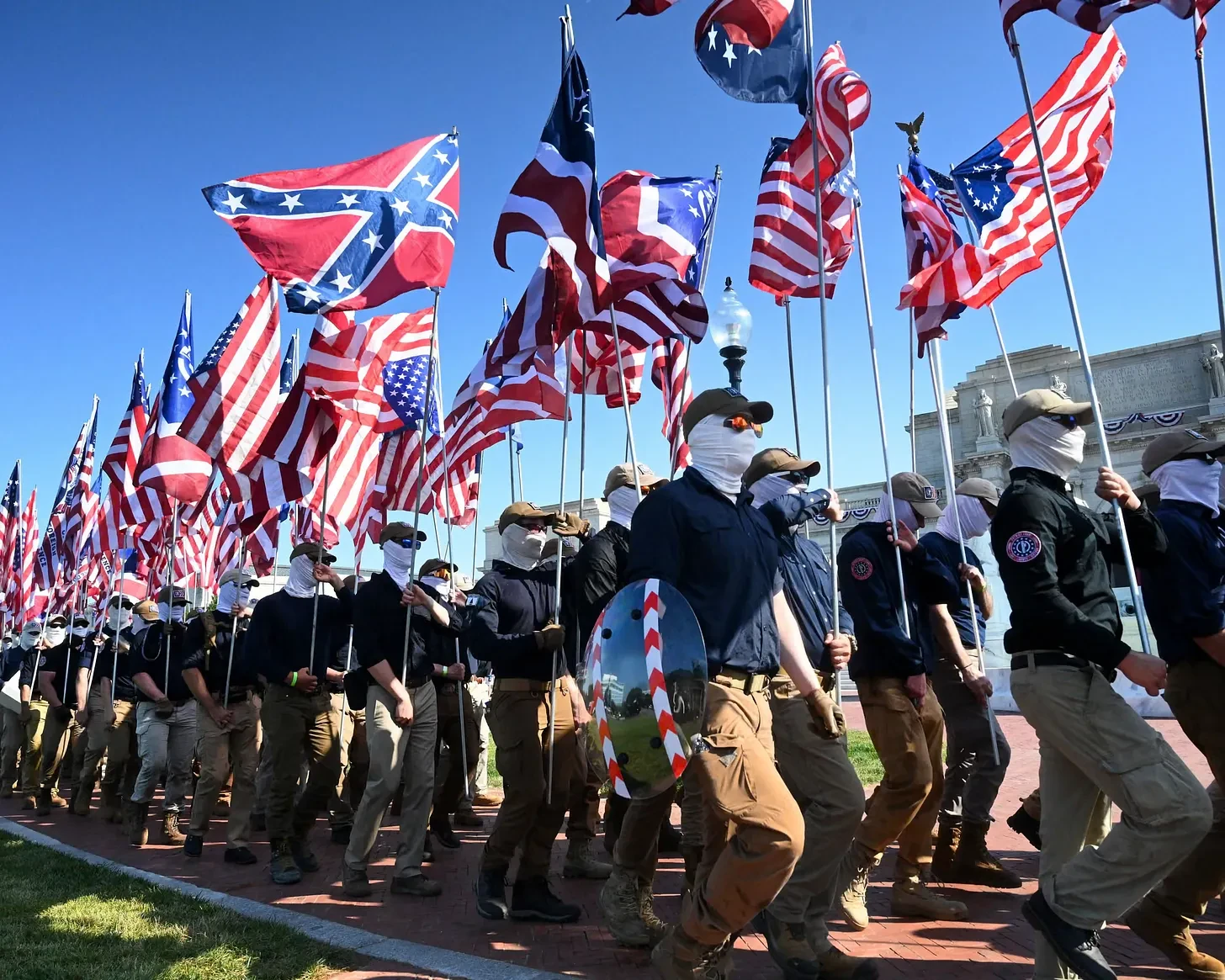
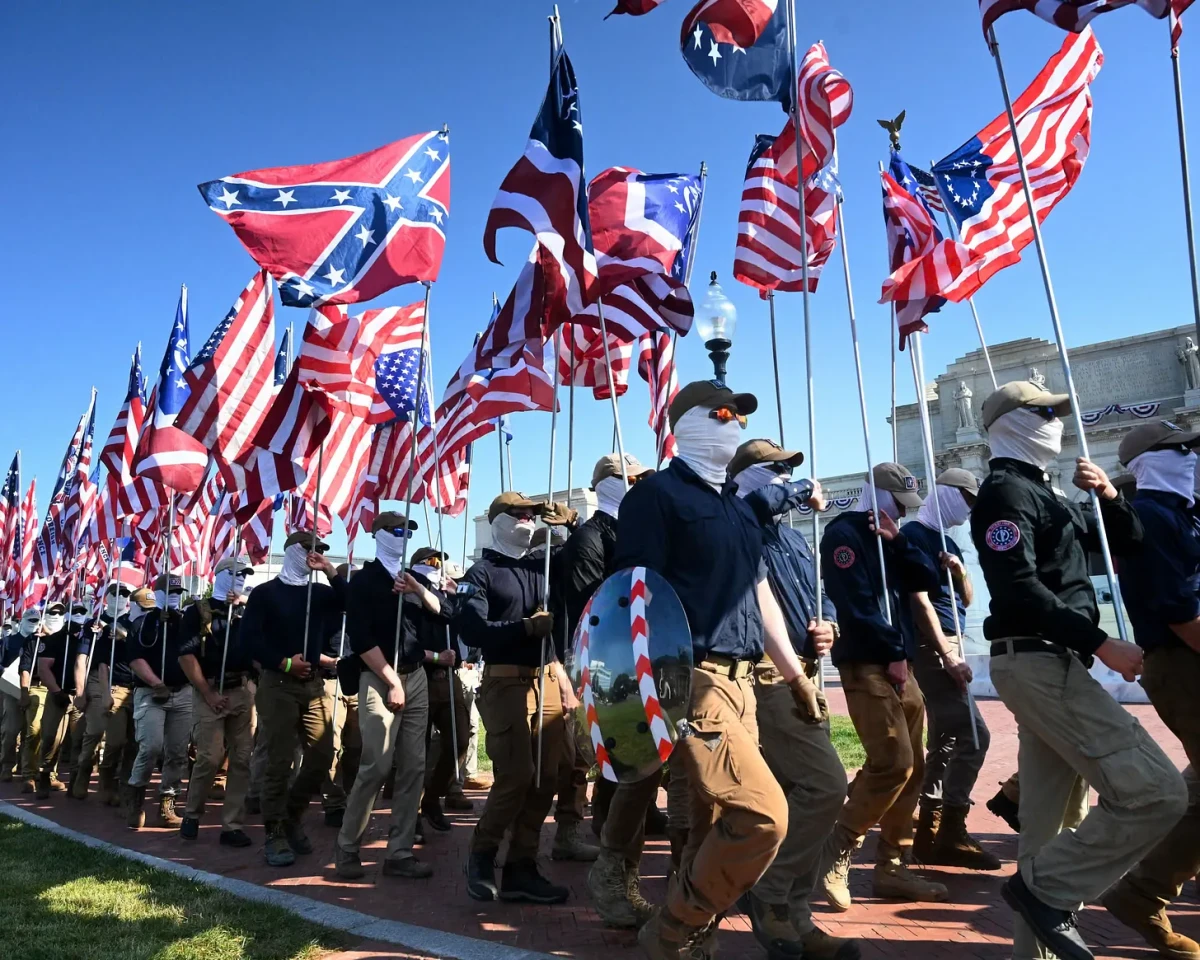
Instead, I chose a photograph of the men marching.
This essay is not about Bernita Bowlding. It is about the political project embodied by the men surrounding her, the ideology they represent and the violence that continues to animate it. They should be the object of our analysis, our scrutiny and our collective indignation. The very people who loudly invoke national security, law and order, and the need to identify those they portray as threats to the nation, conceal their own faces behind white masks. Meanwhile, our cameras almost instinctively return to Black bodies, to those who continue to occupy public space, live their lives and preserve their dignity despite intimidation. In doing so, we risk assigning them yet another responsibility, that of carrying the emotional and symbolic weight of the spectacle itself. But a spectacle does not exist because of a single character. Every performance requires a cast, and every stage has protagonists, spectators and directors. Too often, when racial terror enters public view, we keep the spotlight fixed on those forced to endure it while allowing those responsible for producing it to remain in the wings. Perhaps it is time to move the spotlight. If we are serious about confronting racial terror, then those who have hidden behind masks for so long should finally be brought back to their rightful place, centre stage.
Whenever Strange Fruit ends and the room falls silent, I find myself wondering what exactly the song leaves behind. It has never felt like a piece of music trapped inside another century, nor like a historical document commemorating a violence that America eventually overcame. If anything, every time I press play I am reminded that its silence belongs much more to the present than to the past, lingering long after Billie Holiday’s voice disappears as though refusing to let the listener retreat into the comfort of historical distance. We have grown accustomed to treating Strange Fruit as the soundtrack to a completed chapter of American history, as though the horror she sang about belonged to a country that eventually found the courage to bury it beneath the victories of the Civil Rights Movement and the reassuring mythology of progress. It has become the kind of song we commemorate rather than the kind of song we truly listen to, transformed into historical memory precisely because imagining it as contemporary would require confronting the possibility that the political grammar of racial terror never truly disappeared. It simply learned how to speak differently. What made Strange Fruit unbearable was never only its subject matter.
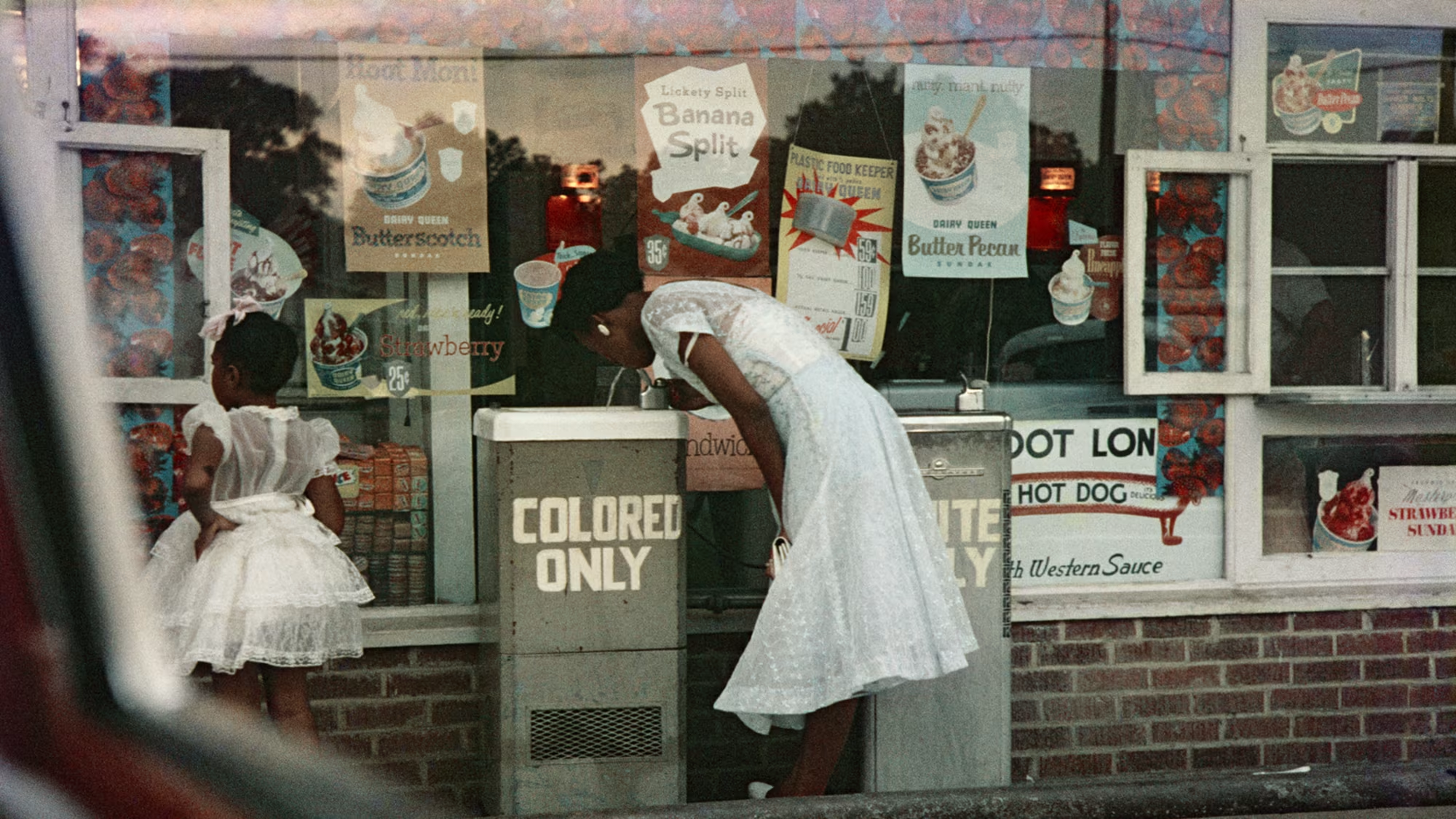
Billie Holiday was not merely singing about lynching, she was exposing the social function of lynching itself. We often remember the bodies hanging from southern trees while forgetting the crowds gathered beneath them, the children brought to witness the spectacle, the postcards printed from photographs of mutilated Black bodies, the newspapers that reproduced those said images with astonishing normality. Lynching was certainly murder, but murder alone was never enough. Its power depended upon visibility, upon performance and, above all, upon an audience. The violence was directed at an individual while the message was addressed to an entire community. Every public execution reaffirmed who possessed the right to belong within the American nation and who remained permanently vulnerable to expulsion from it.
But the thing is… terror has always relied upon spectatorship.
That was the first thing I thought about when I saw the Reuters photograph of Bernita Bowlding sitting alone on a Washington Metro train, surrounded by members of Patriot Front returning from their Fourth of July march. The image travelled across the world within hours because it appeared almost too perfect, too loaded with historical echoes to escape becoming iconic. A young Black woman seated quietly beneath the fluorescent lights of a subway carriage. Around her, a line of masked white men dressed almost identically, their faces concealed behind white coverings, their bodies disciplined into visual uniformity, transforming themselves into something less than individuals and more than a crowd- I dare to say a choreography. Nobody is touching her and nobody really needs to. The intimidation resides precisely in the absence of physical violence, in the certainty that the photograph communicates everything without requiring a single gesture. The temptation is to read the image as evidence that racism is still alive in the United States, to circulate it with the familiar language of outrage before quietly placing it alongside the endless archive of viral images documenting racial injustice.
Yet something about that response feels profoundly insufficient. The photograph is important, but not for the reasons most people seem eager to discuss. Its significance lies less in what it depicts than in what it reveals about the society capable of producing it. We risk consuming the image in exactly the same way previous generations consumed photographs of lynchings, allowing the spectacle itself to become the event while neglecting the political conditions that made such spectacles possible in the first place. The image becomes detached from the structures that generated it, transformed into a symbolic object that invites moral condemnation without demanding political explanation.
America is rediscovering the political function of lynching long before it rediscovers the rope. This is not an argument that lynching has returned in its historical form, nor an attempt to collapse profoundly different moments into an easy analogy. History rarely repeats itself with such generosity: it mutates, abandoning certain rituals while preserving their underlying logic, exchanging one language for another without surrendering the social relations that language was designed to protect. This is how the rope disappears. The postcard becomes a viral photograph, yet the political objective remains disturbingly familiar, reminding certain bodies that their presence within the nation remains conditional, that citizenship itself can still be organised through fear, humiliation and public performance.
What unsettles me most is not the existence of white supremacist organisations, I am not naive… and American history has never lacked them. Nor is it the fact that such groups continue marching through public streets wrapped in the language of patriotism. White nationalism has always understood the symbolic power of flags, uniforms and national mythologies. What troubles me is something far more structural, namely the ease with which these moments are absorbed into a culture that increasingly experiences politics through images rather than institutions, through spectacles rather than material conditions. We have become extraordinarily good at consuming racism as visual evidence while growing increasingly incapable of confronting it as political economy, as though racial violence existed independently from housing, labour, healthcare, education, precarity and the slow erosion of every institution once capable of producing genuine social belonging.
Perhaps that is why the photograph feels so haunting. Not because it shows us something entirely new, but because it captures a society in which racial terror no longer needs to announce itself through extraordinary violence in order to communicate its message. Spectacle has always been most effective when it appears ordinary, when intimidation becomes mundane enough to occupy the same space as commuters returning home after work. The Reuters photograph is therefore not simply a document of contemporary racism; it is evidence that racial intimidation has once again become thinkable as public performance, that white supremacy increasingly understands itself not as something to conceal, but as something to stage, photograph and circulate. Before asking what the image tells us about America, we should perhaps ask a more uncomfortable question, what kind of political and economic order has made such performances imaginable once again?
There is something reassuring about treating the Fourth of July march as an anomaly, another shocking episode confirming that extremist organisations continue to exist on the margins of American society. It allows us to believe that what unfolded in Washington belongs to the realm of exception rather than confronting it as the product of a much longer political trajectory. Yet reading it this way mistakes the symptom for the disease. The Patriot Front did not suddenly emerge from the shadows, nor is its public visibility the consequence of an unexpected resurgence of white supremacy. Rather, the march through Washington should be understood as the latest expression of a political process in which ideas, symbols and forms of racial exclusion that once carried an undeniable social cost have gradually re-entered public life, not because they have become universally accepted, but because liberal democracies have progressively lost the capacity to make them politically unacceptable.
This distinction matters because it changes where responsibility lies. White supremacy has never disappeared from the United States, nor from Europe for that matter. What has changed is the political environment within which it operates. For decades, the post-war liberal order rested upon an anti-fascist consensus that extended well beyond legislation. Certain ideas could certainly survive, but they remained confined to the political margins, deprived of institutional legitimacy and burdened by the weight of historical memory, as well as shame.Fascism was not defeated because societies became inherently more tolerant. It was defeated because the social, cultural and political consequences of publicly embracing it were simply too costly. That consensus has not collapsed overnight, nor has it been dismantled by the far right alone. It has eroded gradually, almost imperceptibly, through years of institutional distrust, economic insecurity and political fragmentation that have hollowed out the authority of the democratic centre itself. The result is that positions once considered beyond the limits of democratic legitimacy increasingly circulate as legitimate contributions to public debate, first as provocation, then as controversy and eventually as policy proposals discussed with remarkable normality. The boundaries of what can be publicly imagined shift long before the law changes, and by the time legislation begins reflecting those transformations, society has often already adapted to their presence.
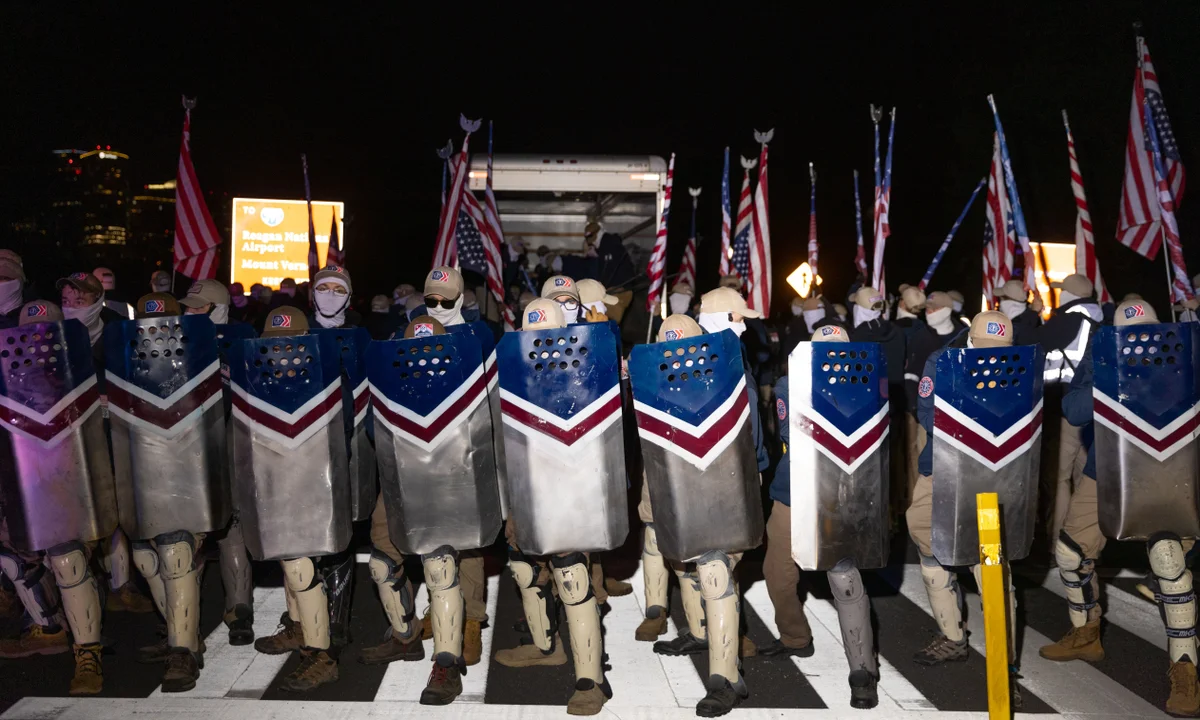
America simply offers the clearest image of this contradiction because its history has always made the relationship between race and nation impossible to conceal. But the phenomenon is by no means uniquely American. Across Europe, the language differs while the underlying architecture remains quite familiar. Electoral campaigns increasingly revolve around ethnic belonging rather than citizenship, migration is framed less as a question of governance than of civilisational survival, and proposals that would once have been dismissed as incompatible with liberal democracy now circulate comfortably within parliamentary debate. The targets vary according to national histories, whether migrants crossing the Mediterranean, Muslim communities, Indian populations or Black Europeans born and raised within the very countries that continue questioning their belonging, but the political logic remains remarkably consistent. The nation is gradually reimagined not as a civic community open to those who participate in it, but as a cultural inheritance to be defended from those whose presence is presented as permanently conditional. Seen from this perspective, the Reuters photograph ceases to be merely a disturbing image of racial intimidation and becomes something far more revealing. What it captures is not simply the persistence of white supremacy, but its renewed confidence in occupying public space without fearing immediate political isolation. The significance of the image therefore lies less in the men standing inside the carriage than in the society standing outside it, a society in which such performances no longer appear unimaginable, where outrage remains abundant but political consequences increasingly scarce.
If the resurgence of openly exclusionary politics cannot be explained simply by the persistence of racism, then the more uncomfortable question becomes why this political language has regained such resonance now. The answer cannot be found exclusively inside the far right itself because no political movement, however sophisticated its propaganda, succeeds so rapidly. Ideologies become powerful when they learn to inhabit conditions that already exist, translating anxieties, frustrations and unmet needs into coherent narratives that appear capable of making sense of an increasingly fragmented world. The success of contemporary reactionary politics therefore tells us at least as much about the failures of liberal democracy as it does about the ambitions of the far right. For more than four decades, neoliberalism has transformed Western societies in ways that extend far beyond the economy. Its greatest achievement was never simply privatisation, deregulation or the expansion of financial markets. It reorganised social life itself around competition, individual responsibility and permanent self-optimisation, gradually dissolving many of the institutions through which democratic societies once produced solidarity. Stable employment became increasingly precarious, housing ceased to function primarily as a social good and became an investment vehicle, public services were progressively hollowed out, trade unions lost both membership and political influence, religious institutions declined, neighbourhoods became more transient and every sphere of collective life was reorganised according to market logic. What emerged was not merely greater inequality but a society in which belonging itself became progressively privatised.
This distinction is crucial because human beings rarely organise themselves around abstract principles alone. Long before they seek ideological certainty, they seek recognition, stability and the reassuring sense that their lives exist within a community capable of giving them meaning. Liberal democracies once attempted to satisfy at least part of this need through institutions that connected individuals to one another, whether through work, collective bargaining, local associations, religious communities or public education. Those institutions were never perfect, nor were they equally accessible to everyone, particularly racialised communities who often experienced exclusion even within them. However, as those structures weakened, not much emerged to replace them beyond the expectation that individuals would construct meaning through personal success, consumption and endless self-improvement…. So politics inevitably adapted to this transformation. As collective institutions declined, political discourse increasingly shifted towards the individual, celebrating personal visibility, representation and recognition while becoming progressively less capable of articulating a shared material horizon (this is quite tangible on social media, where everything is advertised through the idea of “self”… and Marx warned us about this). Rights remained essential and struggles around race, class gender and sexuality unquestionably transformed millions of lives, yet these battles increasingly unfolded within a political landscape where universal questions of housing, labour, healthcare and redistribution occupied a diminishing place in the public imagination. Recognition gradually came to substitute redistribution, representation displaced organisation and visibility itself became confused with political transformation, leaving structural inequalities largely intact while encouraging the belief that symbolic inclusion alone could compensate for growing material insecurity.
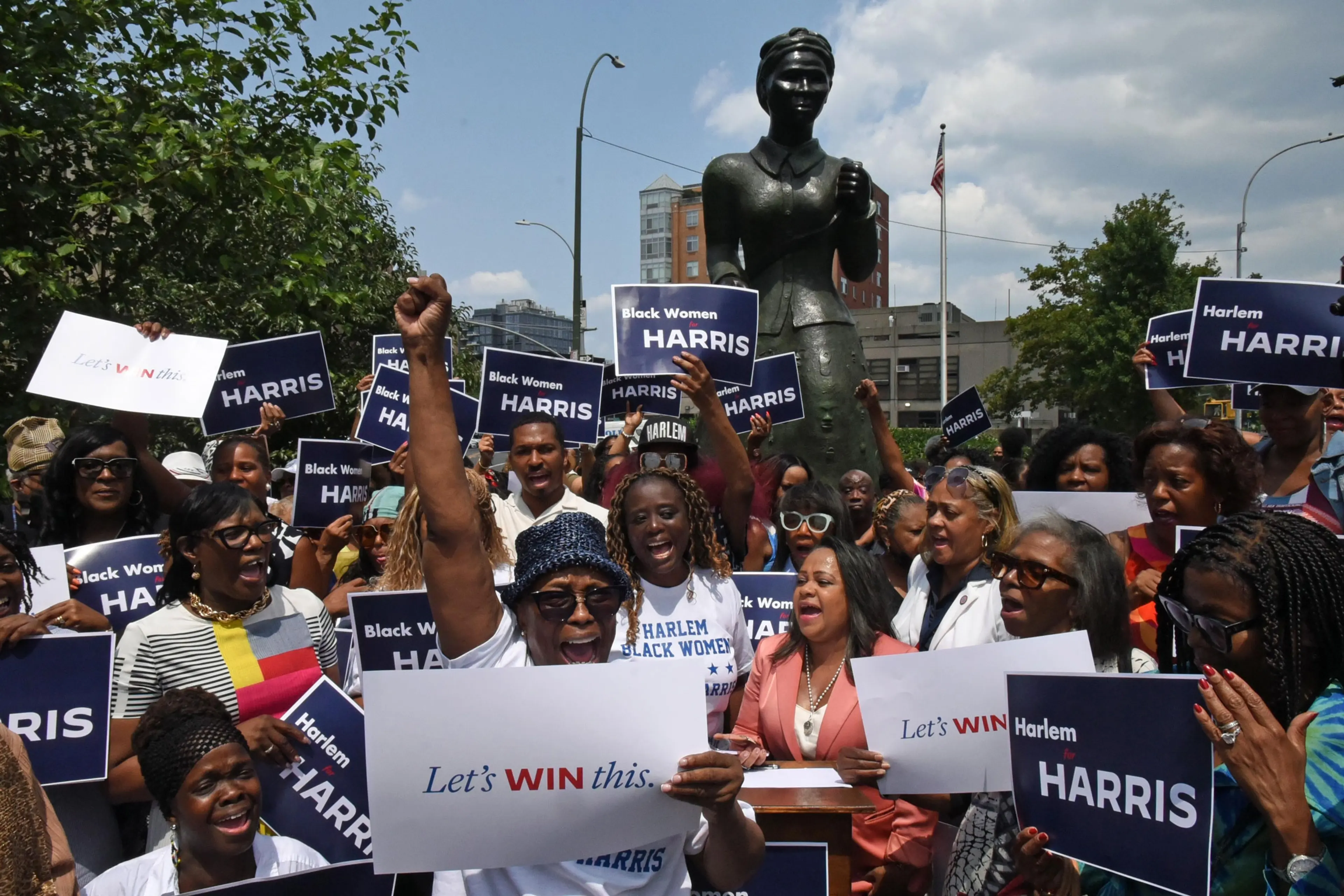
A prime example of this is Kamala’s Harris presidential campaign, where visibility was dressed down as political transformation, without actually addressing any material issue that affects the ordinary American citizen. It is precisely within this arena that the contemporary far right has demonstrated a political intelligence many of its opponents continue underestimating. Its success does not primarily lie in the originality of its policies, many of which are economically incoherent or historically recycled, but in its capacity to reconstruct forms of collective identity inside societies increasingly organised around isolation. Nationalism offers community where neighbourhoods have fractured. Ethnic identity provides certainty where work has become precarious. Rituals, uniforms, marches and symbols generate emotional attachment in political cultures that increasingly struggle to produce any comparable experience of collective belonging. None of this legitimises the premises upon which these movements are built. Their vision remains exclusionary, authoritarian and fundamentally incompatible with democratic equality. Yet dismissing their appeal as nothing more than ignorance or manipulation only deepens the analytical failure that allowed them to expand in the first place. False belonging remains belonging, and communities organised around exclusion continue fulfilling emotional and social needs that liberal democracies have too often abandoned to the market.
I believe this to be the greatest paradox of the present political moment. The ideological project that celebrated individual freedom above all else has produced societies in which loneliness has become one of the defining collective experiences of modern life. The movements most capable of exploiting that loneliness are precisely those promising to dissolve the isolated individual into a larger collective, even when that collective is imagined through racial purity, national mythology or civilisational decline. White supremacy, in this sense, should not be understood merely as an ideology of hatred. Increasingly, it presents itself as an ideology of belonging, and it is precisely because that promise is built upon exclusion that it proves so politically dangerous.
This is why I keep returning to Strange Fruit. Every time the song ends, I expect the silence to offer some distance, to return safely to another century, to remind me that Billie Holiday was singing about a country that no longer exists. Instead, it does the opposite. The silence lingers because the song was never only about lynching, nor even about the bodies hanging from southern trees. It was about the unsettling realisation that violence rarely ends when the violence itself does. It survives inside memory, inside institutions, inside political language and, perhaps most dangerously, inside the quiet expansion of what a society slowly learns to accept as ordinary. Perhaps this is the reason I find the Reuters photograph so difficult to look at. Not because it tells us something we did not already know, but because it forces us to confront how easily we continue to mistake the spectacle for the problem itself.
We have become too fluent at recognising racism once it has produced an image, once it has become visible enough to circulate across newspaper front pages and social media timelines, while remaining far less willing to ask what kind of political and economic order keeps producing those images with such relentless regularity. For years we have spoken about racism as though its greatest danger lay in individual prejudice, offensive language or the visibility of extremist groups, all of which deserve to be confronted but none of which explain why exclusion repeatedly returns at precisely those moments when democratic societies seem least capable of offering people a sense of purpose, dignity and belonging. The last question I bring forward, then, is not why white supremacy still exists. Again - it has always existed. The question that continues to haunt me is why it increasingly presents itself as a convincing answer to forms of loneliness, insecurity and abandonment that our political systems not only failed to resolve but, in many ways, helped create. Maybe that is the silence Billie Holiday leaves behind… not the silence of history, but the silence that follows every society convinced it has already learned the lessons of its past.