
Blood in My Eye: Experiences on the Margins and Anti-Prison Struggles
Can a prison become a school of revolution? George Jackson’s writings transformed his experience of incarceration into a radical reflection on marginalisation, race, class, and political struggle. In this article, Vittoria Lamorgese traces Jackson’s legacy from the Black Panther Party to the Italian prisons of the 1970s, exploring the unexpected connections between Black prisoners in the United States and Italy’s Collettivo Jackson and Nuclei Armati Proletari. Across different contexts, the prison emerges not only as a space of punishment and exclusion, but also as a site of political awakening, organisation, and resistance.
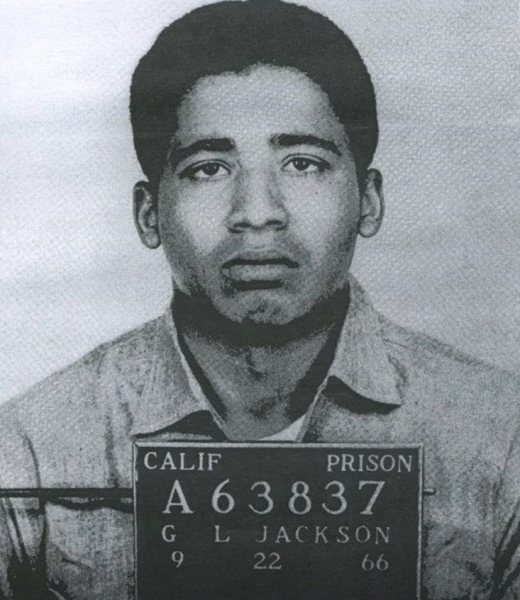
On 21 August 1971, in the courtyard of San Quentin Prison in California, a prison officer’s gunshots cut short the life of a 29-year-old prisoner, striking him from behind. That man was George Jackson, who was already one of the most famous prisoners in the United States and was destined to become an international symbol of the anti-prison and Black liberation struggles. His life story unfolded amid juvenile halls, arrests, and prison cells from the age of fourteen, with his first conviction coming at just eighteen. From that moment onwards, he never spent a single day in freedom again. He spent the next eleven years in prison for stealing seventy dollars from a petrol station. His story is not just his own tragic tale, nor is it an exceptional case; rather, it is the collective biography of an entire people: the “internal colony” of Black people, the marginalised and the excluded; a section of the population forced into a life of survival tactics, underpaid work, exploitation, petty theft and minor criminal activities. Jackson transformed his imprisonment into a space for study and redemption, gradually becoming aware of this reality as he faced it head on. «I’ve been in rebellion all my life»[1], he wrote in a letter. Crime is merely the first and most unconscious expression of the quest for liberation.
Although democratic societies tend to cloak the institution of imprisonment in a veil of naturalness and inevitability, viewing it as a necessary instrument of security, Jackson’s writings and letters help us recognise its brutal reality. Imprisonment is revealed to be a means of disciplining the social body and safeguarding power relations rather than ensuring security. Jackson writes: «The ultimate expression of law is not order - it’s prison», and «Bourgeois law protects property relations and not social relationships [...] The law and everything that interlocks with it was constructed for poor, desperate people like me»[2]. The class, gender, and racial divisions inherent in capitalist society are manifested most violently and explicitly within the prison system, which becomes a sort of repository for all those who cannot find their place within the capitalist system, either economically or socially.
Prison clearly reproduces as a vessel for social marginalisation, characterised by low levels of education, unemployment, drug addiction, and foreign nationality, acting as the final stage in a funnel-like process that selects its population based on material and human resources[3].
Through the letters and writings he produced during his imprisonment, George Jackson’s voice becomes a living testimony to all this – a cry of anger and pain that is soon harnessed in the service of the revolution. Jackson recognises the lived experience of Black American prisoners as being akin to that of slaves: «Born to a premature death, a menial, subsistence-wage worker, odd-job man, the cleaner, the caught, the man under hatches, without bail - that’s me, the colonial victim»[4].
The plantation slave and the racialised prisoner share the same fate: they are both subjected to the same yoke. It was in prison that Jackson realised this, began to devote himself to politics and joined the Black Panther Party, eventually becoming one of its most famous and influential members in the 1970s. During his imprisonment, revolution became an imperative - something from which one could not and must not shy away - «a love-inspired, conscious act of desperation»[5]. This led Jackson to endure a particularly harsh experience of imprisonment[6]: recognised as a revolutionary also by the prison authorities, he was constantly subjected to repeated transfers, beatings and solitary confinement in an attempt to neutralise him. However, it also led him to become increasingly convinced of the need for organisation and strict political discipline, almost military in nature. The “people’s war” cannot afford informality, carelessness or confusion; it requires a carefully selected structure capable of maintaining constant vigilance and ensuring the effectiveness of its practices. It was with these aims in mind, following meetings with other “Black guerrillas” - including George “Big Jake” Lewis and W.L. Nolen - that the Black Guerrilla Family came into being, and it remains active to this day within the US prison system. Prison is no longer merely seen as a place of resignation and passivity, but as a breeding ground for political awakening where common criminals can and must be radicalised in order to emerge as revolutionary militants. «We attempted to transform the black criminal mentality into a black revolutionary mentality»[7]. While the revolt finds its embryonic stage in an illegal and informal setting, subsequent steps can be taken from within prison. This was George Jackson’s political gamble.
A similar kind of gamble was taking place in the corridors of Italian prisons a few years later. An alliance was forged in the first half of the 1970s between so-called “social prisoners” and political activists, particularly at the Murate prison in Florence. In 1974, Luca Mantini, a Lotta Continua activist, was arrested and imprisoned following a protest at a conference organised by the Italian Social Movement. The people he met in prison seemed to share the same sense of subjugation as that experienced and recognised by George Jackson. A visceral understanding was immediately forged between the communist theoretical perspective and the unyielding drive towards rebellion of the outlaws. The encounter between Mantini and Abatangelo, as recounted by the latter, provides a vivid picture of this: «Luca explained to me the theories, history, and political and social objectives of the class struggle. I taught him the art of the extra-legal proletariat, learnt over a lifetime on the streets»[8].
During a period of intense political upheaval in post-’68 Italy, which was moving ever closer to armed conflict, a disruptive force emerged from the prisons: raw, uncompromising explosiveness. The traditional political categories that identified the factory worker as the quintessential revolutionary were no longer sufficient: the marginalised classes, excluded even from this economic pact, demanded their own space. Outlaws, bandits and rebels asserted their own perspective and autonomous role. While Lotta Continua initially managed to address the prisoners’ demands by setting up the Prison Commission, it was precisely this body that subsequently collapsed and split, leading to the formation of the Collettivo Jackson and, subsequently, the Nuclei Armati Proletari (NAP). The time had come to go on the offensive. It was here that they made the decision to dedicate their life to the revolution: «How many things have changed! During that conversation, I made the definitive decision to end my career as a robber and rebel and devote myself entirely to revolutionary activism. I had become a different person»[9]. The words of the Florentine bandit echoes the legacy of George Jackson. The distinction between the underclass, both Black and white, and the revolutionary is made behind bars. With this understanding, the NAP was the only militant organisation capable of establishing itself in central and southern Italy. It was thus able to engage with the section of the population excluded from the capitalist market: until then, no valid political influence had been drawn from this group. In regions left behind long before the economic boom, where economic investment had failed and the industrial apparatus was struggling, lives built on makeshift means on the fringes of legality were proliferating. The NAP enabled these lives to assert their political significance and build a revolutionary perspective by critiquing the prison system.
«Armed struggle was no longer confined to the industrial triangle[10]. In Naples and Rome, a new organisation had emerged, determined to address the realities faced by the working classes in central and southern Italy, as well as the revolutionary demands arising from the prisoners’ movement. Its name was Nuclei Armati Proletari»[11].
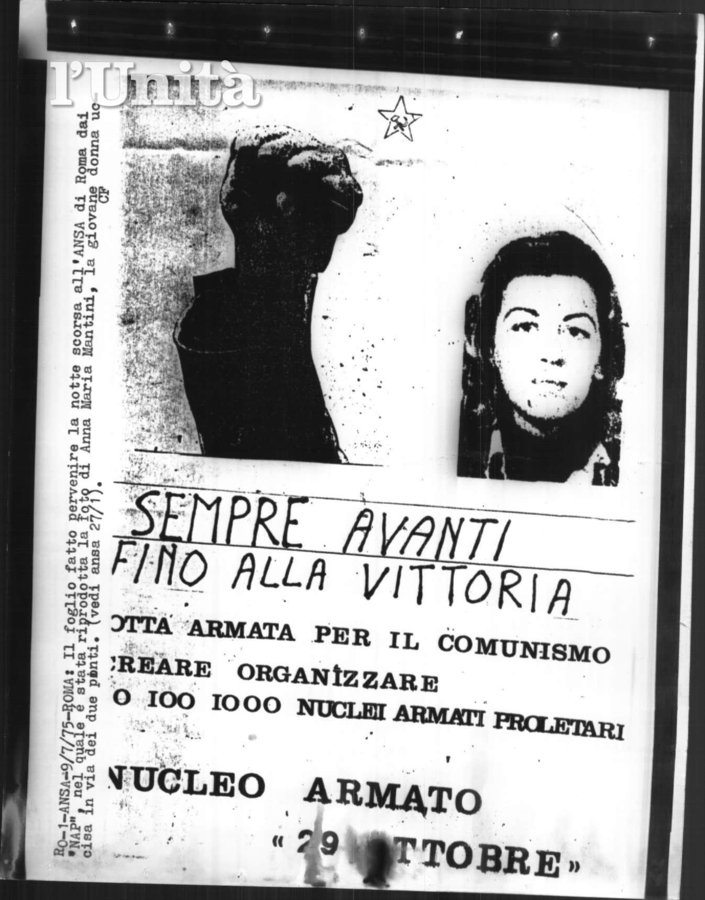
Political organisation breaks the isolation of the marginalised, offering them the opportunity to reclaim their existences. Class consciousness becomes a means for saving oneself from exclusion, passivity, and often even drug addiction. The close link between imprisonment and political education leads revolutionary movements and illegal prisoners – the “bandits” – to recognise each other. Perhaps the most striking example of this is the demand by the Brigate Rosse for the liberation of Sante Notarnicola and 12 other prisoners in exchange for the release of Aldo Moro. Sante, who was active in the prison movement, was not a member of any political or political-military organisation in the 1970s. He carried out robberies between Turin and Milan with the Cavallero gang, and, although he was a communist, he was also a “maverick”; yet the Brigate Rosse had put him at the top of the list of people they were demanding to be released.
The prison, conceived as a place of punishment and annihilation with the sole purpose of inducing resignation, is transformed into its opposite and becomes a school of revolution. For political militants and the new metropolitan proletariat, the fight against the prison system and oppression knows no bounds. It’s a matter of succumbing or continuing to resist.
Jackson’s expression “blood in my eye” is therefore not mere rhetoric. It characterises the gaze of those who refuse to be passive victims of marginalisation and oppression; those who refuse to be excluded and ultimately imprisoned. The blood in the eyes is the hallmark of those who bear the weight of centuries of exploitation and slavery on their shoulders; those who grew up on the streets of the ghetto or in refugee camps; those who saw their brothers die under prison guards’ bullets. With blood in the eyes, one looks the enemy in the face and overturns one’s cell, turning it into the site of political emancipation. The stories of the Black Panther Party prisoners, as well as those that would give rise to the Collettivo Jackson in Florence and the Nuclei Armati Proletari in central and southern Italy, are inextricably linked by their shared experience of marginalisation. It is from their shared experience of discrimination, colonisation and segregation that they find the political possibility of freedom.
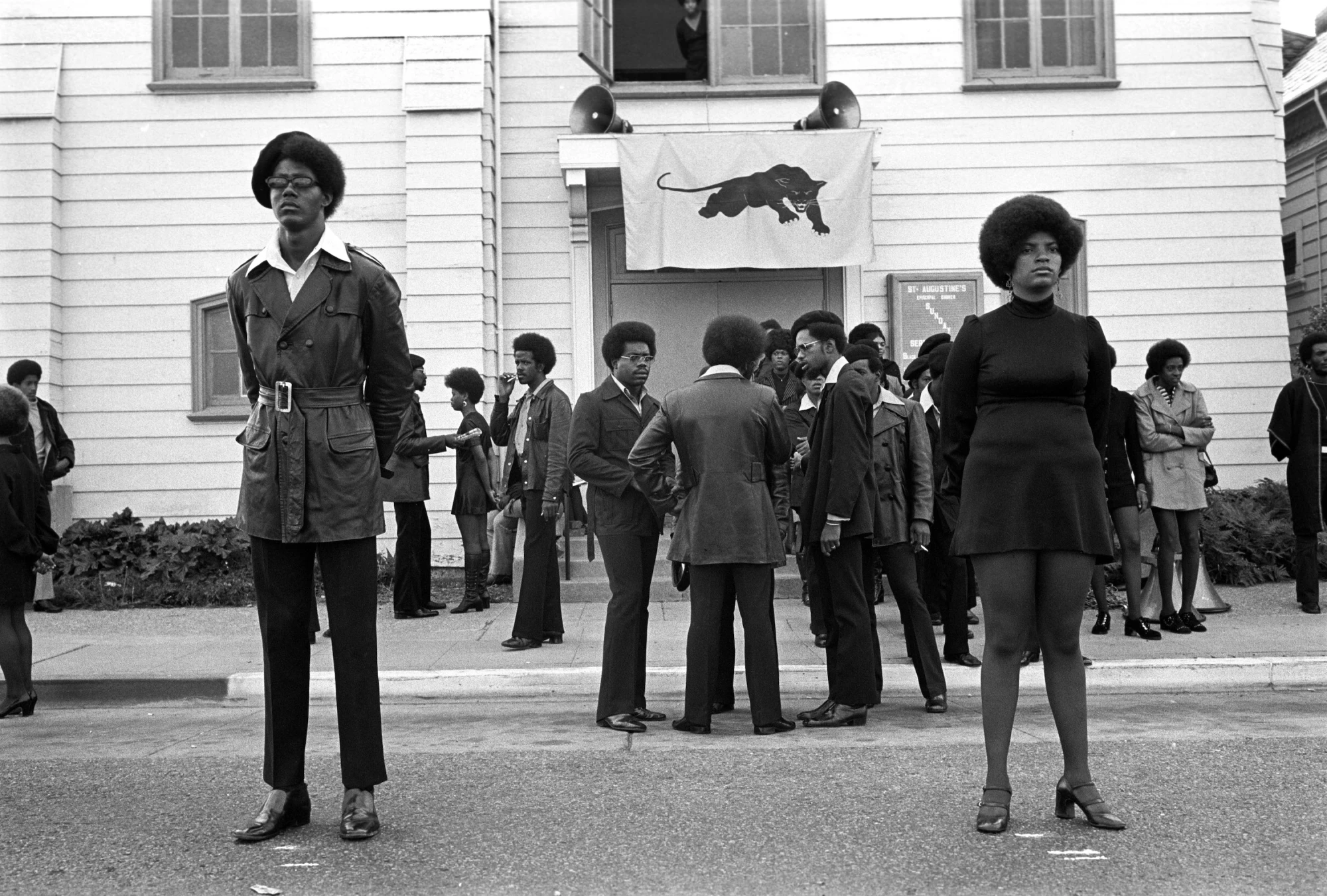
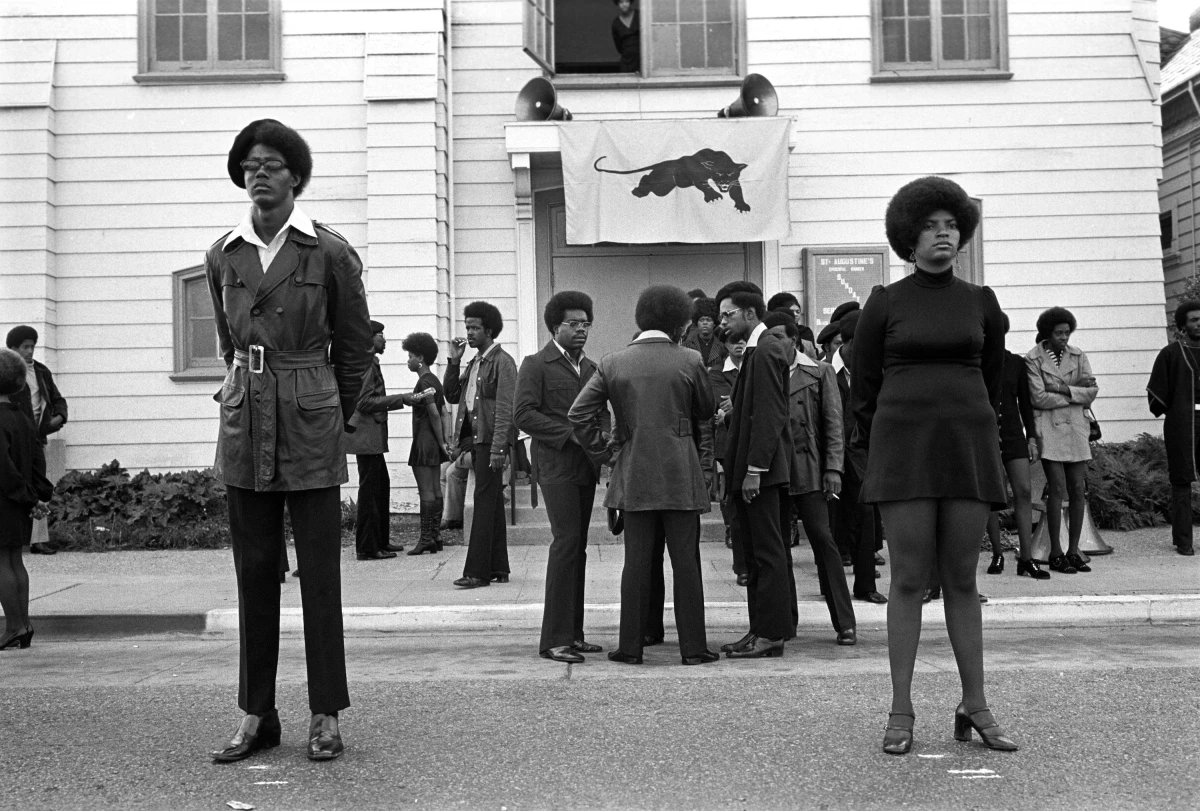
Opening image: George Jackson's funeral at St. Augustine's Church in Oakland, August 28th 1971. Photo Credit: Stephen Shames / Steven Kasher Gallery; BMW AG (04/18).
Bibliography
Abatangelo, Pasquale (2018), Correvo pensando ad Anna, Milano, PGreco.
Jackson, George L. (1970), Soledad Brother. The Prison Letters of George Jackson, New York, Coward-McCann.
Jackson, George L. (1972), Blood in My Eye, New York, Random House.
Vianello, Francesca (2025), Sociologia del Carcere, Roma, Carocci.
[1] Jackson, George L. (1972), Blood in My Eye, New York, Random House, p. X.
[2] Jackson, George L. (1972), p. 99-100.
[3] Vianello, Francesca (2025), Sociologia del Carcere, Roma, Carocci, p. 87 (author’s translation).
[4] Jackson, George L. (1972), p. 7.
[5] Jackson, George L. (1972), p. 9.
[6] The case that best symbolises the judicial overreach used against political prisoners is that of the so-called Soledad Brothers. On 13 January 1970, a new exercise yard was opened in the special security wing of Soledad Prison, and six Black prisoners and eight white prisoners were released there at the same time. A brawl soon broke out, after which one of the prison guards deliberately opened fire on the prisoners, killing three Black men and wounding one white man. Three days later, an internal inquiry commission in Monterey County declared the Soledad killings to be lawful and justified. On the same day, a prison officer was found dead in the prison, having been beaten to death. George Jackson, Fleeta Drumgo and John Clutchette were charged with this murder. The charges were politically motivated and amounted to a massive judicial set-up. The case became a media sensation and catalysed an international solidarity movement. By the time they were acquitted on 27 March 1972, Jackson had already been killed.
[7] Jackson, George L. (1970), Soledad Brother. The Prison Letters of George Jackson, New York, Coward-McCann, p. 16.
[8] Abatangelo, Pasquale (2018), Correvo pensando ad Anna, Milano, PGreco, p. 124 (author’s translation).
[9] Abatangelo, Pasquale (2018), p. 144 (author’s translation).
[10] I.e., the area between Genoa, Milan and Turin where most of the national industrial sector and main factories (such as Fiat, Ansaldo, Pirelli and Breda) were historically concentrated.
[11] Abatangelo, Pasquale (2018), p. 146 (author’s translation).