
Exporting the Revolution. How the Black Panthers Built Solidarity in Europe

Solidarity is often imagined as something that happens from a distance. But what happens when those at the center of a struggle actively help build the networks that support them? In her latest article for oltreoceano, Iolanda Cuomo explores a lesser-known chapter of Black Panther history: the transnational alliances the Party helped create across Europe in the late 1960s and early 1970s. Moving between Amsterdam, Copenhagen, Berlin, and Oakland, the piece traces how activists, students, anti-colonial organizations, and Black Panthers themselves worked together to build a shared front against racism, capitalism, and imperialism.
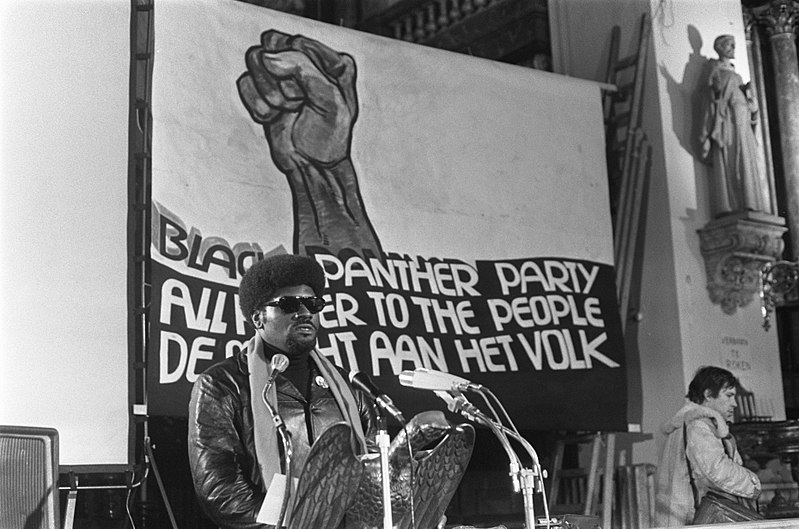
On the evening of 16 January 1970, hundreds of people gathered at the Moses and Aaron Church in Amsterdam in the Netherlands. In front of the altar hung a banner bearing the words: “BLACK PANTHER PARTY – ALL POWER TO THE PEOPLE – DE MACHT AAN HET VOLK”, accompanied by a black clenched fist. Inside the church, the inaugural meeting of the Black Panther Solidarity Committee of the Netherlands (Solidariteitscomité met de Black Panthers, or BPSC) was taking place. The group had been founded a few weeks earlier with the aim of providing economic and political support to the African-American civil rights movement and to Black communities fighting for self-defence in the United States and around the world. However, the Netherlands was not the first European country in which such a solidarity network had emerged.
Some members of the Black Panthers travelled to Europe for the first time in the spring of 1969. Bobby Seale and Raymond “Masai” had set out on a tour of Norway, Sweden, Finland and Denmark with two aims: raising funds to free Huey Newton, one of the party’s founders who was in jail at the time, and finding out if their struggle had attracted any interest across the Atlantic. The tour was organised by Connie Matthews, a Jamaican activist who worked for UNESCO in Copenhagen, and Leonard W. “Skip” Malone, an US journalist living there. Both of them had previously been involved in the Scandinavian Solidarity Committee for Third World Peoples’ Liberation Struggle (SSCTWP) and had therefore decided to found the Danish Solidarity Committee Black Liberation (SCBL). In addition to Copenhagen, universities in Stockholm also began to organise activities to support the movement.
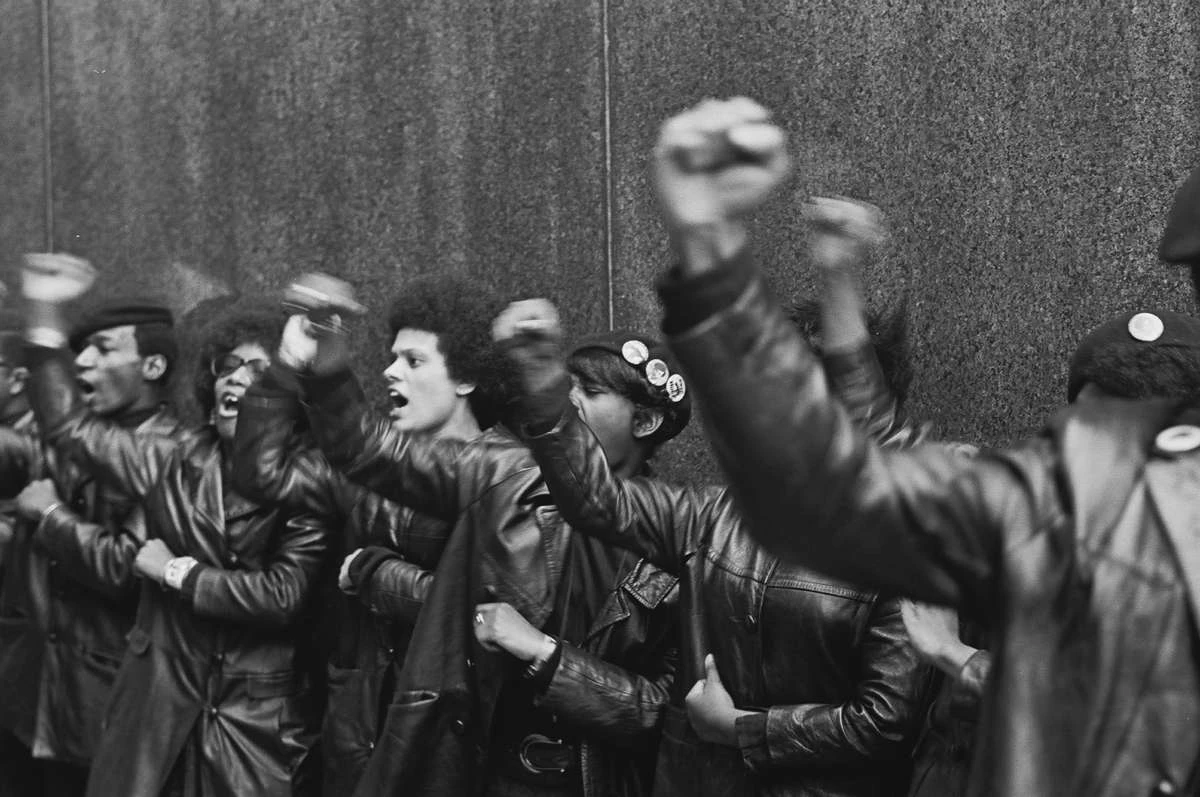
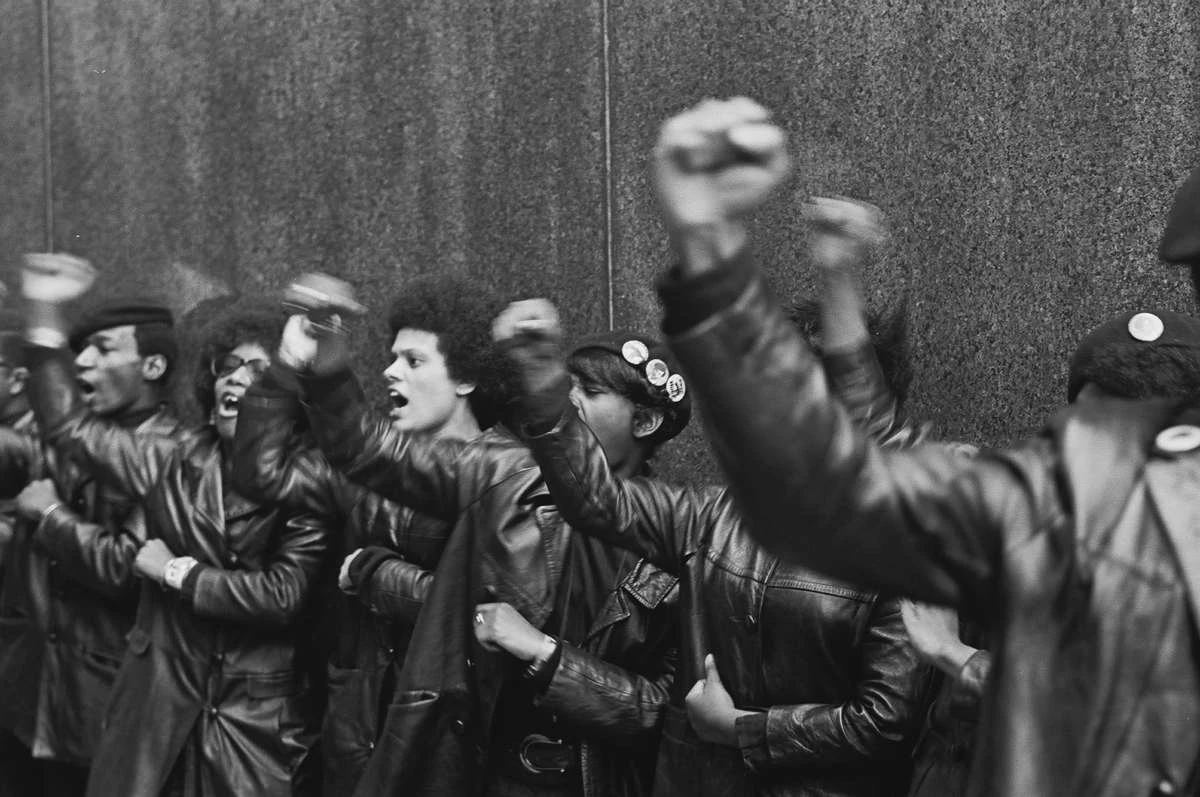
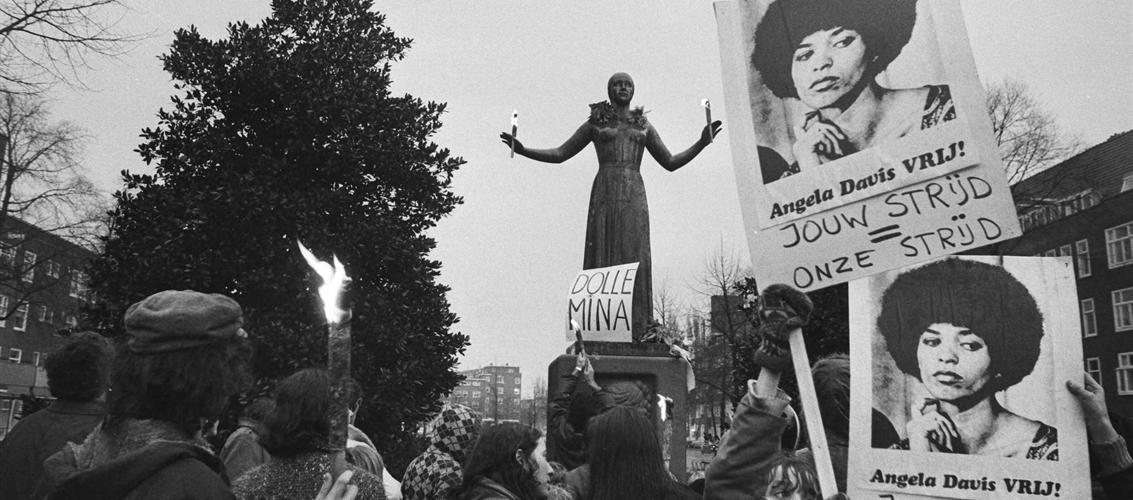
During the same period, the Black Panthers in Germany joined forces with radical German students and African-American US soldiers — two groups united by their opposition to the Vietnam War. Troops were being deployed to and from Vietnam in West Germany, and by 1965, pacifism had become a core principle of the Sozialistischer Deutscher Studentenbund (SDS) (the Socialist German Students’ Union). The students immediately aligned themselves with the rejection of the war, so much so that, in February 1968, they organised the largest anti-Vietnam War demonstration in the West, with 12,000 people marching through Berlin. Much of that protest was organised in collaboration with African-American soldiers who refused to go to war. In 1969, they opposed the imprisonment of Black Panther leader Bobby Seale. Two years later, they joined forces again to support the “Ramstein Two” case. This trial involved two former Black Panthers and soldiers who had been arrested for shooting a German civilian guard outside the Ramstein Air Base. Media attention on the trial gave the activists the opportunity to highlight the connections between American and German racism, as well as West Germany’s collaboration with U.S. foreign policy, bringing them to the forefront of public debate.
The first to shed a light on the history of the broader European movement for Black Panther solidarity was Dr. Debby Esmeé de Vlugt, who has devoted much of her academic research to this movement, both out of personal interest and due to the lack of archival research on the subject. What follows is the result of an in-depth interview with Dr. de Vlugt on this topic.
A lecturer of history of international relations at Utrecht University, de Vlugt has been interested in issues of racism and justice since high school. As these topics were primarily taught within a US context, she decided to delve deeper into North American history. During her doctoral research on the Black Power movement, she realized that she knew a lot about antiracist activism in the United States but nothing about similar movements in her own country because very little had been written about this, so she began researching and eventually uncovered a veritable “hidden history”. In her essay “The Best Place to Help the Panthers Is at Home”: Dutch Black Panther Solidarity in Pursuit of a Revolution, she provides a detailed account of the history, rise and decline of the Committee.
On 10 December 1969, the Black Panther Solidarity Committee was founded in Hilversum by Peter Schumacher, a young journalist who had come into contact with the movement during a trip to the United States earlier that year. Impressed by their revolutionary message, Schumacher began to explore the possibility of supporting the movement “from home”. He then contacted the Black Panthers’ European network of solidarity, who sent over the Danish Committee president, Leif Aingsmose, and his Swedish counterpart, Bill Caldwell. Both of them stayed in the Netherlands for several weeks in order to help Schumacher build a local committee, sharing their experiences and introducing him to their widespread transnational network.
Initially, Schumacher’s programme focused on raising awareness of the history and struggles of the Black Panthers Party among the public, as well as raising funds to support them. To spread the movement's ideas, the Committee organised conferences with various student organisations and political groups, and published a monthly pamphlet containing current news and translations of key theoretical texts. The scholar adds that, for Dutch revolutionaries, it was crucial to present an alternative image of the Panthers to that promoted by the Dutch media. The latter relied almost exclusively on the US mainstream media, which promoted a distorted and manipulated image in an attempt to devalue and silence their revolutionary initiatives.
To launch the solidarity campaign, the Black Panthers sent Elbert “Big Man” Howard from the United States. Big Man had been one of the Party’s first revolutionaries in Oakland, California. During the meeting at the Moses and Aaron Church, he explained that the movement was simultaneously fighting three “evils”: racism, capitalism and imperialism. The revolutionary was certain that Europe was fertile ground for this kind of struggles in those years, so much so that he stated: «We are prepared to collaborate with oppressed people wherever they are in the world [...] Because in the end we are all doing the same thing».
The presence of the Black Panthers in Europe during those years must be understood in the context of the era’s history and politics. The revolutionaries were seeking comrades to help them challenge - and dismantle - the growing imperialist power of the United States during the Cold War. In her essay, De Vlugt points out that the Black Panthers, as one of the most oppressed groups within North American society, saw themselves as playing a key role in the resistance against their own government, arguing that they were in a privileged position to fight its imperialist agenda from within. However, they also needed to find a network to fight it from the outside. According to historian Kim Christiaens, this type of activism appealed to Europeans because it «contrasted the status quo and ennui in Europe with the whirlwind of changes and challenges in countries emerging out of the ruins of colonial empires and defying the stalemate of the Cold War»[1].
In the Netherlands, new Black Panthers sympathisers led by Schumacher managed to convince hundreds of activists from the New Left and anti-colonial movement to join them. This solidarity allowed Dutch activists to challenge both North-American imperialism in Europe and their country’s colonial history in the Caribbean simultaneously. The Committee was organised accordingly, with one section consisting of student organisations and interest groups formed by activists from the former Dutch colonies. These included the Surinamese Student Union (Surinaamse Studenten Unie, SSU), the Surinamese Revolutionary People’s Front (Revolutionair Volksfront Suriname, RVS) and the Antillean Action Group (Antilliaanse Aktiegroep, AAG). During protests, Antillean and Surinamese groups were prioritised, their voices were always present at all Solidarity Committee conferences, and their struggle was promoted beyond the scope of the Committee itself.
The scholar explains that, in the 1970s, there was a great deal of solidarity in the Netherlands with the Vietnamese people because of the ongoing war, with the Angolan people in their anti-colonial struggle, and with the Nicaraguan people during the Sandinista Revolution. Therefore, the idea of a transnational solidarity movement with the Black Panthers was not exceptional compared to other transnational movements. However, the Black Panthers stood out because they travelled to Europe and became the driving force behind the solidarity networks forming in Scandinavia, Germany, the Netherlands and elsewhere.
The scholar notes, «This is the aspect that really struck me in this research. Unlike many other solidarity movements in Europe at the time, the Black Panthers were actively involved in creating and coordinating this network. It was not about white European activists deciding to support movements around the world, but rather the Panthers themselves taking the lead. This speaks volumes about their vision for a shared struggle against oppression, as well as their ideas about what Europeans were able to offer financially and in terms of privilege, which Europeans also – but inconsistently – acknowledged».
In addition to its alliances with Caribbean organisations, the Dutch Committee maintained ties with several groups within the Dutch New Left, including the Cineclub Amsterdam, the Freedom School, the Rode Jeugd (“Red Youth”), Netherlands Students' Bureau for International Cooperation (NESBIC), and the United Support Groups of the NFL (Verenigde Steungroepen aan het FNL).
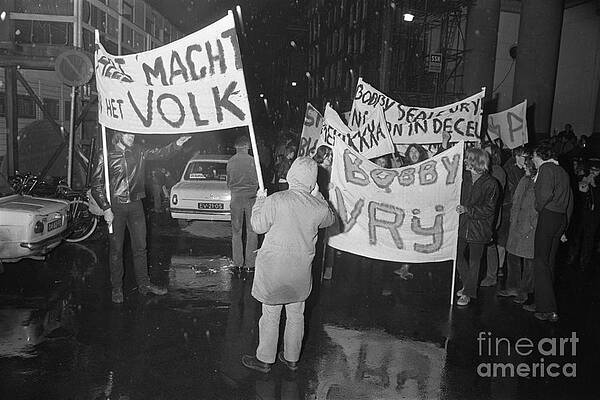
However, these alliances also played into the Committee’s ultimate dissolution. Activists from these groups sought to change the methods of political action, moving away from Schumacher’s “protest through education” approach and favouring the use of force. At a conference organised in Frankfurt to bring together the various committees of the European network, a vote was held in favour of the second approach. With immediate effect, the Committee had to transfer its activities to the Freedom School, which became the official Dutch solidarity committee with the Black Panther Party, although the name used up to that point no longer appeared.
Gradually, many of the more “moderate” revolutionaries left the Freedom School, bringing the Committee to an end.
When asked if the Black Panthers achieved their goals in Europe, the researcher answers with a resounding no, but then explains: «The Black Panthers were a Marxist revolutionary movement and, as such, they fought for a radical change. The world has changed a lot since the sixties, but racism, imperialism, and capitalism still stand. The Panthers did not manage to fully overthrow them. However, they did raise awareness among the European public about the African American struggle, gain significant financial support and exert political pressure on US allies, so the European network was definitely of some use to them». As for whether the Black Panther Party has helped to spark a re-discussion about Netherland’s colonialism, the researcher says she is pleased that more research is being conducted on these issues and that critical thinking has increased. Nonetheless, she is disappointed that this research is almost always conducted by white European researchers, like herself. She hopes Black researchers will be able to contribute to this historical narrative with new insights in the future.
Although Dutch solidarity had played a fringe role in Party’s history, its legacy offers some important intuitions about the movement’s transnational efforts. The Black Panthers actively encouraged Europeans to use their privileged position in the West to support the freedom of Black people. While they did not directly admit white activists to the original movement, they always emphasised the need for mutual support and cooperation in the global struggle against racism, capitalism and imperialism, regardless of race. Some may be surprised by the collaboration with Europe, given that the “Old Continent” has historically been responsible for capitalism and colonialism. However, the Panthers believed that there was a real power in the protest movements that had emerged in Europe, and they were confident that a strong solidarity on both sides of the Ocean could help both sides to succeed in their struggle against those who ran the power, even at home.
Bibliography
Bloom, J., & Martin, W. E. (2016). Black against empire: The history and politics of the Black Panther Party. Univ of California Press.
Christiaens, K. (2017). Europe at the crossroads of three worlds: alternative histories and connections of European solidarity with the Third World, 1950s–80s. European Review of History: Revue Européenne d’histoire, 24(6), 932–954.
De Vlugt, Debby Esmeé. "“The Best Place to Help the Panthers Is at Home”: Dutch Black Panther Solidarity in Pursuit of a Revolution." Journal of American Studies 58.1 (2024): 94-123.
Höhn, M: “The Black Panther Solidarity Committees and the Voice of the Lumpen”, German Studies Review, Vol. 31, No. 1 (Feb., 2008), pp. 133-154, The Johns Hopkins University Press on behalf of the German Studies Association.
Salvatore, G. (2018). Frank Zappa e il’68 tedesco. Un paradosso transatlantico e un’accusa di provincialismo culturale. H-ERMES, 13, 57-90.
[1] Europe at the crossroads of three worlds: alternative histories and connections of European solidarity with the Third World by Kim Christiaens