
Congratulations, You Found Another Vinyl!

There is a growing tendency to treat every forgotten record, every rediscovered archive, every overlooked artist as a hidden masterpiece waiting to be redeemed. But what if cultural memory is more complicated than that? In her latest article for oltreoceano, Maram Khenissi uses the return of the Lafayette Afro Rock Band catalogue to reflect on archives, sampling, migration, and the unequal ways music circulates across time and space. Moving between Paris in the 1970s, the Black Atlantic, and the afterlives of sound in hip hop, the piece asks what survives, what disappears, and who gets to decide what is worth remembering.
Not everything that survived deserved to.
We can start there, even if it makes the vinyl diggers uncomfortable. Somewhere between restoration and reverence, archival anxiety, and a soft-focus cap-cut yellow filter, we developed the habit of confusing endurance with importance. A record exists, therefore it matters. A tape is found, therefore it must speak. But the 1970s were not a sacred reservoir of overlooked genius. They were saturated. Uneven. Full of attempts, some necessary, some forgettable, some already redundant at the time they were made.
And yet, here we are again.
In 2026, Seven Americans in Paris, originally released in 1977 under the name ICE, will return alongside Parisound, a compilation of previously unreleased recordings. The Lafayette Afro Rock Band comes back clean, digitized, restored, made legible to a present that has learned how to value things retroactively.
But you don’t arrive at them through the archive. You arrive through a loop.
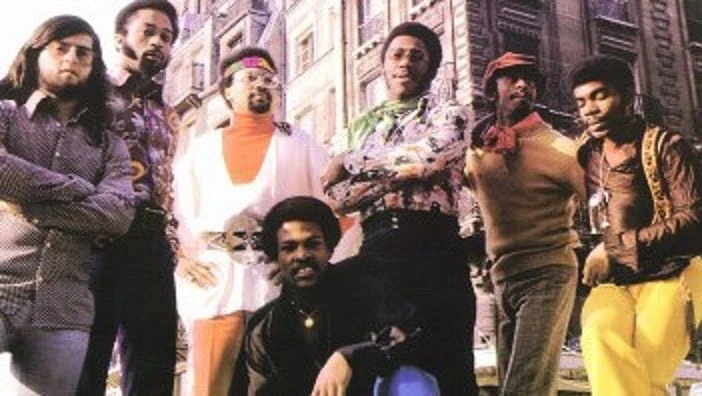
Most often through “Hihache”, though by the time it reaches you, it is no longer quite that. A fragment extracted, repeated, absorbed into something else. Circulating independently of the record it comes from, independently of the seven American musicians who recorded it in Paris in the 1970s, independently even of the name they were using at the time: ICE. The term has since been reassigned to a different kind of operation, one concerned less with sound than with the regulation of bodies. At the time, it was just a name.
This is how the band survives: usable material. And maybe that already tells us something.
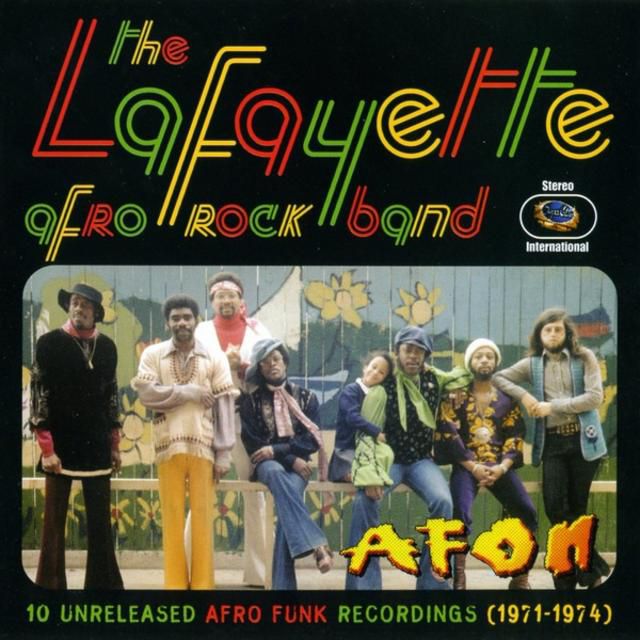
The band lands in Paris at the end of the 1960s, part of a broader, uneven movement of African-American musicians across the Atlantic. Not all of them come with a language for what they are doing. Some articulate it, like James Baldwin, who recalls postwar Paris through nights in Pigalle, jam sessions, Arab cafés. Others don’t articulate anything at all.
Julien Jaubert, music publisher and producer who inherited the catalogue that includes Lafayette Afro rock band records from his father, refuses to imbue this history with meaning. “They wanted to make music freely, do drugs, have sex with white girls,” he tells me. It’s a disarming answer, almost offensive in its simplicity. No exile narrative. No political framing. Just desire, movement, and the banal freedoms that were not equally available in the United States.
It would be easy to dismiss that answer. Or to sanitize it.
But it does something more useful: it interrupts the retrospective need for coherence. It reminds us that not every movement comes with intention, that not every trajectory needs to justify itself through history. And yet, context operates anyway.
Paris, in this story, is less a destination than a point of passage.
The band settles in Barbès, in the 18th arrondissement : a space already structured by other migrations. Algerian independence is recent. North and West African labor migration is ongoing, organized, surveilled, necessary and marginalized at once. Barbès is markets, textiles, counterfeit goods, cassette tapes. Cafés where music travels faster than people do. Sounds arriving from Oran, Dakar, New York, altered in the process. Raï circulating before it is formalized, before it is exported back out again as something else. It is also a place of political organization: anti-colonial networks, migrant solidarities, informal economies that rarely enter official archives but shape the conditions under which culture is produced. Julien also calls it a “vibe.” Small venues. Live shows. Density. Few images. Few books.
What remains is the music. But Barbès doesn’t just host culture, it processes it. What Paul Gilroy calls the Black Atlantic is not abstract here. It determines who meets, what circulates, what gets recorded, what disappears. The music recorded by the Lafayette Afro Rock Band in Paris doesn’t register as proximity in the way we might want it to. It is not a simple meeting of worlds. It is funk, yes, but also rhythms drawn from West and Central African traditions, filtered through American forms, reassembled in a European studio. Tracks like “Congo,” long unreleased, make that reference explicit. It is what happens when sounds collide under specific conditions.
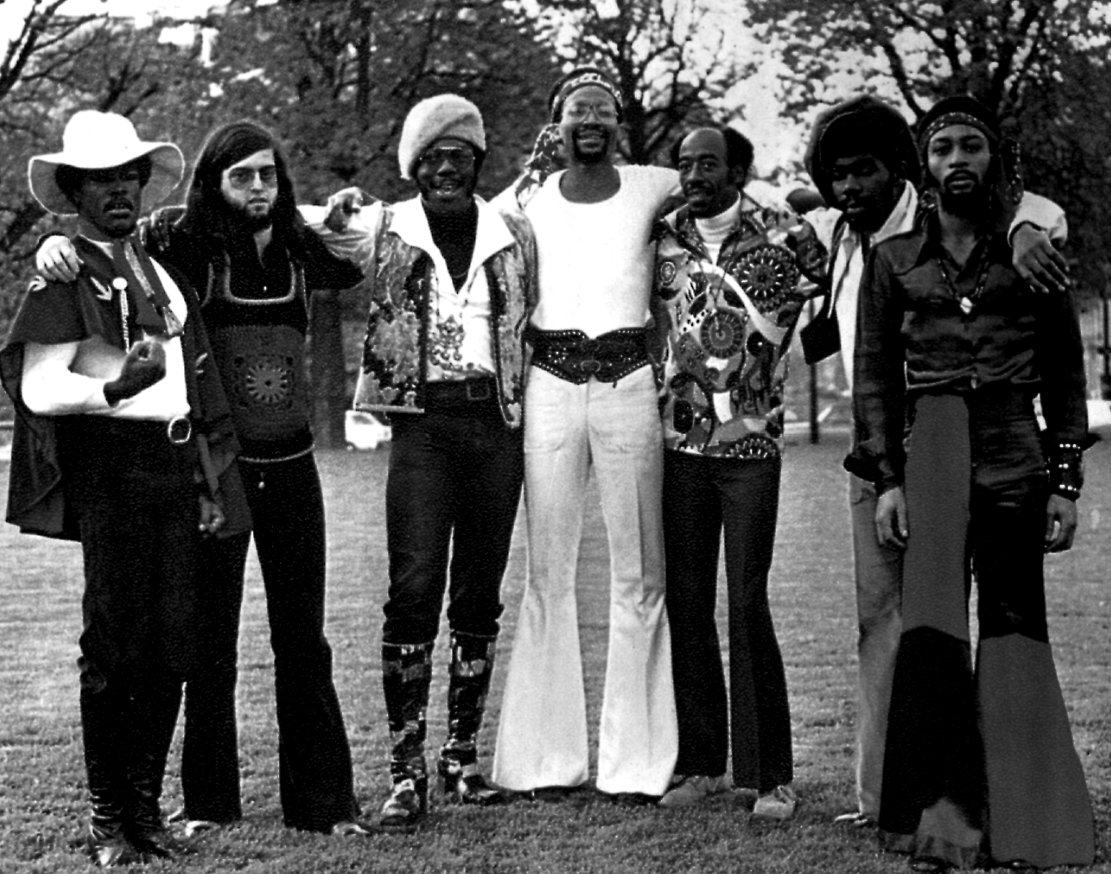
Paris in the 1970s allows for that encounter while maintaining distance from it. Black music circulates, but often through frameworks that extract from it. Jazz had already been absorbed into a European imaginary: celebrated, curated, contained. Funk arrives less stabilized, harder to categorize.
What doesn’t fit remains peripheral. The band records, performs, collaborates, backs artists like Nino Ferrer but stays at the edge of recognition. And here is where the temptation begins: to retroactively correct that marginality. To treat every overlooked trajectory as an injustice waiting to be repaired. But not everything that remained at the margins was misrecognized genius. Some of it simply didn’t cut through.
Listening back now, without the safety net of narrative, you hear it. The 1970s were already full. Already competitive. Already uneven. The Lafayette Afro Rock Band was one formation among many, not outside the system but inside it, navigating the same density. What survived is not the entirety of that work. It’s the fragment. With hip-hop, producers begin to isolate segments: drum breaks, basslines, percussive fragments and reinsert them into new compositions. “Hihache” becomes one of those tracks: sampled repeatedly, detached from its origin.
From Jay-Z to Brazilian funk, the music operates less as a body of work than as a set of available elements. This is where its value sharpens: in transformation. Sampling does not care about completeness. Almost ruthless, It takes what works and abandons the rest. A loop survives because it is functional, not because it is historically important. Producers sample tracks that have already been sampled. The sound becomes recursive. The archive, meanwhile, tries to put everything back together. And sometimes, that’s where it loses its edge. There is something slightly excessive about the current obsession with rediscovery.
The way dusty vinyl becomes proof of depth. The way obscurity is aestheticized into importance. The way we are asked to sit through entire records to honor the fragments we already extracted. As if context redeems everything. It doesn’t.
Some of these records are not hidden masterpieces. They are documents of a moment that was already saturated. Their return tells us as much about our present: our fear of loss, our need to keep everything, as it does about their past. We archive because we are afraid to let things disappear. But things, like bodies are supposed to.
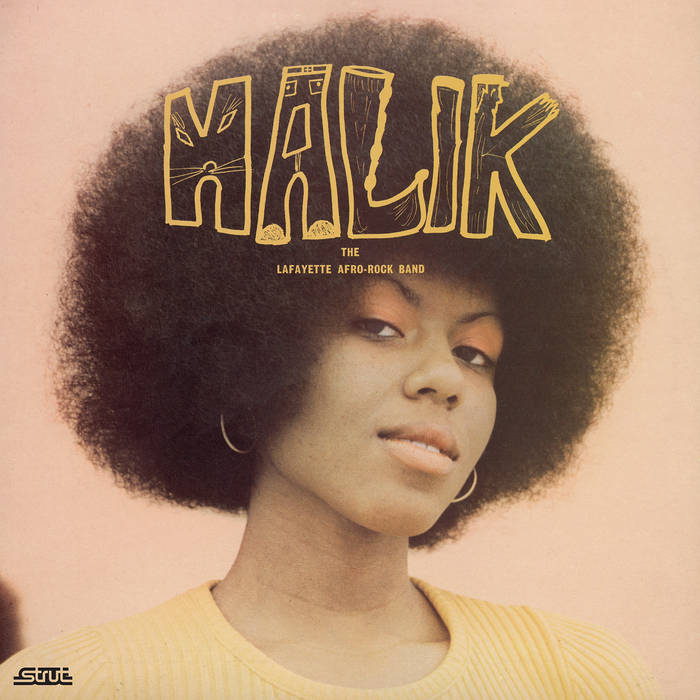
Julien knows this, even if he doesn’t frame it that way.
“I didn’t get along much with my father,” he tells me. “But I respect his work. It would have been a crime not to take care of it.”
What he inherits is a responsibility. Digitizing tapes, reissuing records, making them available again, to allow new contexts to emerge. “There’s always a matter of storytelling,” he says. “By putting together old songs in a new format, you create new stories.” He’s right. But storytelling is also selection. To reissue is to decide what returns, and how. To give form to an archive that was once fragmented. In the absence of images or documentation, the archive begins to function as an author. And authors choose.
What 2026 hears in this music is not what 1977 heard. Because the position of the sound has changed. Removed from its context, it becomes traceable. Vintage. Legible as influence. Time reorganizes value. But value is not neutral. Some sounds outlive the conditions that produced them without carrying those conditions with them. They circulate more freely than the bodies that made them ever could. It is policy. Borders. Migration regimes that tighten while culture continues to move, unimpeded, monetized, celebrated. Everything we hear comes from somewhere else. From someone else. Often from someone who would not be allowed to follow the same route as the sound.
So yes, give flowers. To the fragments that survived. To the conditions that made them possible. To the ways in which something minor became essential somewhere else.
But don’t flatten everything into importance. Some things were seeds.
Some things were soil. And some things were just… there. Glorifying, doesn’t make them bloom.