
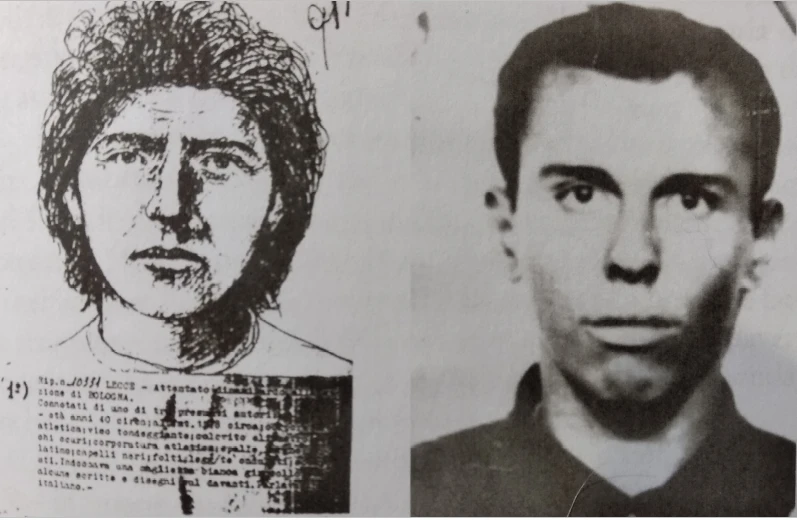
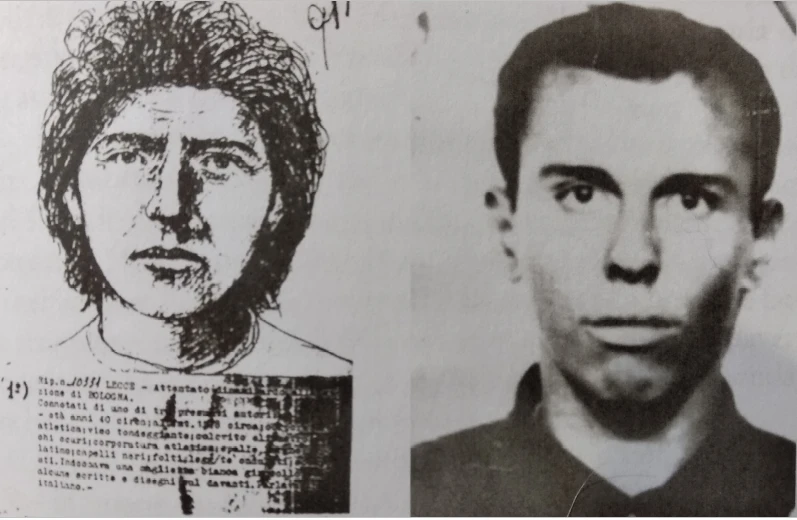
Black Terror. A Glimpse into the Life of a Black Italian Neo-Fascist Terrorist

Can a Black man become a neo-fascist? In her latest article for oltreoceano, Magalì Asfaha explores the life of Giorgio Vale, a young Italian of Eritrean descent who became involved with some of the most violent far-right organizations of the so-called Years of Lead. Through a conversation with researchers Carlo Costa and Gabriele Di Giuseppe, whose decade-long work helped reconstruct Vale’s story, the article moves beyond easy assumptions about race, identity, and political belonging. Rather than seeking simple answers, it examines the contradictions, silences, and historical legacies that shaped a figure often described as an anomaly: a Black neo-fascist in postwar Italy. At the intersection of colonial history, political violence, and collective memory, the piece raises difficult questions about agency, ideology, and the limits of the categories through which we understand the past.
Giorgio Vale was a young Italian boy of Eritrean descent who, at just 17 years old, became involved in the violent actions of two neo-fascist groups of the 1970s: Terza Posizione and the Nuclei Armati Rivoluzionari (NAR). Born in 1961, he lived through a time filled with political tension and violence, which brought him to his death in 1982, when he was 21 years old.
Terza Posizione emerged as a movement grounded in notions of justice, righteousness, and a militant “warrior” ethos, drawing inspiration from Argentine Peronism, the ideas of Romanian politician Corneliu Codreanu, and even Tolkien’s fictional universe.The NAR organization, which had no real direction nor common objective, appeared for the first time in 1977, as a violent reaction group. The NAR were responsible for numerous violent actions during the 70s and the 80s, decades purposely remembered as the Years of Lead, that peaked during the infamous massacre of Bologna, on August the 2nd, 1980. -This crime was almost immediately attributed to members of the far-right terrorist group NAR, which saw as main offenders Valerio Fioravanti, known as the head of the group, and his partner, Francesca Mambro.
Despite his loyalty and numerous contributions to the actions of the group, Giorgio Vale appears rarely in the historiographical accounts, and always as an appendix to others’. He was the son of an Italo-Eritrean man, Umberto Vale and a middle-class Roman woman, Anna Antonia Garofoli. Nevertheless, the ties with the once Italian colony of Eritrea of the Vale family seem hazy, if not inexistent. The sources regarding Umberto Vale’s early years in Eritrea were scarce and inconsistent and nothing can really testify any kind of political position towards this colonial legacy. Umberto Vale was, in fact, what would be called a metis, the son of the union between an Italian man and an Eritrean woman. The discrepancies along his lifetime could be justified with the instability of the Italian fascist regime and what would be proclaimed as Norme relative ai meticci, May 13th, 1940, but we cannot state this with certainty.
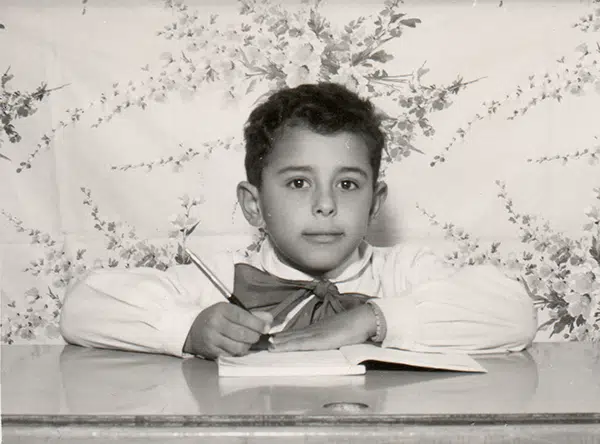
As I write these lines, I am 23 years old — two years older than Giorgio Vale at the time of his death, or rather, at the time of his killing. My father was born and spent his early life in Eritrea, while my mother grew up in a middle-class family in the suburbs of the city of Rome. The similarities with the life of Giorgio seemed evident when I began reading about him, but we couldn’t be more distant when it comes to our political stances, which intrigued me to dig deeper. The corpus that helped reconstructing Giorgio’s life, and the circumstances of it, is a decade-long work of research by Carlo Costa and Gabriele di Giuseppe, who meticulously put together judicial and memorial sources for us to understand this controversial figure of a black neofascist, renamed by the authors themselves as a foreign body[1], inhabiting an unusual context, for what we might imagine. When asked about the encounter of this personality and their first impression of him, Carlo replies to me that his «first impression was really a question: how could it be possible?»[2] and again «the objective of this book was finding an explanation, an answer to this question, even if we could just make hypotheses on his life choices. The answer was simply that it was, in fact, possible.»[3]
In this regard, I think that when it comes to non-white people it’s hard to imagine they might make choices that break the stereotypes that enclose them, thus making it hard to imagine that a young boy of Eritrean descent might take political stances that are not what we would think. This assumption reflects a broader tendency to deny Black and brown people full political agency. Just like it happened with Toni Iwobi, an Italian politician of Nigerian descent and a prominent figure within the right-wing party Lega. There is no doubt that some choices might appear controversial, considering the long history that the far-right in Italy has with racist ideologies and policies. But doesn’t it also have to do with our idea of black men? Is it our own ideology that sets him into a box out of which it would be wrong to stand? Apart from our political opinions, we must remark that these are Italian men, with brown or black skin, and as uncomfortable as their postures might be, we must accept the idea of a countercurrent, for we would not question why a white political man chooses war against his own white brothers, or why a white woman chooses misogynistic over feminist stances against her sisters.
«The idea of this book», the authors say, «was to think and write freely from stereotypes and preconceptions. His descent was the most fragmented aspect. We wanted to know if it had somehow influenced his life, it was frustrating trying to reconstruct this side of his.»[4]
From what emerges, Giorgio’s political position did not have anything to do with his ancestry, nor his phenotype, nor any racist views. His political activism and militancy with the groups of Terza Posizione and Nuclei Armati Rivoluzionari were related to the deep sense of injustice that he and his comrades felt. They were moved by the idea of self-defensive actions and distanced themselves from traditional fascist attitudes and political figures. In the polarized atmosphere that surrounded the Years of Lead, characterized by violent actions of both right-wing and left-wing political associations, armed struggle seemed to be the only real and valuable option that the youth had to demonstrate their principles. In a self-representation, the NARs declared that for them “revenge is sacred” and that “lead awaits those who continue to pollute our youth.”[5]
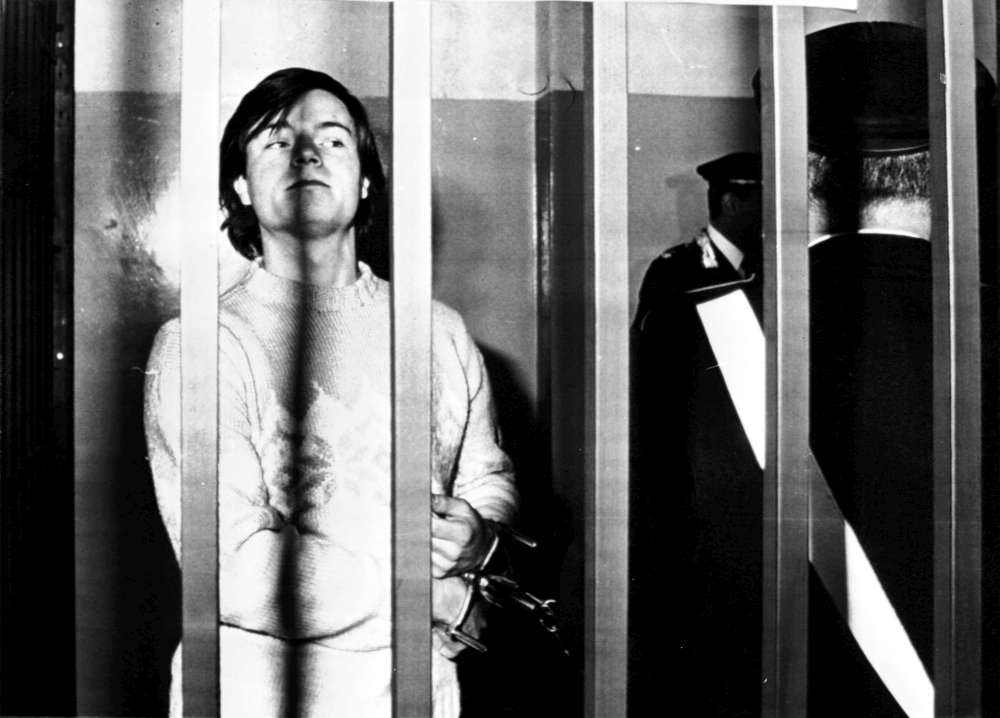
Giorgio Vale’s political experience took its first steps when he was arrested, in March 1979, after he was attacked by a leftist political group. The sense of injustice, previously cited, grew and soon escalated in violent actions, on a small scale, which became increasingly greater, in terms of targets and terror. Despite this, Giorgio was always described as a gentle, quiet and serious person, even by his comrades. His family strongly disagreed with his participation in such movements and never stopped believing that his actions were mainly attributable to the context in which he grew up. But his fascination for weapons arose earlier, back when he was still in school. His father found his actions incoherent with the history and principles of the family, and incessantly stated his disappointment: in a letter he wrote to his son while he was in hiding, Umberto Vale explicitly told Giorgio «You’re fighting a war that is not yours»[6].
Nicknamed the Drake and often the Negro, Vale was frequently labeled with the n word, but sometimes this attribution was denied. The TP's and NARs’ racist stances existed, just as they did during the Fascist era and as they do today in far-right groups and ideologies, in Italy and elsewhere. Yet among the members of the group, a sort of colorblindness toward Vale seemed to prevail, as if his color existed, but it was irrelevant compared to their shared values and struggle, their thirst for justice and revenge.
Vale wasn't a stranger, a foreign body, simply because of his skin complexion and the seemingly contradictory political leanings he had chosen. Vale was a stranger to everyone and everything; his profile did not fit the cliché of a terrorist, unlike his companions. Nor did he suit into the category of the so-called martyrs of fascism: his death followed a strange epilogue. It was reported as a suicide during a police raid, which fired 140 shots on the morning of May 5th 1982, after 20 months in hiding, but apparently none of the bullets hit him, except for a single one that perforated his temple. Experts later declared it highly implausible that his death was a suicide, it was rather an execution by the police, but it was obscured as such and redirected to himself. His family never accepted this narrative and fought a years-long battle for the truth on Giorgio’s assassination.
After his death, some street art appeared along streets of Rome claiming “Honor to the Drake”, and “Giorgio Vale lives!”, but he remained unknown to most and forgotten by many, even by historiography.
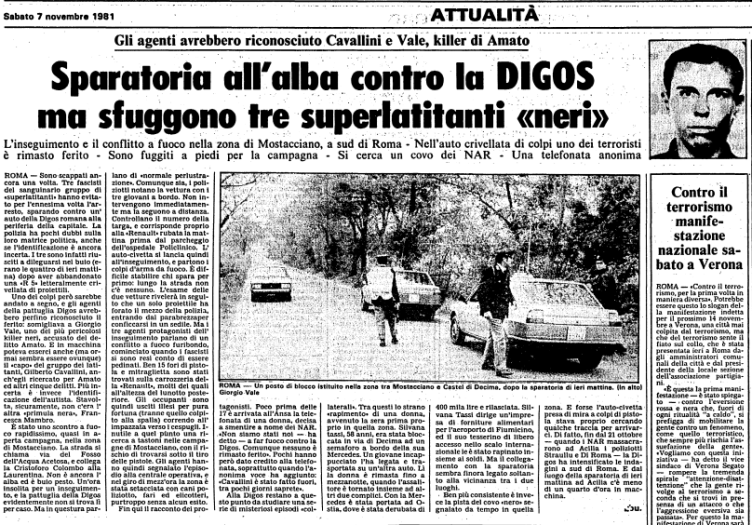
Considering this context, the life of Giorgio Vale seems to reconnect the dots between the darkest pages of Italy’s forgotten histories: the fascist era along with the colonization period, the Years of Lead, and Italy’s contemporary situation. Neofascist positions gave new life to Mussolini’s fascist party, while the history of colonialism intertwines with Vale’s family and his genealogy. Even today, for some, violence seems to be the only answer to uncertainty, the only sense of belonging that the youth seems to be able to cling to, the only way to make justice, when ignored by the institutions.
These periods, spaced about 40 years apart, remain an open wound in the lives of the Italians who experienced them and still struggle to name them. Thus, Giorgio Vale’s figure, who lived for only 21 years, fits into a timeless continuum, specular to an unspeakable past and an unstable future, a legitimate product of Italy’s colonial legacy — long silenced — and of a fascist sentiment from which the nation has never fully freed itself.
«Our attempt» says Gabriele Di Giuseppe, «was to give back the humanity lost. Publishing houses backed out when the publication of the book was due. Some publishers even asked us to remove his child pictures, to dehumanize his figure. Nobody had the guts or wanted responsibility to tell the story of a black neofascist terrorist»[7]. Carlo Costa and Gabriele Di Giuseppe’s research lasted approximately 10 years and their objective was to «dismantle consolidated and stereotyped views on history: leftists cling onto antifascism, while right-wing extremists hold on to the victimhood of martyrdom. In this context, Giorgio Vale is set in a limbo».[8]
In this historical oblivion, identities are nuanced, they are made invisible, they become shapeless bodies with no name nor history, no origin nor direction, lacking agency, humanity, choice.
Bibliography
Costa C., Di Giuseppe G. (2021). Corpo estraneo. Storia di Giorgio Vale (1961-1982). Milano: Milieu Edizioni, collana Ombre Rosse.
Scarano A. (2022, September 4) – AnniDiPiombo. La storia di Giorgio Vale. In Barbadillo.
Il Post (2021, November 26) – La storia di Giorgio Vale, terrorista neofascista e afroitaliano. In Il Post.
Redazione Spazio70 (2017, November 18) – La folle corsa di Giorgio Vale, il mulatto dei NAR. In Spazio70.
[1] Corpo Estraneo, Carlo Costa and Gabriele Di Giuseppe, 2021.
[2] Interview with Carlo Costa and Gabriele Di Giuseppe.
[3] Ibidem
[4] Ibidem
[5] Ibidem
[6] Ibidem, p. 203
[7] Interview with Carlo Costa and Gabriele Di Giuseppe.
[8] Ibidem