
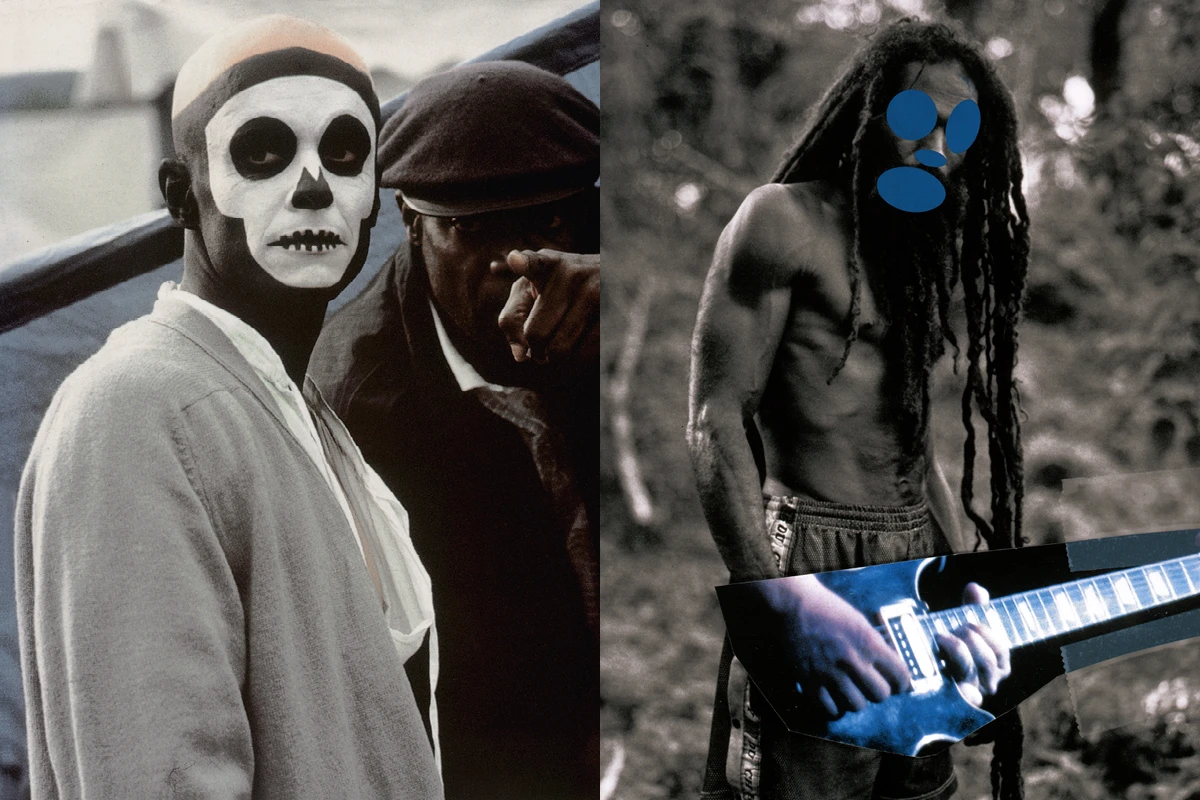
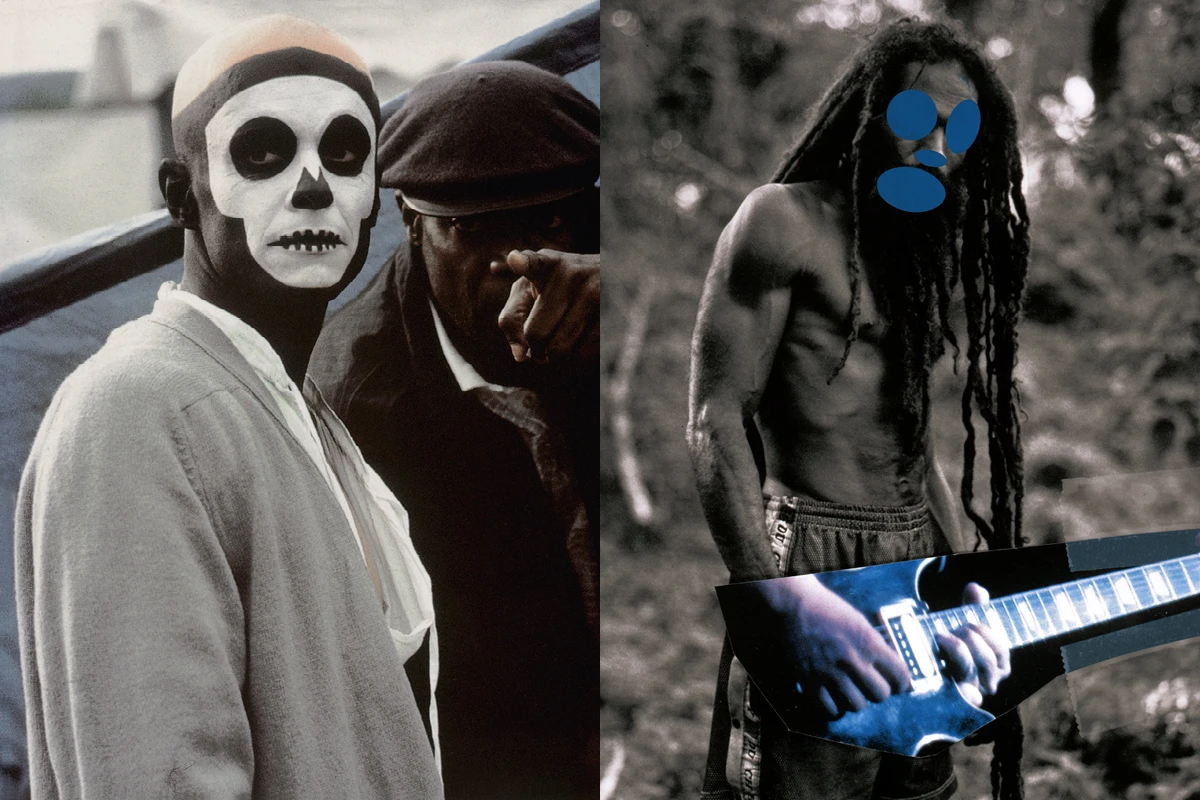
Arthur Jafa’s Love Letter to America

To date, Arthur Jafa has established himself as one of the most influential artists of our century on the international scene, developing a narrative of Black culture that is also a genuine declaration of love.
To mark the exhibition Helter Skelter. Arthur Jafa and Richard Prince, hosted by the Fondazione Prada in Venice from 9 May to 23 November 2026, this article reflects on the evolution of Jafa’s artistic practice ten years on from what remains perhaps one of his most iconic works to date: Love Is the Message, The Message Is Death.
On 6 May, the Fondazione Prada in Venice opened a two-artist exhibition curated by Nancy Spector and dedicated to the work of two of the most acclaimed contemporary North American artists today: Arthur Jafa and Richard Prince. Dubbed by many as “the real US pavilion”[1], Helter Skelter presents dual spiritual portraits of contemporary America, highlighting its strengths and, above all, shadows whilst offering profound reflections on image appropriation[2] and showing how the complex relationship between Blackness and Whiteness remains an issue which is far from being resolved.
Ten years on from the public premiere of the video work that established him on the international scene, Love Is the Message, The Message Is Death (2016), this new exhibition also marks Jafa’s first return to Venice since winning the Golden Lion in 2019 for The White Album (2018). The two artists’ works, both of which are featured in the exhibition, embody a negative reflection of one another, coming together to form a profound meditation on the complex dynamics that define relations between Black and white citizens, whilst also echoing – through a veritable mise en abyme – the choice to place their respective artistic practices in dialogue with one another. While Prince deserves credit for understanding the immense potential of appropriating images from visual culture to explore themes such as consumerism, white masculinity, and the main clichés of North American society, Jafa has taken the discourse further by filtering everything through his own Black gaze[3], articulating the ontological condition of Blackness itself.
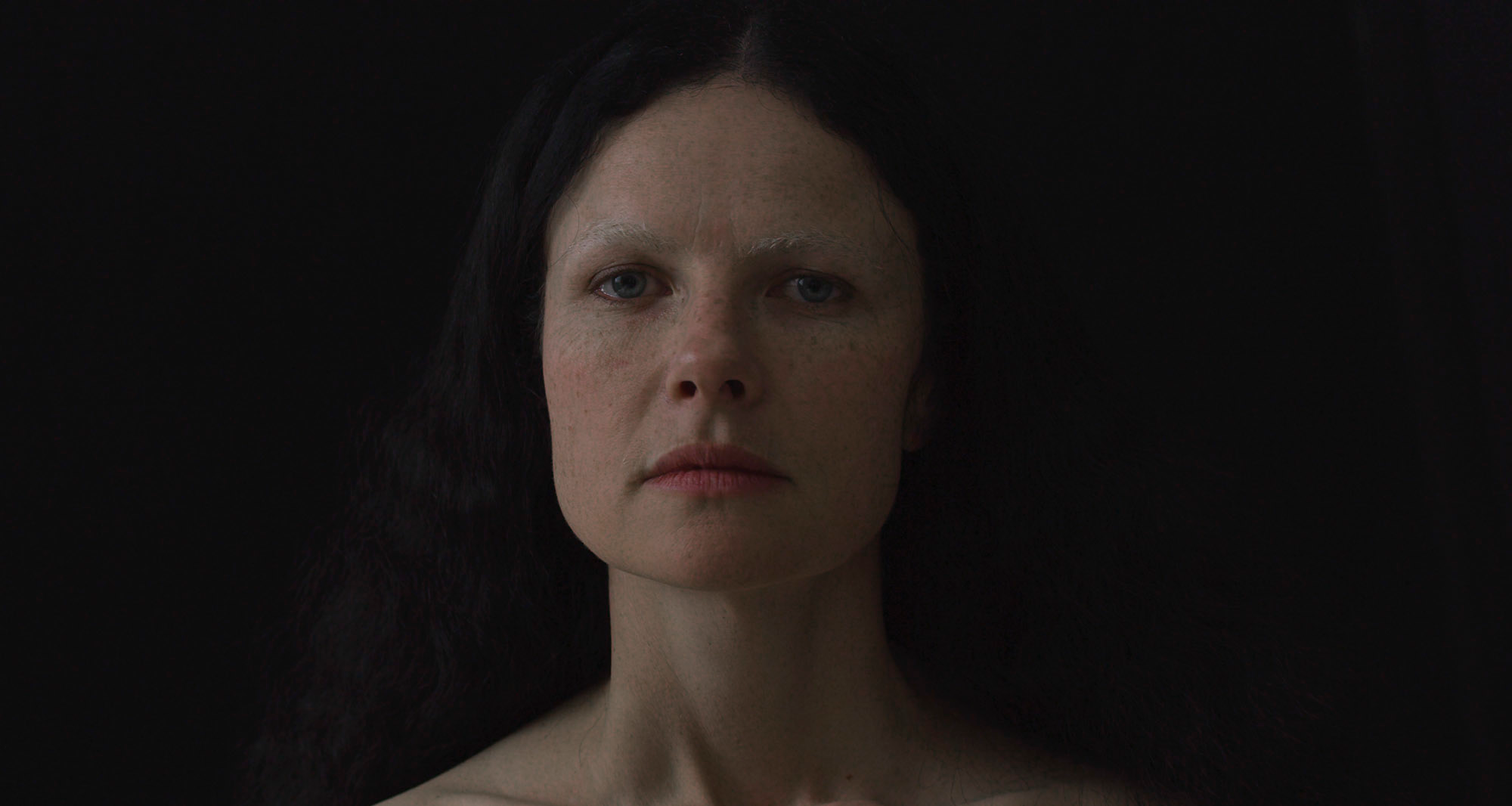
As early as 2003, in his essay-manifesto My Black Death, Jafa traced the origins of modernism back to a West’s precise operation of appropriation of Black culture, carried out by artists such as Picasso, Duchamp and Pollock, and musicians like Elvis Presley and John Cage. In this context, Black people were subjected to a process of forced erasure, allowing white artists to be celebrated for their originality. «More than permission», observes Jenny Wu, «power licenses the act of appropriation, as well as one’s ability to produce, manipulate and sell images of others in the first place»[4].
Drawing on Prince’s influence, Jafa has focused his entire body of work on the everlasting debate regarding the possibility for artists to use materials from the cultural sphere in its entirety as raw material for their art[5]. Examining the earliest Untitled Notebooks (1990–2007), reveals that the artist’s works are filled with images from magazines, newspapers, and advertisements, connected by a specific principle termed “affective proximity” by his colleague John Akomfrah and later as a series of “small collisions” by Aria Dean[6].
From Love Is The Message to The White Album
Exactly ten years ago, Jafa premiered for the first time a seven-minute video, initially intended for free distribution on YouTube. It quickly became what many have described as a genuine meta-narrative of Blackness in the United States, partly due to Donald Trump’s election and the Black Lives Matter protests of 2020.
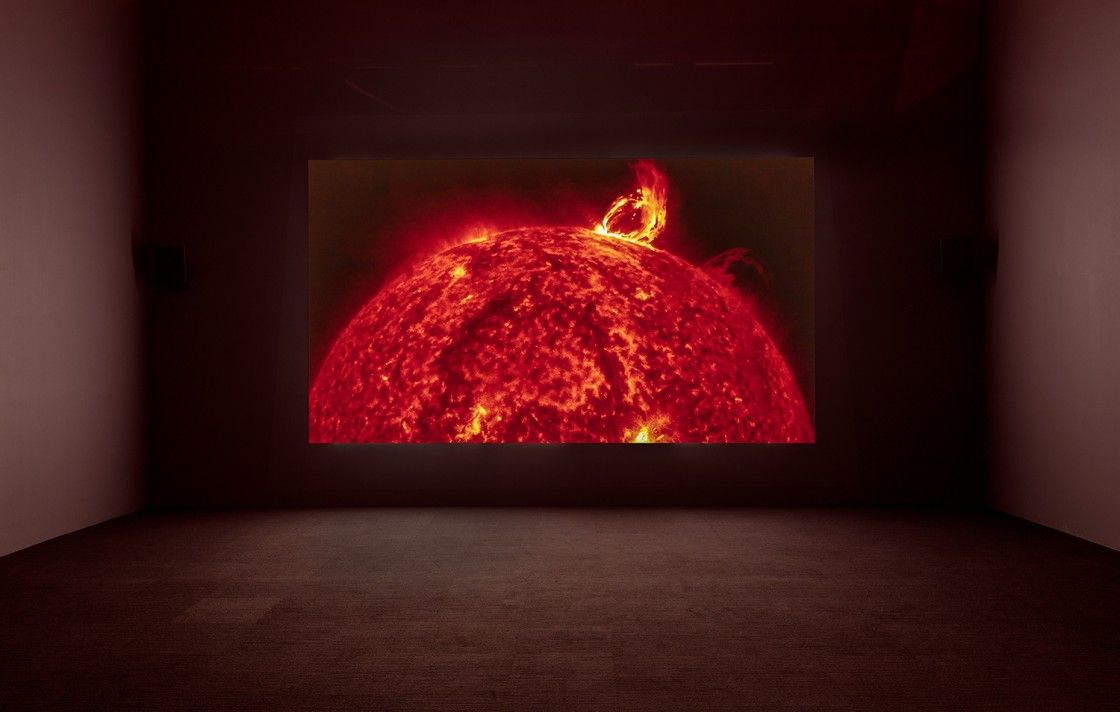
In Love Is the Message, found-footage clips which unfold to the tune of Kanye West’s Ultralight Beam range from scenes of ordinary people dancing and celebrating to footage of musicians such as Miles Davis and Michael Jackson, athletes, historical figures like Martin Luther King and Malcolm X, and even extracts from science fiction films, viral videos, and scientific footage of the sun. These elements are interwoven with footage documenting the systemic subjugation of African Americans, portrayed through this archive material and complemented by those very same viral videos that still bear witness today to brutal police violence.
The result is a constant oscillation between transcendence and horror, through which Jafa ultimately defines the “cosmological level” from which he believes it is most appropriate to observe all[7].
Maintaining the same modus operandi, two years later, in 2018, Jafa composed The White Album: this is a genuine mapping of Whiteness, filtered through his own Black gaze and within which, among the various archive footages, it is possible to recognise Alex De Large’s character [Malcolm McDowell] in A Clockwork Orange (1971), as well as some scenes from 2017 film Good Time, starring Robert Pattinson, and Iggy Pop in a “digital zombie” version, alongside camera footage portraying Dylann Roof - aged 21 - a few minutes before committing the Charleston Church Shooting, happened on 17 June 2017.
Although the two works display significant differences when viewed side by side, Love Is the Message and The White Album function like two sides of the same coin. This further helps to create a powerful visual representation of what Spector described as “Spiritual America”: an «emancipatory space, where the deranged and the disaffected, the superheroes and the megastars, the average and the ordinary, all coexist, beyond the binaries of good and evil, of us and them»[8].
Black Cinema and Black Visual Intonation
As also Aria Dean has observed, throughout the twentieth century, Black filmmakers were often tasked with producing positive images of Blackness to counteract the racist representations already in circulation[9]. Jafa himself has described himself as an “undertaker” rather than an “uplifter” on several occasions, portraying Black life in all its complex contradictions.
«There’s a certain presumption that Black artists, particularly conscious or intentional Black artists, are going to do the uplifting thing [...] I don’t do the uplifting thing. I’m definitely an undertaker. I’m like, Let’s go down. I’m interested in where the bodies are buried. I’m genuinely drawn to the darkness, to the shadow, and I’ve accepted it»[10].
By translating the so-called “worried notes” into a visual language in Love Is the Message, Jafa also produced an early example of his own theory of Black cinema, defining a cinematic genre that can synthesise the “power, beauty, and alienation” typical of Black music through the visual dimension.
In 2013, in fact, the artist had created APEX, an initial visual composition pieced together from 841 still images which unfolded on screen to the beat of a fast-paced electronic rhythm, and subsequently slowed down in 2023 to become SloPEX.
In a 2019 article, Tina Campt wrote how APEX images are calibrated in a specific visual frequency, «which tethers black life to black death, black pleasure to black pain, and black beauty to its inextricability from the terrible beauty of a black grotesque»[11], thus coming to represent a manifestation of what Jafa defined “Black visual intonation”, namely «a cinematic practice in which “black images vibrate in accordance with certain frequential values that exist in Black music»[12], therefore representing an independent system from what is, according to Dean, the Western obsession for progress[13].
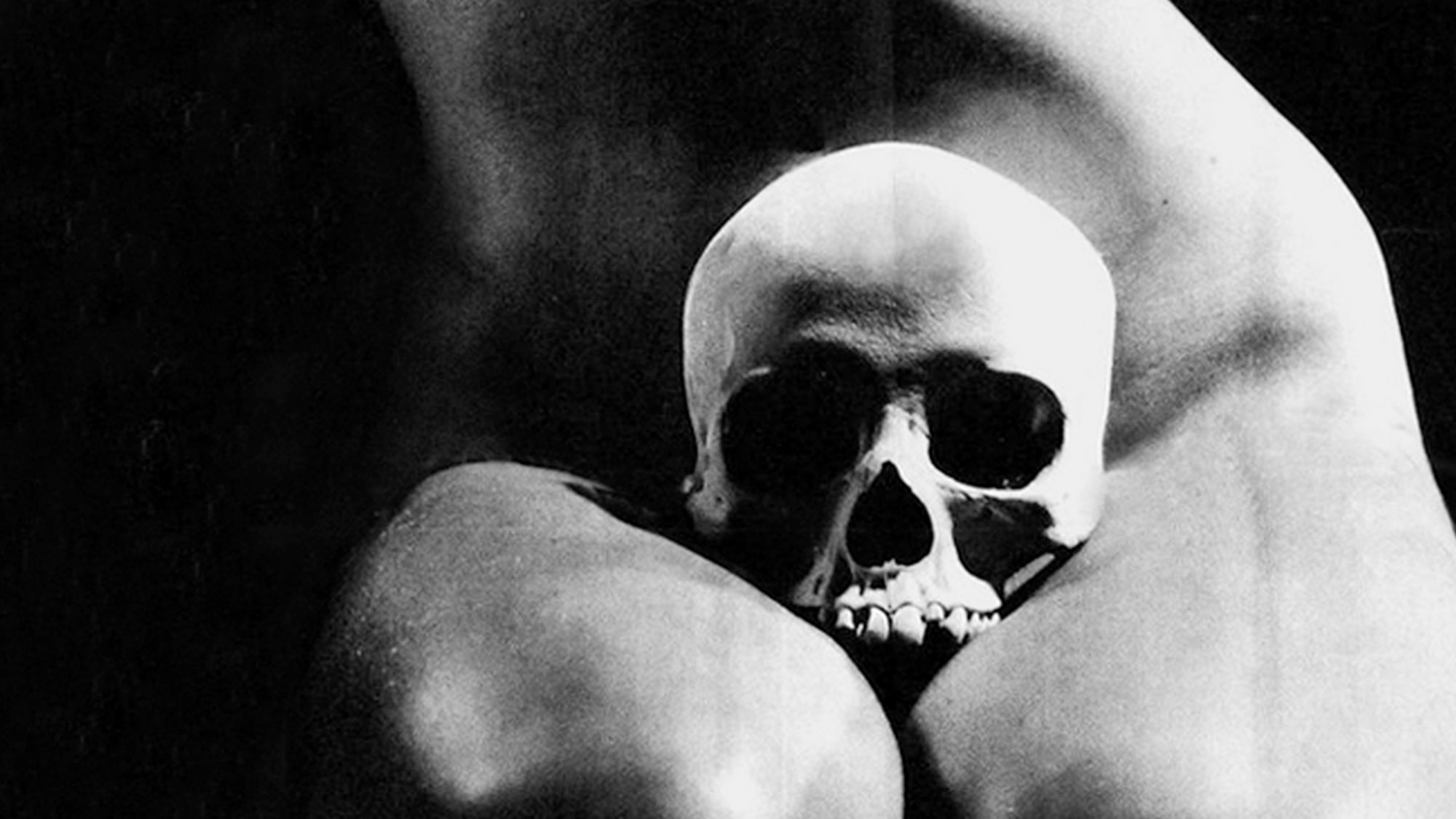
“Helter Skelter”
As Nancy Spector explains in her critical essay for the catalogue, the history of the words “helter skelter” is disturbingly intertwined with that of racial violence in the United States[14]. Originally used to refer to a fairground ride, the term has also come to mean “chaos” and “disorder” in colloquial language, as well as being the title of a track on the 1968 LP The Beatles, also known as The White Album. Just one year after the album's release, in 1969, Charles Manson’s followers murdered the LaBianca couple, leaving the words “Helter Skelter” scrawled on the wall. This was most likely an allusion to Manson’s elaborate plan to incite a race war between whites and Blacks. Finally, in 1992 – less than a year after the Rodney King beating and a few months after the infamous Los Angeles riots – the Museum of Contemporary Art (MOCA) opened a group exhibition entitled Helter Skelter: L.A. Art in the 1990s’. Curated by Paul Schimmel, the exhibition explored alienation, violence, and the darker aspects of Californian culture. However, not a single Black artist was invited to participate. By making it clear that a complete understanding of American culture requires recognition of the contributions of Blackness, Jafa offers a profound reflection on an issue that has preoccupied him since My Black Death[15], openly addressing the theme in works such as BEN GAZARRA (2024).
By digitally manipulating the final shootout scene from Taxi Driver (1976) and repeating it several times while altering certain details each time, Jafa has realised Paul Schrader’s original vision for the film’s screenplay. Initially, the character of Sport (played by Harvey Keitel) was intended to be played by a Black actor. However, both Schrader and Scorsese subsequently opted to change the casting to avoid potential riots in cinemas sparked by the racial issues that would have inevitably overshadowed the violence of the images[16].
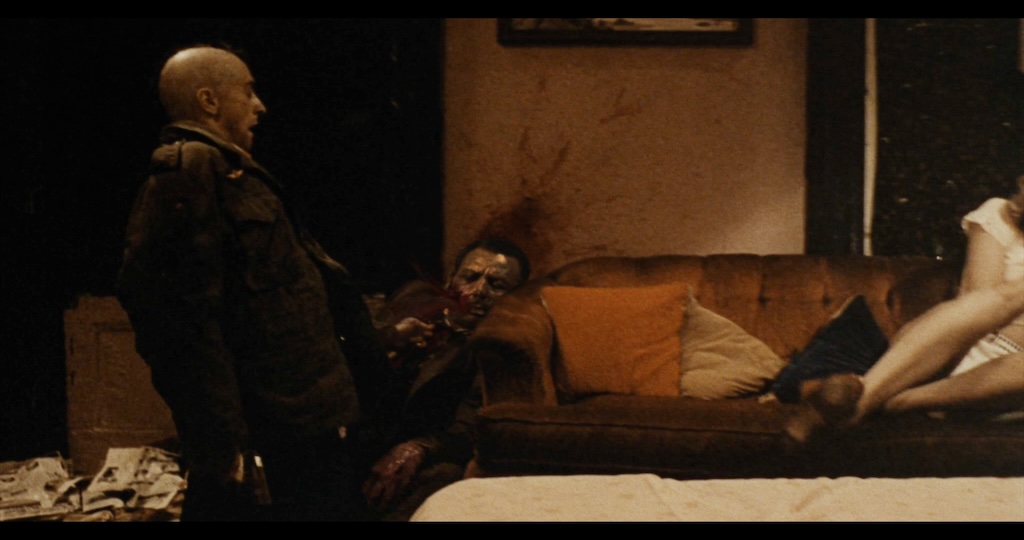
First presented under the title ***** – a reference to the editing process that the 1976 film underwent – BEN GAZARRA completely rewrites the work, thereby exposing the latent racism hidden behind the original scene.
Alongside the video works, Helter Skelter also features a selection of pieces that demonstrate how Jafa’s practice continues to focus on found footage whilst also expanding into more traditional media. Examples include the Array (2020) and Le Rage (2017) series, as well as the diptychs Mickey Mouse Was a Scorpio (2018) and I Don’t Care About Your Past, I Just Want Our Love to Last (2018), Nirvana (2025), Ex-Slave Gordon (2017) and Big Wheel II (2018). The latter, in particular, contrasts with Prince’s Folk Songs (Blasting Mats) (2006), thereby evoking, as Aruna D’Souza also observes, the same bodies that were once victims of lynchings[17]. It also links back to the theme of Black labour within the automotive industry and to the imagery associated with slavery and its “afterlives”[18].
Jafa himself has stated on several occasions that it is impossible to conceive of Black people outside of the paradoxical equation of horror that has defined their history. This is because: «At the very core of being Black is a discrepancy between circumstances that insisted, demanded and disciplined us to understand ourselves as not human — and yet, despite all that, we were still able to retain, insist upon and reinforce our humanity»[19].
Working from what he has repeatedly described as «a constant state of crisis»[20], Jafa tells through his research a story of Blackness in America which never stops to engage with its incredible complexity, thereby presenting a powerful portrait of it, one that stands out precisely for its ability to resonate deeply with the very frequencies that enable it to continue to survive.
Extended bibliography
Campt, T. (2019, February 25). Black Visuality and the practice of refusal. Women and Performance.
Campt, T. (2021). A Black Gaze: Artists Changing How We See. The MIT Press.
Clayton, J. Jafa, A. (2018, February 22). As Brilliant as the Sun. Frieze, Issue 193.
D’Souza, A. (2026, June 16). “Helter Skelter” Can’t Look America in the Eye. Hyperallergic.
Dean, A. (2017, May 26). Worry the Image. Art in America.
hooks, b. (1992). Black Looks: Race and Representation. South End Press.
[edited by] Spector, N. (2026). Helter Skelter. Arthur Jafa e Richard Prince. Exhibition catalogue. Fondazione Prada
Jafa, A. My Black Death. (2003). In: [edited by] Tate, G. Everything But the Burden: What White People Are Taking from Black Culture. Crown; 244-257.
Jafa, A. et al. (2025). LIVE EVIL. Exhibition catalogue. Buchhandlung Walther König. LUMA Arles.
White, S. (2024, March 26). Arthur Jafa’s America. W Magazine.
Wu, J. (2026, April 27). Appropriation Culture: Richard Prince and Arthur Jafa. ArtReview.
Credits
Film A Clockwork Orange by Stanley Kubrick. 1971. USA. (Kubrick/Warner Bros.).
Film Good Time by Benny and Josh Safdie. 2016. USA. (Safdie/Elara Pictures).
Film Taxi Driver by Martin Scorsese. 1976. USA. (Scorsese/Columbia Pictures).
Kanye West’s Ultralight Beam. In: Album The Life of Pablo. 2016. GOOD Music, New York.
The Beatles’ The Beatles. 1968. Apple Records, UK.
[1] This refers to the widespread criticism that has arisen regarding the US Pavilion presented at this year’s Art Biennale in the Giardini, curated by Jeffrey Uslip and centred on the work of the sculptor Alma Allen [see D’Souza, 2026].
[2] See Wu, 2026.
[3] Within Visual Studies, the term “Black Gaze” refers to a form of critical gaze that rejects passive consumption, thus representing a strategy of resistance against dominant, white and/or colonial visual regimes. Further reading: Campt, T. (2021). A Black Gaze: Artists Changing How We See. The MIT Press. hooks, b. (1992). Black Looks: Race and Representation. South End Press.
[4] Wu, 2026.
[5] Wu, 2026.
[6] Dean, 2017.
[7] Clayton, Jafa, 2018.
[8] Spector, 2026, p. 98.
[9] Dean, 2017.
[10] Jafa, quoted in White, 2024.
[11] Campt, 2019.
[12] Jafa, A. (1992). 69. Black Popular Culture: A Project by Michele Wallace. Edited by Gina Dent; 249–54. Seattle: Bay Press. In: Campt. 2019
[13] Dean, 2017.
[14] Spector, 2026, p. 32-36.
[15]Already in the second part of My Black Death, Jafa analysed three films that are now regarded as science fiction classics: 2001: A Space Odyssey (1968) by Stanley Kubrick, Star Wars (1977) by George Lucas, and Alien (1979) by Ridley Scott. He noted in particular that all three films feature a constant Black element that serves to visually characterise the other - the black monolith, Darth Vader’s black costume, and the black skin of H. R. Giger’s alien. These elements embody a tangible manifestation of the terror that Blackness exerts on the white imagination, while also serving as a substitute for the absence of visible Black characters. [See Jafa, 2003, p. 253–256.]
[16] Spector highlights also that Scorsese’s movie drew inspiration from The Searchers (1956) by John Ford, movie that she describes as “an American racist epic”, observing also that «while the fear of shooting Black men at close range by a hyped up, psychopathic killer was the rationale the studio used for altering the script, Jafa points out that the very thought of a young white girl being passed around Black men would be simply too much for the Hollywood film audience. Violence was never fully the issue; miscegenation (and statutory rape) crossed the line of acceptability»[cfr. Spector. 2026, p. 89].
[17] D’Souza refers in particular to Prince’s two installations, but Jafa also carried out a similar project for Big Wheel I (2018). This project is not, however, on display at the Venice exhibition. [See D’Souza, 2026.]
[18] See Saidiya Hartman’s definition of “afterlives of slavery”.
[19] White, 2024.
[20] Jafa, 2025. Arthur Jafa and Saidiya Hartman in Conversation. In: LIVE EVIL. Exihibition catalogue, Buchhandlung Walther König. LUMA Arles; 270-277, p. 271.