
Did Marxism Fail in Africa or Did Africa Expose Its Limits?

For decades, Africa has often been portrayed as the place where Marxism supposedly failed, where class dissolved into ethnicity, religion, or spirituality. But what if the more interesting question is not whether Marxism worked in Africa, but how Africa transformed Marxism itself? Starting from Kevin Ochieng Okoth's Red Africa, Naomi Kelechi Di Meo explores the encounter between Marxist thought, anti-colonial struggles, and African political traditions. Moving through the ideas of Amílcar Cabral, Kwame Nkrumah, Julius Nyerere, and Thomas Sankara, the article argues that political theories do not simply travel across continents unchanged. They are reshaped by the histories, communities, and relationships they encounter.
The more I read about Marxism in Africa, the less interested I became in whether it “worked.”
What kept drawing me back was a completely different question. Why do we assume that political theories can cross continents without being transformed by the histories they encounter?
Few political traditions have had a relationship with Africa as paradoxical as Marxism. For some, the continent has long represented its greatest failure, the place where class consciousness was supposedly eclipsed by ethnicity, religion, spirituality or communal belonging, where revolutionary politics never fully took root because material struggle appeared to dissolve into forms of identity that Marxism could neither adequately explain nor comfortably accommodate. For others, Africa is precisely where Marxism found some of its most radical and transformative expressions, becoming one of the political vocabularies through which anti-colonial movements imagined not only national independence, but a far more ambitious project of economic, political and cultural emancipation.
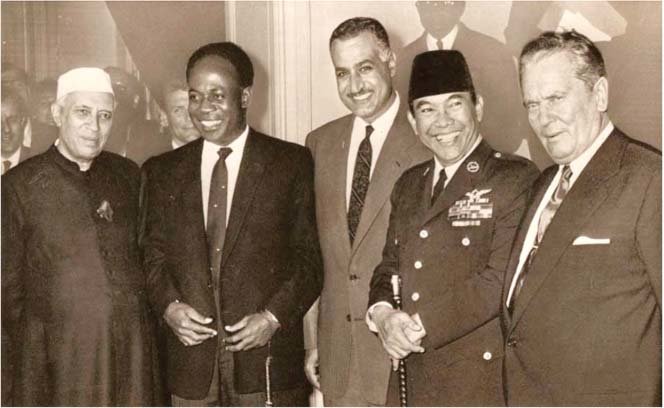
How can the same continent simultaneously stand as evidence of Marxism’s supposed limits and one of its most fertile political terrains? It is precisely this contradiction that Red Africa. Questione coloniale e politiche rivoluzionarie, published in Italian by Meltemi, invites readers to reconsider. In his first book, Kenyan-British political theorist Kevin Ochieng Okoth returns to the revolutionary histories of twentieth-century Africa, tracing the encounter between anti-colonial struggles, Marxist thought and the global structures of imperial power that sought to contain them. Moving across the rise and eventual eclipse of the Bandung moment, while engaging with figures such as Andrée Blouin and many of the political actors who imagined decolonisation as something far more radical than the mere transfer of state power, Okoth asks what remains of that revolutionary horizon and what it might still offer to the present.
But reading Red Africa left me thinking about a slightly different question, one that extends beyond the historical reconstruction the book so carefully undertakes. Not whether Marxism reached Africa, because history leaves little doubt that it did, nor whether it shaped anti-colonial struggles, because it undeniably became one of the political languages through which many liberation movements articulated their visions of emancipation. The question that lingered was what happens when a political theory crosses continents. Can it simply be transplanted, carrying with it the same categories through which it first interpreted the world, or must it allow itself to be transformed by the histories, political traditions and philosophical worlds it encounters? I began to wonder whether the question had ever been whether Marxism belongs in Africa. The more interesting question, and certainly the one that Red Africa prompted me to return to, is whether Marxism is willing to become something other than what Europe imagined it to be.
One of the enduring assumptions surrounding Marxism is that, because it presents itself as a universal critique of capitalism, it can travel largely unchanged. Exploitation may assume different forms from one society to another, but the analytical framework remains fundamentally the same, with capital, labour and class operating as categories capable of explaining the world irrespective of geography. Histories, however, do not simply receive political theories; they reshape them, forcing them into conversations with realities they were never originally designed to confront. Africa, more than any other continent, demonstrates that every universal political language ultimately encounters the limits of its own universality. This is not because Marxism somehow failed to understand Africa, nor because Africa proved inherently resistant to socialist thought. On the contrary, some of the twentieth century’s most influential anti-colonial movements found in Marxism an indispensable language through which to analyse exploitation, imperialism and economic dependency, recognising that the struggle against colonial rule was never merely a struggle for flags, constitutions or formal independence, but against an economic order organised around extraction, dispossession and the systematic denial of political sovereignty. Marxism offered concepts capable of naming those structures with remarkable clarity. And yet colonialism was never only an economic project. It reorganised land, certainly, but it also sought to reorganise memory, transforming relationships between generations, redefining systems of authority, criminalising cosmologies, displacing languages and attempting to sever communities from the political, cultural and spiritual worlds through which they had historically understood themselves. Colonial domination was material precisely because it was also symbolic, cultural and epistemological; to reduce it to economics alone is to misunderstand both the scale of its ambition and the depth of its violence.
This, I think, is where the conversation between Marxism and Africa has often become most productive. Not because African revolutionaries rejected Marx, but because many refused to inherit him unchanged. Rather than abandoning their own political traditions in order to become orthodox Marxists, they repeatedly asked a more difficult question: what would Marxism look like if it were forced to think from African histories instead of merely speaking about them?
If there is one lesson to be drawn from the history of African socialism, it is that its most influential thinkers were rarely interested in reproducing Marxism as an intellectual orthodoxy. They approached it instead as a method, a language capable of illuminating the material structures of colonialism and capitalism, one that nevertheless required constant revision when confronted with societies whose histories did not resemble those of nineteenth-century Europe; in that sense, Africa did not simply receive Marxism, it provincialised it, exposing the limits of imagining any political tradition as universally complete before it enters into conversation with other histories.
This distinction matters because one of the most persistent misunderstandings surrounding Marxism in Africa has been the assumption that its relative “success” or “failure” should be measured by its fidelity to European models, as though the question were whether African revolutionaries had correctly applied Marx rather than whether Marxism itself had to change in order to become politically meaningful in African contexts. Yet no political theory survives by remaining untouched; it survives because people remake it, because ideas, much like the societies that adopt them, are transformed through encounter rather than preserved through repetition. Amílcar Cabral understood this better than anyone. For the revolutionary leader of the PAIGC, the struggle against Portuguese colonialism could never be reduced to an economic conflict between labour and capital because colonial domination itself was never solely economic. It certainly extracted wealth, reorganised production and subordinated entire territories to the needs of imperial accumulation, but it also sought to erase history, fragment communities and convince the colonised that their own cultures belonged to the past. It is for this reason that Cabral repeatedly insisted that national liberation was, above all, “an act of culture”, not because culture existed independently of material conditions, but because it was one of the principal terrains upon which domination itself was organised. Political independence therefore demanded more than the redistribution of resources or the transfer of state power; it required the recovery of historical consciousness, collective memory and cultural dignity, all of which had become objects of colonial violence.
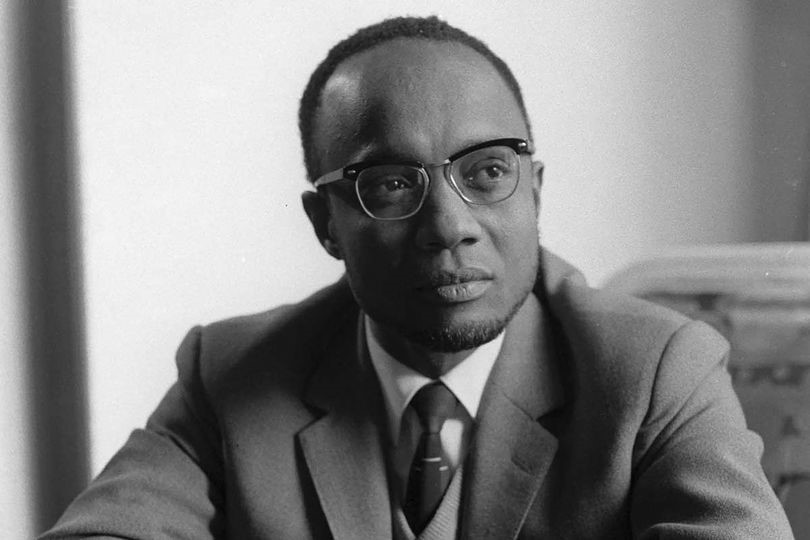
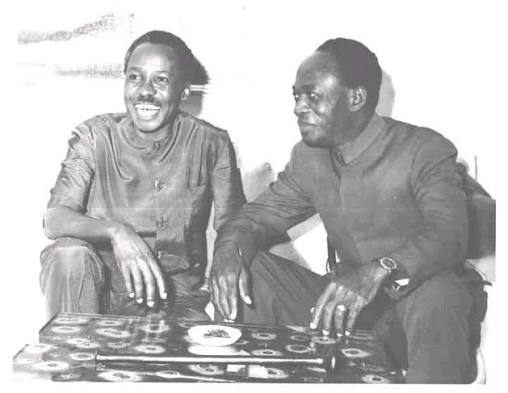
A similar intuition runs through Kwame Nkrumah’s political thought. His project of Consciencism, first articulated in the 1964 work of the same name, sought to provide a philosophical foundation for postcolonial Africa by confronting the coexistence of three historical currents that had profoundly shaped the continent, indigenous African traditions, Islamic thought and the legacy of Euro-Christian colonialism. Rather than treating these worlds as mutually exclusive, or imagining that one would inevitably supersede the others, Nkrumah argued that they had to be brought into a new political synthesis capable of sustaining an emancipatory future. Marxism remained central to his critique of capitalism and imperialism, but it was never presented as a complete doctrine to be transplanted wholesale from Europe; its value lay precisely in its capacity to enter into dialogue with histories and philosophical traditions that European socialism had often neglected. The question, then, was never how to make Africa conform to Marxism, but how Marxism itself might become adequate to Africa.
Julius Nyerere arrived at a remarkably similar conclusion by a different route; his vision of Ujamaa drew upon existing traditions of communal life to argue that socialism was not an imported ideology waiting to be implemented, but something that could emerge from forms of social organisation already embedded within many rural communities. Whether one agrees with the practical outcomes of his policies is ultimately beside the point. What remains intellectually significant is the refusal to imagine socialism as a foreign doctrine requiring Africans to suspend their own political imaginaries before participating in modernity, as though emancipation necessarily demanded cultural substitution.
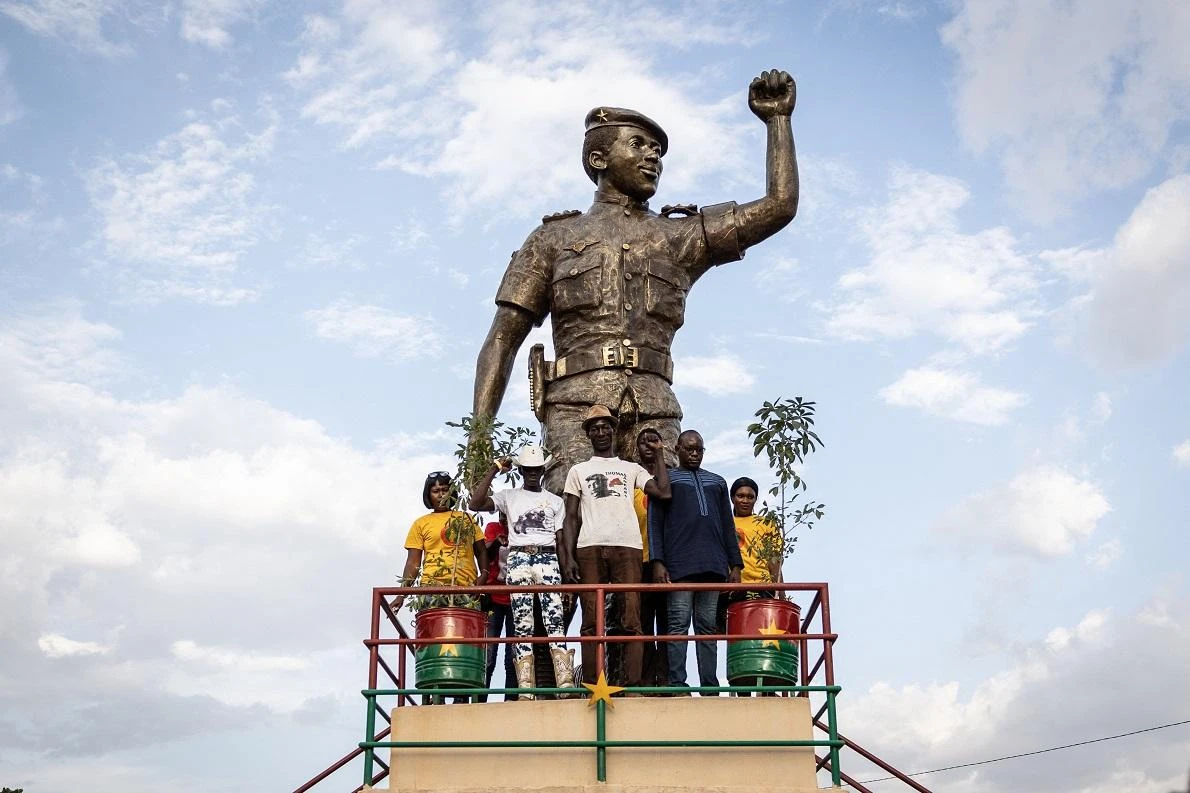
Thomas Sankara embodied that same refusal. His revolution in Burkina Faso embraced anti-imperialism, public ownership and class struggle, while simultaneously placing questions of women’s emancipation, environmental stewardship, popular political participation and cultural transformation at the centre of revolutionary practice. Sankara was not attempting to demonstrate that Burkina Faso could become another Soviet Union; he was asking what a socialist revolution might look like if it began from the concrete realities of Burkinabè society rather than from the historical experience of industrial Europe. His Marxism was recognisably Marxist, but it was also unmistakably African. Taken together, these thinkers suggest that the history of Marxism in Africa is less a story of ideological importation than of political translation. None rejected Marx outright, yet neither did they inherit him uncritically; they read him through colonialism, dispossession, race, peasant economies, communal forms of life and through historical experiences that European industrial capitalism alone could never fully explain.
It is here that I find myself hesitating before one of the oldest criticisms levelled against Marxism in Africa, namely the claim that the continent is somehow “too spiritual” for historical materialism. The argument is usually presented as evidence that Marxism cannot fully take root because religious belief, ancestral traditions or spiritual cosmologies inevitably eclipse class consciousness, as though spirituality were merely a distraction from material struggle. But I wonder if the problem lies elsewhere. It seems to me that it is not that Africa is excessively spiritual; rather, much of European Marxism has too often struggled to recognise that spirituality itself can constitute a political category rather than merely a religious one.
For many African societies, land has rarely been understood as a commodity alone. It is inheritance and ancestry, obligation and memory, a site through which relationships between generations are continually renewed rather than simply a resource to be exchanged on the market. Community, likewise, has often functioned as something more than a collection of individuals sharing the same economic position, becoming instead a network of reciprocal responsibilities that links the living to the dead, the individual to the collective and the present to those who came before. None of this abolishes class, nor does it make material exploitation any less real; it suggests, rather, that exploitation is experienced through relationships whose political significance cannot always be reduced to economic categories alone.
I think that this may be where European Marxism has occasionally encountered its own limits. In seeking a universal grammar of emancipation, it has sometimes mistaken European historical experience for universal historical experience, forgetting that every political language is transformed by the worlds into which it arrives. Africa does not reveal the weakness of Marxism because it is somehow exceptional; it reveals the limits of any political theory that assumes it can speak every language before it has first learned to listen.
Reading Red Africa, I kept coming back to a question that stayed with me long after I had finished it, even if it was never one the book explicitly tried to answer. What exactly did Africa force Marxism to confront? For decades, the continent has often been presented as the place where Marxism supposedly faltered, where class consciousness dissolved into ethnicity, religion or spirituality, as though African societies represented an exception to the historical trajectory imagined by European socialism. The longer I sat with that assumption, the less convincing it became. What if Africa did not reveal the weakness of Marxism at all? What if it revealed the limits of a specifically European reading of Marxism, one that had gradually mistaken its own historical experience for universal historical experience?
The more I thought about that possibility, the less interested I became in Africa as an exception, and the more interested I became in Europe itself. After all, the crisis of Marxism in the West has never really been its inability to explain capitalism. More than a century after Das Kapital, few political traditions have produced a critique of exploitation as rigorous or as enduring. The difficulty has always lain somewhere else. Why has shared exploitation so rarely become shared political community?
Marxism teaches us that capitalism creates classes through the organisation of labour and the unequal distribution of wealth. At the same time, capitalism also fragments the very communities through which solidarity might emerge. Sharing the same material conditions does not necessarily mean recognising oneself in another person who shares them. Precarity does not automatically produce collective consciousness; quite often it produces competition, resentment and the search for distinction. If I cannot become wealthier than you, I may still try to become more deserving than you, more respectable than you, more civilised than you, more national than you. If economic hierarchy becomes more difficult to escape, symbolic hierarchy becomes all the more attractive. Racism, nationalism, xenophobia and respectability politics do not emerge outside class relations; they frequently become the means through which people attempt to escape them without ever leaving them behind.
This is where many African socialist traditions, at least to my mind, offer something that Western Marxism has occasionally struggled to see. Their starting point was often not the isolated individual who later discovers a common class interest, but communities already bound together through histories of reciprocal obligation, kinship, memory and collective responsibility. This is not to romanticise Africa, nor to suggest that African societies were somehow free of hierarchy, conflict or exclusion. They were not. It is simply to recognise that political belonging was frequently imagined through relationships that exceeded the economic individual inherited from European modernity.
Seen from this perspective, spirituality begins to appear rather differently as well because It is no longer an irrational residue standing in the way of material politics, but one of the ways through which material life itself has historically been organised. Land is not simply property but inheritance; ancestry is not merely belief but a relationship that structures obligation across generations; ritual is not the opposite of politics but one of the practices through which communities reproduce themselves over time. None of this abolishes class, nor does it weaken Marxism’s critique of capitalism. Rather than asking Marxism to abandon its critique of capitalism, I think Africa asks something far more difficult of it, to recognise that exploitation is never experienced in the abstract, but always through histories of belonging, memory and social relationships, and that these, no less than labour or capital, are part of the material conditions from which political life emerges.
I find myself wondering whether this is Africa’s most enduring contribution to Marxist thought. Not an alternative to class analysis, nor a rejection of historical materialism, but an insistence that no emancipatory politics can be sustained through economic relations alone. Before solidarity can become a political project, it must first exist as a lived relationship, one rooted in mutual obligation, recognition and care. Relationships, unlike theories, cannot simply be transported from one history to another, they have to be built, inhabited and continually remade.
What I take away from Red Africa is not simply a richer history of African socialism, but a different way of thinking about how political ideas move through the world. Theories do not travel as finished products. They carry with them the assumptions of the societies that produced them, and they remain politically alive only insofar as they are willing to be transformed by the histories they encounter. Africa did not simply receive Marxism; it argued with it, stretched it, translated it and, in doing so, revealed possibilities that could not have emerged from Europe alone. Revisiting these histories feels especially urgent today. We are living through another moment in which capitalism generates profound inequality, political fragmentation and widespread disillusionment, while shared precarity continues to produce as much resentment as solidarity. We understand the mechanisms through which exploitation is organised, but we remain far less capable of imagining the forms of community through which it might be overcome.
That is why I do not read African Marxist thought as a chapter in the history of socialism, nor as an intellectual curiosity belonging to another continent or another century. I read it because it asks a question that feels impossible to ignore: whether emancipation begins not simply with recognising that we share the same material conditions, but with the far more demanding task of learning how to belong to one another. Marxism remains indispensable for understanding the structures of domination that shape our world. Africa, however, reminds us that no political language, however powerful, becomes emancipatory until it learns to speak not only in the grammar of class, but also in the grammar of relationships.