
A New Jazz Order. The New Transatlantic Axis

What if the future of jazz is being written between Johannesburg, London, and New York? In his latest article for oltreoceano, Nils Bourdin explores the emergence of a new transatlantic jazz circuit connecting South Africa, the UK, and the United States. Far from being a nostalgic genre, contemporary jazz has become one of the most dynamic spaces for experimentation, collaboration, and cultural exchange. From Yussef Dayes and Ezra Collective to Nduduzo Makhathini and Robert Glasper, a new generation of artists is redefining what jazz can sound like, drawing on hip hop, electronic music, Afrobeat, spirituality, and diasporic connections. More than a story about music, the article examines how new cultural routes are emerging across the Black Atlantic, reshaping who influences whom and where innovation happens.
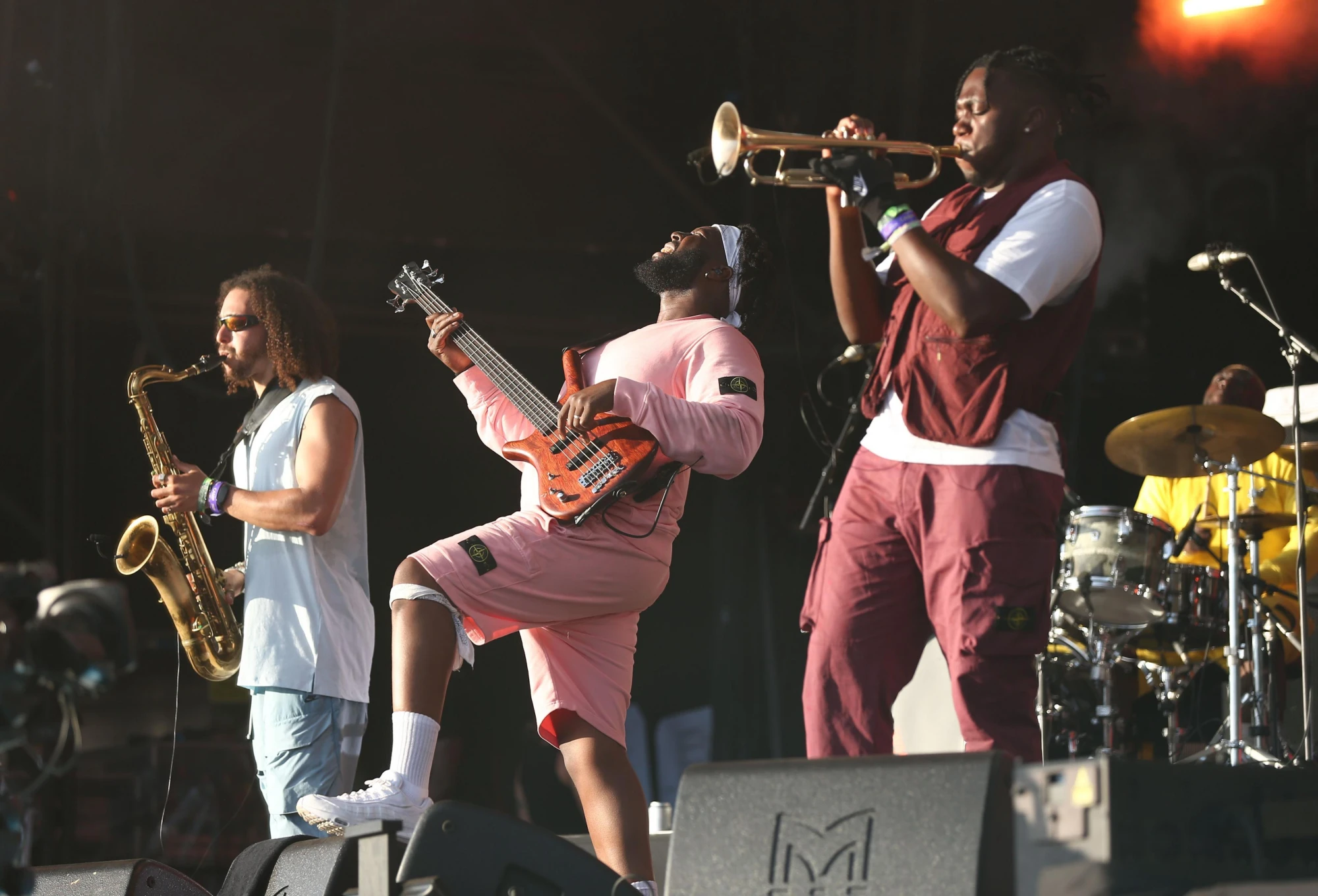
The sun is setting in Cape Town, South Africa. With Table Mountain rising in the background, British drummer Yussef Dayes sits behind his kit, locked into a glowing, sunlit groove alongside South African band Thanda Choir. The scene feels almost unreal: sharp tailoring, effortless cool, voices and drums bouncing into the open air. Posted to Instagram, the clip travels fast: hundreds of comments, endless reshares, a quiet sense that something bigger is happening. The video was captured over the weekend of March 27–29, 2026, in Cape Town, behind the scenes of a remarkable convergence. For two days, the “Mother City” became a gravitational center for contemporary jazz, as the Cape Town International Jazz Festival and Montreux Jazz Festival unfolded almost simultaneously. Across stages and studios, artists like Robert Glasper, Ezra Collective, Jacob Collier or Fatoumata Diawara moved through the same orbit, blurring lines between scenes. For a brief moment, it felt as if the axis of jazz had shifted south, suspended somewhere between London and New York, with Cape Town at its center. In the crowds, too, something had changed: young, sharply dressed audiences moved between stages with the ease of seasoned insiders, as if jazz, once coded as heritage, had quietly become the most contemporary, most desirable sound in the room.
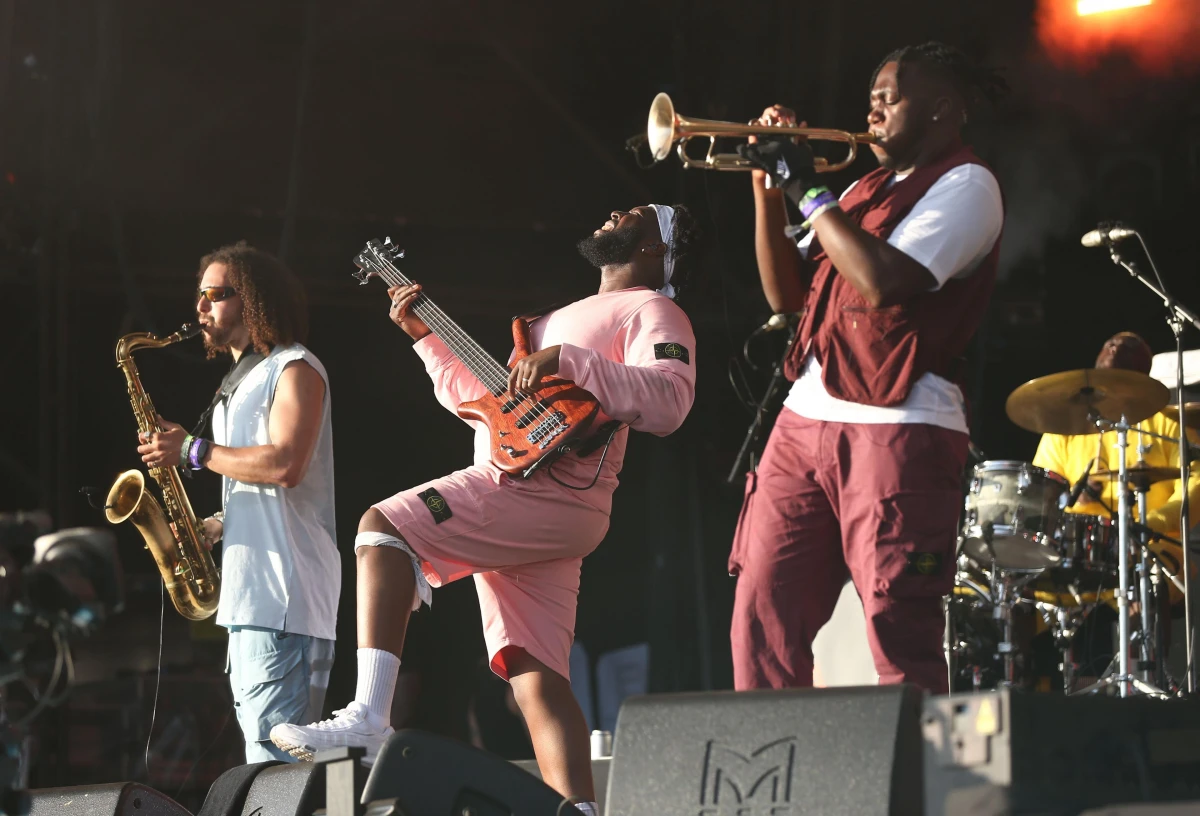
This feeling is not an illusion. Jazz, quietly but decisively, has become cool and bankable again. Not as nostalgia, but as a living, shape-shifting language. In the UK, a new generation has rewritten its codes in the past 5 years: Ezra Collective, Kokoroko, Yussef Dayes or Nubya Garcia move like pop stars, drawing young, diverse crowds while weaving Afrobeat, funk, grime and electronic textures into their sound. They are often joined on stage by international figures like Fred again…, Jordan Rakei, Olivia Dean…
Further south, South Africa has long carried a deep jazz heritage, now surging back into global view. Artists such as Nduduzo Makhathini and Thandiswa Mazwai are invited on international platforms (see their NPR Tiny Desk), while boundary-pushing groups like The Brother Moves On and BCUC become critical darlings abroad. In Johannesburg, jazz is not confined to concert halls: teenagers drift between clubs and live sets in the CBD, carried by collectives like Kids Love Jazz or Your Weekly Touch Up, with venues like Untitled Basement acting as incubators. Even streaming reflects that energy: Spotify reported nearly 175 million jazz streams in South Africa over the past year, a sharp rise that hints at a generational shift[1].
Finally, across the Atlantic, the United States remains both anchor and amplifier: from enduring icons like Nina Simone to contemporary figures such as Robert Glasper, Theo Croker, Samara Joy, or Kassa Overall, the scene continues to blur boundaries with hip-hop, R&B and electronic music. Not so long ago, jazz had, for many, acquired the unfortunate reputation of being music for old white men. American musician Adrian Younge even delightfully played with this image through his “Jazz Is Dead” project ; little did he know he was acting for its revival. Back in Cape Town on this festive weekend, the shift is clearer than ever as young, Black South African audiences are dancing to Black musicians from the UK and the US. Jazz is no longer something to sit through: it is something to move to, to circulate through, to inhabit. Not surprising for a genre over a century old, which has always found new ways of reinventing itself.
What feels newer, and far less predictable, is the way these three scenes have begun to lock into one another, forming a dense transatlantic circuit that is quietly redrawing the map of jazz. The exchanges are no longer occasional; they are constant, almost structural. Thandi Ntuli records with Californian producer Carlos Niño, Bongeziwe Mabandla crosses paths with UK jazz artist Alfa Mist, Bokani Dyer signs to London’s Brownswood Recordings, while Nduduzo Makhathini tours extensively across the United States. South African cellist Abel Selaocoe collaborates with ensembles in Manchester, as bands like Kokoroko or Ezra Collective take their sound deep into North American venues. Over the years, these artists have increasingly met and mingled across festivals, studios and tour circuits, building relationships in real time, and often extending them online, where collaborations now spark as easily on social media as they do on stage.
Few careers embody this circulation as vividly as Shabaka Hutchings. Often described as a mentor to the UK’s new wave, he helped shape the landmark 2017 compilation We Out Here on Brownswood Recordings, which introduced artists like Kokoroko, Moses Boyd, Ezra Collective and Nubya Garcia to the world. But his trajectory stretches far beyond London: he has performed with the legendary American Sun Ra Arkestra and tours extensively in the US. At the same time, his own work repeatedly turns toward South Africa: his band The Ancestors was created after a spiritually awakening trip to Cape Town, while on his latest album Off The Wall, he pays tribute to his mentor South African drummer Louis Moholo. Even the discography mirrors this circulation: two years after releasing We Out Here, Brownswood released Indaba Is, a compilation dedicated to South African jazz. What emerges is not a simple exchange, but a loop: a three-way conversation in which influence no longer travels in one direction, but moves continuously between Johannesburg, London and American cities like Chicago, New York or Los Angeles.
The emergence of this transatlantic triangle also reflects broader shifts in the global music landscape. Demography is slowly unseating long-standing hierarchies: markets in Korea, Latin America or Africa are no longer peripheral, but central, reshaping what global success looks like. At the same time, African music is entering a new phase of expansion: Afrobeats alone saw its global listenership grow by more than 20% in 2025, creating both curiosity and gravitational pull[2]. Within that context, the dialogue between the US, the UK and South Africa feels almost inevitable.
For Black American and British musicians, there is a renewed desire to reconnect with deeper musical lineages (something palpable in projects like Black Classical Music by Yussef Dayes, or Love Quantum by Theo Croker). And in that search, South Africa stands apart on the African continent. Firstly, its jazz scene is structurally robust with festivals, venues and institutional memory. Other African countries often lack infrastructure and support for music as a whole, and even more for music as “niche” as jazz. Secondly, South African jazz is musically distinct, rooted in traditions that have not been diluted. Spirituality, long embedded in jazz history, takes on a different density here: Nduduzo Makhathini, for example, is not only a pianist, but also a recognised traditional Zulu healer, embodying a connection between sound and ritual that feels lived rather than referenced. South African acts like BCUC, Herbie Tsoaeli or Sibusile Xaba always reference local traditions in their live performances, often erupting into trance similar to the ones performed in spiritual rituals. In this way, the country provides an endless source of inspiration for Afro-diasporic artists wishing to explore their musical roots. Working with Johannesburg musicians on Shabaka and the Ancestors, Hutchings described being “drawn back to the primordial source of inspiration”, a telling phrase that frames South African jazz not just as influence, but as spiritual origin[3].
This resonance is not new. During apartheid, many of South Africa’s greatest musicians (from Hugh Masekela in the United States to Louis Moholo in the UK, or Miriam Makeba across the world) forged deep ties in exile, collaborating and exchanging with local scenes. Those routes never fully disappeared; they linger in today’s influences and affinities, when Thandi Ntuli names Nina Simone as a guiding light, or when members of Kokoroko cite Abdullah Ibrahim as a foundational influence.
Beyond geography, these musicians recognize each other in more subtle ways. They grew up on the same playlists as much as on the same records: hip-hop, soul, funk, electronic music. This new generation of artists approaches jazz less as a fixed tradition than as something to be opened, stretched, and shared. For Kokoroko, that can mean handing an entire EP over to electronic producers for reinterpretation; for Nduduzo Makhathini, it means sharing the stage with Afro-house heavyweight Black Coffee at festivals; elsewhere, jazz musicians like Kamasi Washington or Robert Glasper now move fluidly into blockbuster rap projects like To Pimp a Butterfly by Kendrick Lamar, where improvisation meets hip-hop at its most ambitious. What binds these 3 scenes together is not just collaboration, but a shared philosophy: a refusal to police boundaries. As Shabaka Hutchings puts it, “One of the strengths of the London scene is a kind of carelessness in exploring how we relate to jazz or what’s seen as commercial music (...). That could seep into the SA scene, especially when you see things like the massive electronic scene, the massive house music scene, and the scope for cross-fertilisation[4].” In that carelessness, or freedom, lies the possibility of a jazz that no longer belongs to one place, but to a generation moving between them.
What is unfolding in jazz, in many ways, mirrors a trajectory already visible in global pop. Genres like Nigerian Afrobeats and South African amapiano, once deeply local, have followed a now familiar route: first circulating through diasporic networks in the UK, then breaking into the United States, before expanding worldwide. Artists like Burna Boy, Wizkid or Uncle Waffles have become global stars through this very pathway, selling out arenas and collaborating with figures such as Chris Martin from Coldplay or Chris Brown. Amapiano festivals now fill venues in cities like Washington, Miami or Atlanta. The map is strikingly similar: Africa as the creative engine, the UK as the first relay, the US as amplifier. Jazz, long perceived as rooted in American history, is now moving along those same routes, but with a different kind of circulation, less about domination than dialogue.
Behind this cultural movement, the industry is paying close attention. The expansion of the Montreux Jazz Festival into Franschhoek signals a growing belief in South Africa as a key node of the global jazz economy, while labels are beginning to invest more deliberately across this triangle. From Blue Note Records’ African ventures to Partisan Records in America signing acts like Ezra Collective, the signals are clear. What they see is not only artistic vitality, but reach: these musicians, positioned between African heritage, British multiculturalism and American imagery, seem uniquely equipped to speak to a global audience. For South African artists in particular, the stakes are concrete: with limited monetisation at home and fragile infrastructures, touring abroad is often less a choice than a necessity. And yet, out of that necessity, a new geography is taking shape.
Jazz is no longer anchored to a single birthplace or narrative; it moves, circulates, reinvents itself in transit. And somewhere between Johannesburg, London and the United States, it is learning, once again, how to belong to the world.
[1] Shumba, N. (2026, 7 April). Spotify reports growth in SA jazz listenership as streams rise 20%. Music in Africa.
[2] Sunny, D. (2025, 4 December). Afrobeat listeners grew by 22% globally – Spotify Wrapped 2025. Techpoint Africa.
[3] Nadal, J. (2016, 8 October). Shabaka And The Ancestors: Wisdom Of Elders. AllAboutJazz.
[4] Warren, E. (2018, 2 May). London x Chicago x Johannesburg. The Vinyl Factory.