
A History Written in Black and Blue. On the Meaning of Blue Color in Black Culture

The colour blue is more than a colour, a mood, or a genre of music. It is a metaphor, a sound, a birthright, a sensibility, a respite, and a way of living with the cruelty of the world. Across art, music, culture, blue plays an undeniably central role in African-American culture, with roots stretching across continents, from Africa, where the colour carried deep spiritual meaning, to the plantations of the Americas, where enslaved workers stained their hands to satisfy a global market’s hunger for colour. Our contributor Rokhaya Sofia Thiam traces this layered and powerful history.
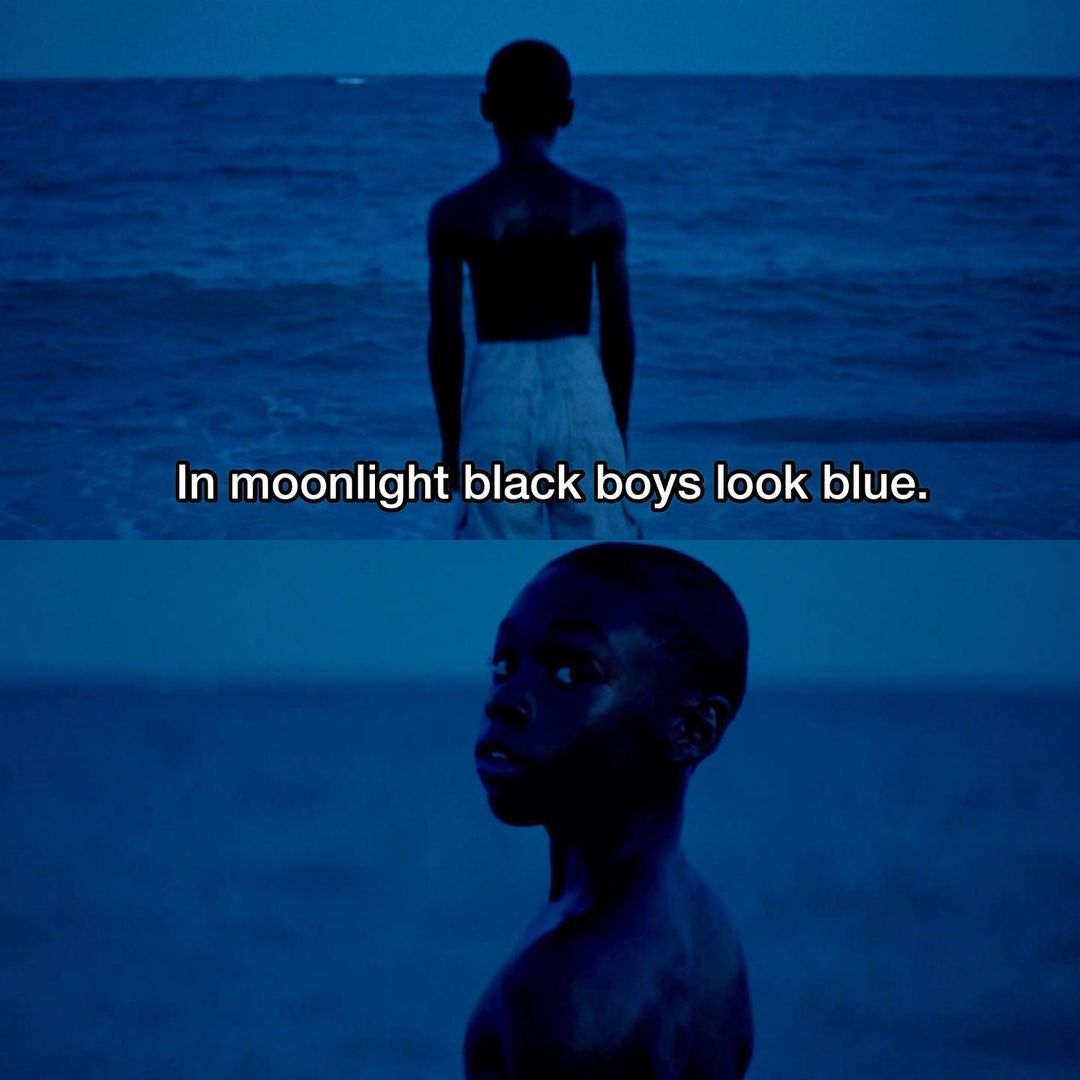
There is a scene from Moonlight (2016) that, despite the fact that ten years have passed since the film's release, still circulates today on many social media profiles and web pages, often as animated GIFs or montages of multiple frames. In these images, we see the protagonist—Chiron—filmed from behind, standing on the beach, bathed in an alienating light and a blue so saturated that it appears almost electric. In some versions, the iconic quote “In moonlight Black boys look blue” appears at the bottom of the image, taken from the play of the same name by Tarell Alvin McCraney that inspired Jenkins' film. In addition to evoking a sense of calm and tranquility in the viewer, often in stark contrast to the themes dealt with in the film, in Moonlight the color blue and its different shades also serve as a narrative thread, driving the events and linking the chapters of Chiron's life, accompanying him throughout his journey of formation.
Almost twenty years before Jenkins, in 1998, the now legendary director and videomaker Hype Williams also chose blue as the guiding color for his debut feature film, Belly, which is still considered a cult classic within the Black community, mostly thanks to its extremely striking aesthetics, carefully selected soundtrack, and unprecedented representation of 1990s hip hop culture. In particular, in the film's iconic opening scene, the two protagonists - played by Nas and DMX - are seen entering a strip club, wearing white contact lenses and immersing themselves in the purple/blue light of the venue, before launching into a violent robbery to the notes of Soul II Soul's a cappella version of Back to Life.
In a 2018 interview, Williams recalls how he and cinematographer Malik Sayeed chose to use blue in the film's color palette because of how this color stands out against dark skin, anticipating by almost twenty years the techniques still used today by directors to highlight the beauty of Black bodies (Khal. 2018). Like Moonlight, Belly highlights how Black stories, particularly those dealing with themes such as street life, when told through the black gaze and by people who come directly from the community, can be conveyed to the audience through artistic storytelling full of vibrant colors (Khal. 2018). By closely linking the subject of the Black body to the color blue, both films are part of a much longer visual tradition, which, over the years, has seen the entire African American cultural heritage find its place between the two extremes of the color spectrum, ranging from intense black to deep blue.
“WHAT DID THEY SEE IN ALL THAT BLUE?”
In a 1964 essay entitled The Uses of the Blues, James Baldwin began by stating that the “blues” referred to in the title actually had very little to do with music, but were instead a metaphor for everything related to the experience of life, particularly Black life. According to the author, the blues correspond to all those “disasters” that he himself defines as “Facts of life,” namely “They’re about work, death, love, floods, lynchings [...]” — all events which, according to Baldwin, if accepted for what they are they could even give a certain sense of joy (1964). As academic Imani Perry also points out, in English the word ‘blue’ has been used for centuries as a synonym for feelings such as sadness and melancholy (2025, p. 22), while as early as the Middle Ages, terms such as “blew” and “fear gorm” [“blue man” in Irish] were used to refer to individuals whose skin was so dark and luminous that it appeared almost blue.
However, the relationship between blue and Blackness has even more distant origins, dating back to before the very first Black slaves set foot on American soil, leading Perry to observe that “[...] there was a time before Black, but not before blues”, noting that the adjective “Black” was in fact created in response to the need to divide and categorize human beings (2025, pp. 13; 19). In Black in Blues: How a Color Tells the Story of My People (2025), Perry adopts blue as a thread, examining texts, artifacts, and archival materials to highlight how the history of this color is inextricably linked to the experience of Black life in every corner of the world— “[...] from Malian music and Yoruba cosmology to the testimonies of rural Colombians” – intertwining with some of the most violent events to which Black people have been victims (2025, p. 6). Starting with episodes such as the indigo trade – originally used in Yoruba culture for its strong spiritual significance and associated with those who worshipped the deity Iya Mapo – the author reconstructs how, with the advent of the Atlantic slave trade, this pigment went from embodying a feeling of harmony to representing a real ‘[...] tool of global imbalance’, where ‘a block of indigo dye could be traded for a “hand”, meaning a working slave, a person made tool”(2025, p. 18).
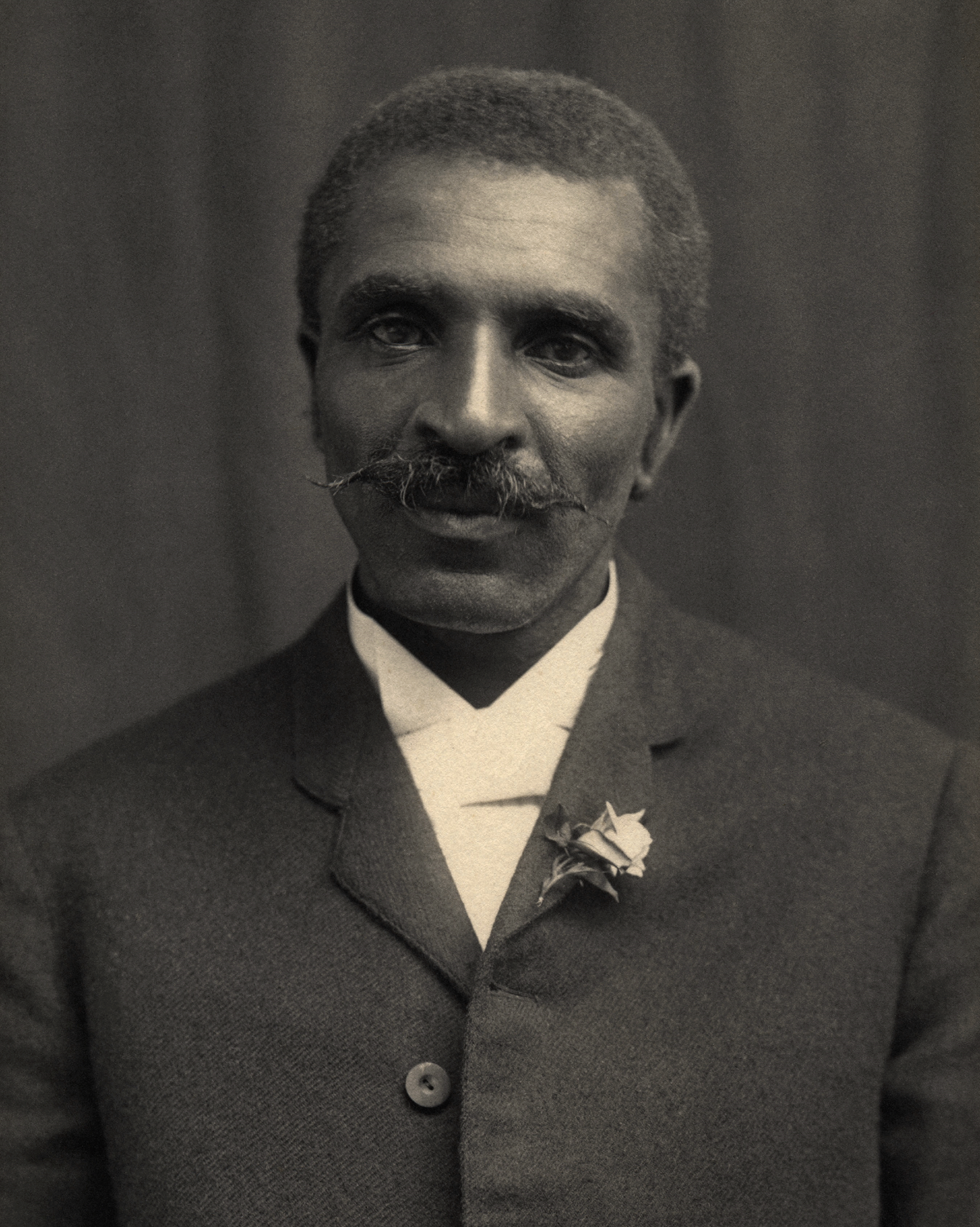
Even within African American culture, blue was later taken up in numerous traditions: from Hoodoo magic practices to the choice of painting walls and ceilings this color to ward off evil spirits, and even in the cotton clothing worn by the slaves who harvested the raw material (Perry. 2025, p. 18; 37; 73). Around the 1930s, agronomist and researcher George Washington Carver succeeded in recreating a particular shade of blue, extremely bright, which had originally been found inside Tutankhamun's tomb in 1922, later becoming known as “Egyptian Blue.” By formulating his pigment, which he would later name Egyptian Blue 9th Oxidation, Carver managed to create a direct link with what had been one of the most important civilizations on the African continent over two millennia earlier, a civilization to which, in those very same years, numerous exponents of the Harlem Renaissance had also begun to refer in an attempt to reconstruct a true genealogy of Black culture.
SAD NOTES AND BLUE SCALES
When considering the realm of music, in addition to giving its name to a whole genre and to all those people whom Amiri Baraka (writing under the name LeRoi Jones) would later define as ‘Blues People’ in 1963, blue is also the color that characterizes the so-called “blue notes”, i.e., those sad notes typical of jazz and blues, which Perry describes as “[...] the most African of interventions into Western music” (Perry, 2025, p. 81). Starting in 1912, blue also began to appear in what are now considered some of the greatest masterpieces of Black music. It was in this very year that composer William C. Handy wrote The Memphis Blues, while in 1929 Fats Waller wrote (What did I do to be so) black and blue?, originally sung by Edith Wilson, but later covered by Louis Armstrong, who is credited with bringing it to fame, so much so that it was mentioned in Ralph Ellison's novel Invisible Man (1952). As Perry observes, in Waller's lyrics, the question “What did I do to be so black and blue?” is asked rhetorically, in that the real question — “Why are [we, Black people] at the bottom?” — would not, for obvious reasons, be worthy of a serious answer (2025, p. 144).
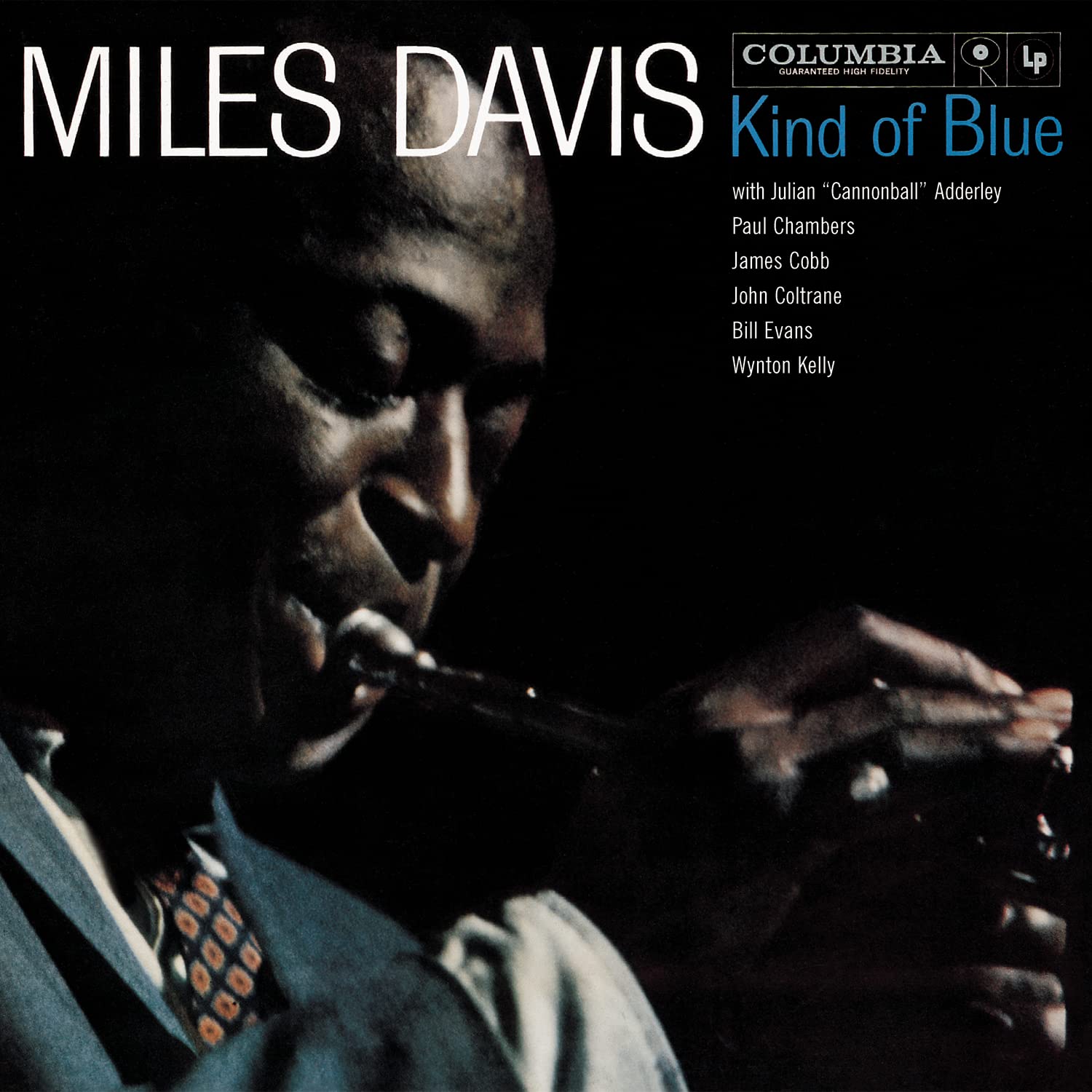
1953 was also the year Miles Davis released his third studio album, Blue Period, which, as Davis himself stated, was inspired by Picasso's famous blue period. This was followed in 1959 by Kind of Blue, which would go down in history as one of the greatest jazz albums of all time. In February of the same year, Nina Simone's first album, Little Girl Blue, was released, followed two months later by Afro Blue by Cuban musician Mongo Santamaría, which would gain notoriety thanks to John Coltrane's arrangement. In Afro Blue, Santamaría — who grew up poor and dark-skinned in the suburbs of Havana — celebrates Blackness and its universality, using a 3/2 time signature — typical of African musical compositions — and including in the album a whole series of influences and references ranging from jazz to R&B, thus reviving those typically Black genres that, over the following decades, would contribute to establishing the African American music scene on a global scale (Perry. 2025, pp. 177-178).
The title chosen by Santamaría is also a reference to the so-called ‘African blue’, a particular shade of blue found in many African cultures and which in reality corresponds to multiple shades, sometimes very different from each other, whose symbolic meaning is related to the spiritual sphere. Ten years after Afro Blue, in 1970, Curtis Lee Mayfield released We the People Who Are Darker Than Blue, a real anthem through which Mayfield encourages Black people to keep their pride high, no matter how difficult or precarious their situation may be.
FROM HEAVY BLACK TO DEEP BLUE
As in music, in African American visual culture and art, black and - in particular - blue take on a whole range of specific meanings, embodying feelings such as resilience and identity, but also spirituality and protection, representing—when combined and directly related to Blackness—a deliberate aesthetic act. One of the most popular works in this sense is undoubtedly Blue Monday (1985) by figurative painter Annie Frances Lee, which depicts a stylized woman, visibly tired, portrayed in the act of getting out of bed to go to work. Lee's painting — whose subjects are often taken from everyday Black life and portrayed with extreme naturalness — almost immediately achieved iconic status, so much so that today many African Americans remember having a reproduction of it in their homes as early as the 1990s. Last year, director Tyler Perry was inspired by Blue Monday to create the promotional campaign for his film Straw (2025), whose plot, not coincidentally, tells the story of a struggling single mother.
In the fall of 2002, David Hammonds turned off the lights at the Ace Gallery in New York to create what is now one of his most famous immersive works ever: Concerto in Black and Blue, described by his colleague Lorna Simpson as “[...] a kind of music-making, an improvisation in blue light made by the guests” (Perry. 2025, p. 234). During the exhibition, visitors were asked to find their way around the gallery using a blue LED light provided at the entrance, which they could use to trace a series of light trails in the dark space. As suggested by the title, Hammonds' work focused on creating a collective and participatory dimension, but also a space for play and reflection, evoking, through the reference to black and blue, a whole series of issues related to race, but also to music and Blackness, which is here understood in its most universal sense.
Years after Concerto, Simpson—whose multidisciplinary practice revolves around themes including the representation of the Black body and the instability of memory—opened an exhibition in New York in 2019, whose visual thread was precisely the chromatic combination of black and blue. In Darkening, Simpson's works explored the multiple intertwining threads that exist between race, coloniality, and the personal dimension, focusing specifically on the investigation of three subjects that at first glance might appear to have no obvious connection between them—views of icebergs, plumes of clouds, and images of Black women—whose coexistence, however, found meaning thanks to a quote from poet Robin Coste Lewis that reads, “Using Black to Paint Light: Walking Through a Matisse Exhibit Thinking about the Arctic and Matthew Henson.”
In 2017, conceptual artist Glenn Ligon curated an exhibition for the Pulitzer Arts Foundation in Saint Louis, Missouri, a group show whose title—Blue Black—introduces a truly lyrical meditation on the meaning of these two colors in relation to Black culture, but also to American culture as a whole. Ligon himself recounts how the idea for the exhibition came to him while he was standing in front of Ellsworth Kelly's painting Blue Black (2000) and his mind suddenly turned to Louis Armstrong singing (What Did I Do To Be So) Black and Blue?, thus creating a profound short circuit between the purely formal aspect of the work in front of him and the cultural and identity implications hidden behind the chromatic combination of the two colors. Blue Black featured works by numerous artists, both African American and non-African American, including Ligon himself, David Hammonds, and Simone Leigh.
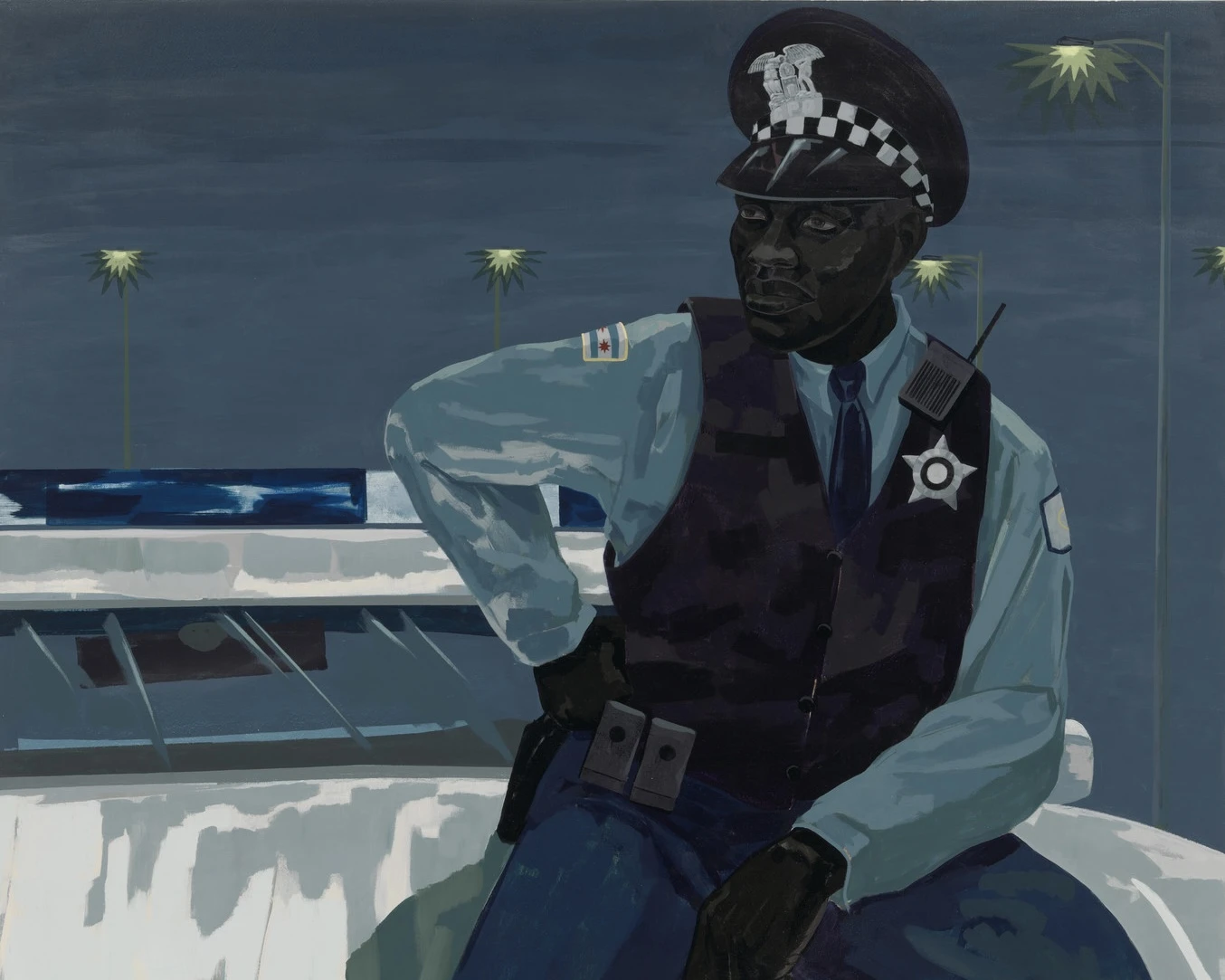
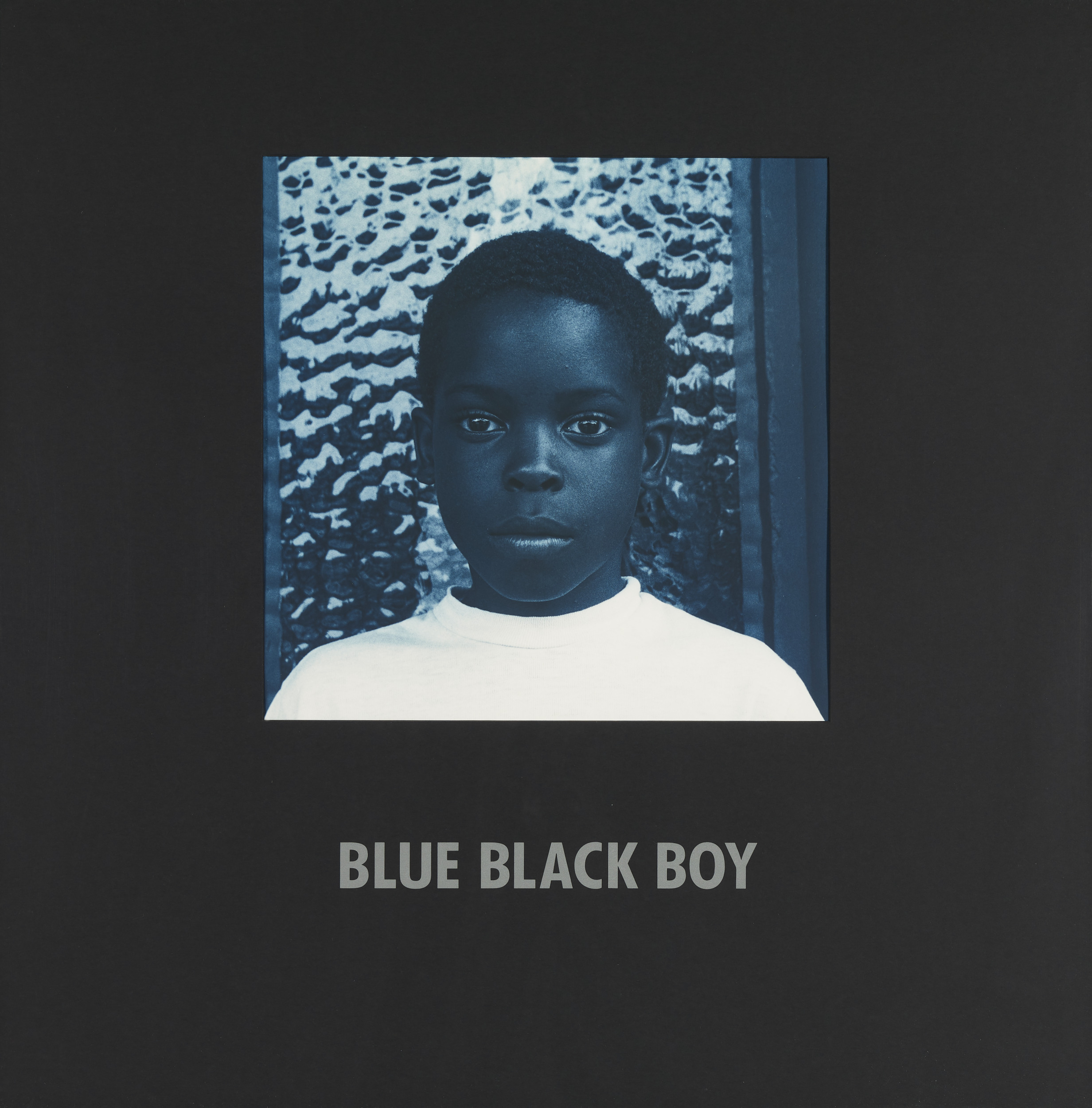
In an article commenting on the exhibition, curator and writer Antwaun Sargent also notes how the exhibition opened with a juxtaposition of several works, including Kerry James Marshall's painting Untitled (policeman) (2015) and the photograph Blue Black Boy (1997) by Carrie Mae Weems, which respectively portray an African American police officer wearing the uniform of the Chicago Police Department and a Black boy looking straight into the camera. In his review, Sargent comments on how this juxtaposition made him think of two very different dynamics of gaze: the first is the gaze of a Black father towards his son, while the second has to do with “[…] what happens when the effects of the white gaze is recognized to be more than a theoretical construct but something representative of systemic power structures that have real life consequence” adding that, under the white gaze, the boy in Weems' photograph effectively becomes “another Michael Brown” (Sargent, 2017).
Originally created as part of the series “Colored People” (1989-1990), Blue Black Boy is one of the images that Weems took with the intention of representing all the possible nuances of Blackness, advancing, among other things, an open criticism of colorism, even and especially within Black communities themselves. Other portraits also belong to the same series, such as Golden Yella Girl, Magenta Colored Girl, and Red Bone Boy (1997), although it is interesting to note that, just like the clip from Moonlight mentioned at the beginning, Blue Black Boy is not only the most famous work in the series, but also one of the most recognizable within Weems' entire body of work, representing, among other things, one of those many Black children whose skin, according to McCraney, would appear blue under the moonlight.
Extended bibliography
Baldwin, J. (1964). The Uses of the Blues. In: The Cross of Redemption: Uncollected Writings. 2012. Randall Kenan, Pantheon Books, New York, N.Y. [Originally published In: Playboy Magazine, January 1964.]
Ellison, R. (1952). Invisible Man. Random House, New York.
Jones, L. (1963). Blues People. William Morrow. USA.
Khal. (2018, December 19). “How ‘Belly’ Changed Hip-Hop and Hollywood”. Complex. https://www.complex.com/pop-culture/a/khal/how-belly-changed-hip-hop-and-hollywood
Perry, I. (2025). Black in Blues: How a Color Tells the Story of My People. Ecco.
Sargent, A. (2017, July 24). The Many Shades of Glenn Ligon’s Blue Black. Hyperallergic. https://hyperallergic.com/glenn-ligon-blue-black-pulitzer-arts-foundation/
Credits
Film Moonlight by Barry Jenkins. 2016. USA. (Jenkins/A2A).
Film Belly by Hype Williams. 1998. USA. (Williams/Big Dog Films).
Soul II Soul’s Back to Life (However Do You Want Me). 1989. Britannia Row, London. Virgin.
Theatrical piece In moonlight Black boys look blue by Tarell Alvin McCraney. Unpublished.
William C. Handy’s The Memphis Blues. 1912. Victor Studios, Camden, New Jersey.
Fats Waller and Harry Brooks’s (What did I do to be so) black and blue?. 1929. Mills Music.
Miles Davis’ Blue Period. 1951. Prestige Records.
Miles Davis’ Kind of Blue. 1959. Columbia Records.
Nina Simone’s Little Girl Blue. 1959. Beltone Studios, New York.
Mongo Santamaría’s Afro Blue. 1959.
Curtis Lee Mayfield’s We the People Who Are Darker Than Blue. In: Album Curtis. 1970. RCA, Chicago. Curtom.
Images
Clip from Moonlight by Barry Jenkins. 2016. USA. (Jenkins/A2A)
George Washington Carver, ca. 1902
Cover for the first edition of LeRoi Jones’ (a.k.a. Amiri Baraka) Blues People (1963). William Morrow. USA.
Album cover for Miles Davis’ Kind of Blue. 1959. Columbia Records.
Annie Frances Lee. Blue Monday (1985)
Lorna Simpson. Collide (2019). Photograph by James Wang.
Kerry James Marshall. Untitled (policeman) (2015). Acrylic on PVC panel with plexiglass frame.60 x 60” (152.4 x 152.4 cm). Gift of Mimi Haas in honor of Marie-Josée Kravis. MoMA. New York.
Carrie Mae Weems. Blue Black Boy (1997). Monochrome color photograph with silkscreened text on mat. 30 x 30” (76.2 x 76.2 cm); framed: 31 x 31 x 11/2” (78.74 x 78.74 x 3.81 cm). Gift of Seymour H. Knox, Jr., by exchange, 2008. Collection Buffalo AKG Art Museum.
Playlist
https://open.spotify.com/playlist/78GsQrs5ZzBgvYdAlJNsRe?si=aMLUBcBZTiyJhw3ekQM38w
Other Links
Blue Black Library
https://pulitzerarts.org/events/blue-black-library/
Blue Black Library Guide (PDF)
https://pulitzerarts.org/wp-content/uploads/2017/05/20170609-Blue-Black-Library-Guide-FINAL.pdf
[1] In Moonlight Black Boys Look Blue is the title of the unpublished and partially autobiographical play originally written by Tarell Alvin McCraney as his thesis for his degree in playwriting at Yale University. After initially shelving the project, considering it “too visual and intimate” for the theater, almost ten years later it inspired the film Moonlight, in which he appears both as the author of the subject and as co-screenwriter alongside Barry Jenkins.
[2] Perry. 2025, p. 27
[3] Baldwin. 1964
[4] Perry. 2025, p. 13
[5] Perry. 2025, p. 6
[6] Perry. 2025, p. 18
[7] Perry. 2025, p. 18
[8] From November 17, 2024, to February 17, 2025, the Metropolitan Museum of Art in New York hosted the exhibition “Flight into Egypt: Black Artists and Ancient Egypt, 1876–Now,” which explored references to Ancient Egypt throughout Black visual culture. Alongside works by artists such as Meta Vaux Warrick Fuller, Barbara Chase Riboud, and Fred Wilson, the exhibition also featured a vial containing an original sample of Egyptian Blue 9th Oxidation, currently preserved in the archives of the University of Iowa.
[9] Perry. 2025, p. 81
[10] Perry. 2025, p. 234
[11] The first African American Arctic explorer to reach the North Pole (Editor's note).
[12] Sargent. 2017